Similiboletinus tomentopileatus gen. et sp. nov. from Tropical China, a New Boletoid Taxon Based on Morphological and Molecular Data
Sipeng Jian, Xinjing Xu, Feng Gao, Yiwei Fang, Tianwei Yang, Jing Liu, Wenzhu Ai, Chunxia Zhang, Yanchun Li

TL;DR
A new bolete species, Similiboletinus tomentopileatus, is described from tropical China using both physical and genetic evidence.
Contribution
The discovery and formal description of a new genus and species in the Boletaceae family from tropical China.
Findings
Phylogenetic analysis places Similiboletinus within the Suillelloideae subfamily.
Distinctive morphological features include a tomentose pileus and broadly ellipsoid basidiospores.
The species highlights the underexplored biodiversity of boletes in tropical China.
Abstract
Boletaceae, a family of profound ecological influence and economic value, has been the subject of prolific taxonomic research over the past decade, with new taxa continually being discovered. In this study, Similiboletinus tomentopileatus gen. et sp. nov., collected from a tropical region of China, is proposed based on integrative morphological and phylogenetic analyses. Phylogenetic analyses of a multigene dataset (LSU-rpb2-tef1-α-atp6) strongly support the position of Similiboletinus within the Suillelloideae. Morphologically, it is characterized by a tomentose and yellow–brown pileus, a subdecurrent hymenophore, unchanging context when injured, a boletoid hymenophoral trama, a cutis-type pileipellis, and broadly ellipsoid to ovoid basidiospores. The identification of Similiboletinus further underscores the striking and largely unexplored diversity of Boletaceae within tropical China.
Genes, proteins, chemicals, diseases, species, mutations and cell lines named across the full text — each resolved to its canonical identifier and authoritative record.
Click any figure to enlarge with its caption.
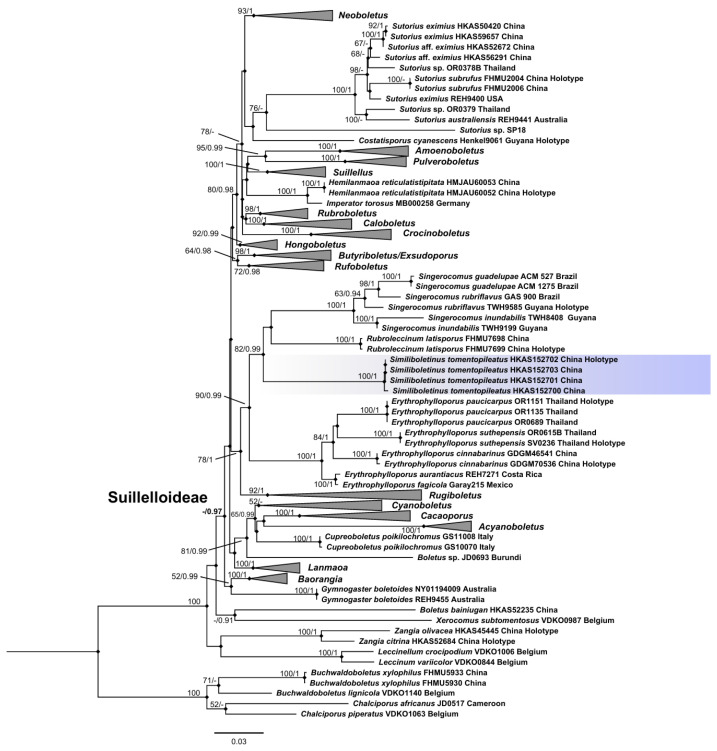 Figure 1
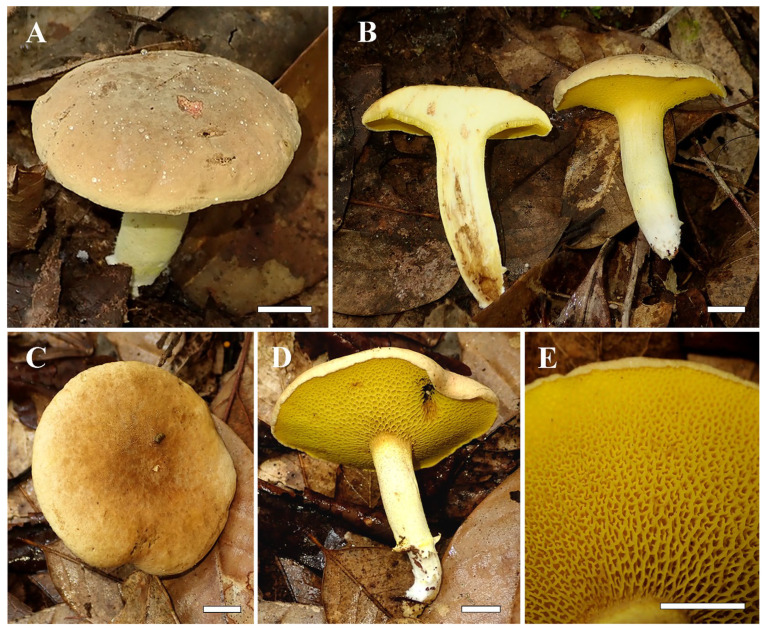 Figure 2
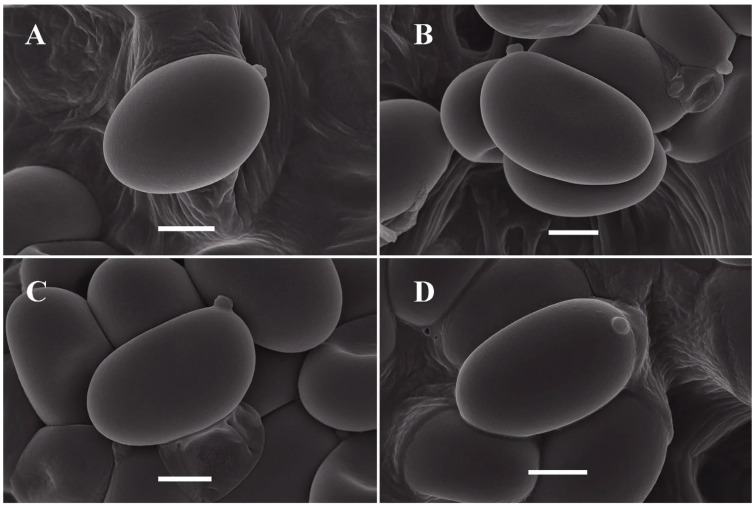 Figure 3
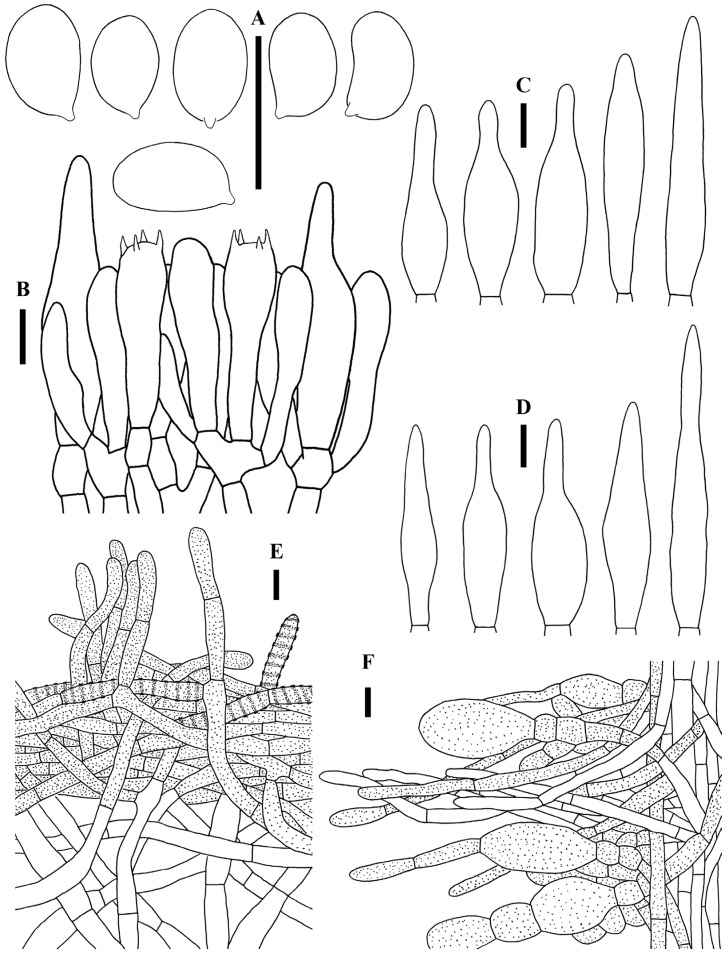 Figure 4
Peer Reviews
No public reviews on file for this paper yet. If you reviewed it on a platform where reviews are public (OpenReview, ICLR, NeurIPS, ICML), you can paste yours below so the community can read it here.
Videos
No videos yet. Explain this paper in a talk, walkthrough, or lecture? Add one.
Taxonomy
TopicsMycorrhizal Fungi and Plant Interactions · Plant Pathogens and Fungal Diseases · Slime Mold and Myxomycetes Research