Serum PTX3 Levels Correlate with Fibrous Cap Discontinuity and Focal Inflammation in Carotid Vulnerable Plaque: A High-Resolution Magnetic Resonance Vessel Wall Imaging Study
Tingting Li, Lu Li, Qingyuan Wang, Yumeng Sun, Jianxiu Lian, Wei Yu

TL;DR
This study shows that higher levels of a blood protein called PTX3 are linked to unstable carotid artery plaques, which can lead to strokes.
Contribution
The study demonstrates that serum PTX3 is a novel biomarker for identifying vulnerable carotid plaque features using high-resolution MRI.
Findings
Serum PTX3 levels increase with the severity of carotid plaque vulnerability.
PTX3 independently predicts fibrous cap discontinuity and focal inflammation in carotid plaques.
PTX3 levels correlate with the number of vulnerable plaque features detected via MRI.
Abstract
Background: Pentraxin 3 (PTX3) is a well-established inflammatory biomarker with significant implications in the pathogenesis and prognostic assessment of cardiovascular diseases. This study aimed to investigate the potential value of serum PTX3 as a circulating biomarker when combined with the high-resolution magnetic resonance vessel wall imaging (HR-VWI) for identifying carotid vulnerable plaque (CVP) and its specific vulnerable features. Methods: This prospective cross-sectional study enrolled 86 patients with carotid atherosclerosis who underwent HR-VWI. Patients were classified into CVP and non-carotid vulnerable plaque (NCVP) groups, and CVP was divided into unilateral carotid vulnerable plaque (UCVP) and bilateral carotid vulnerable plaque (BCVP). CVP was defined as meeting ≥ 1 major criteria: lipid-rich necrotic core (LRNC) maximum area percentage > 40% combined with thin…
Genes, proteins, chemicals, diseases, species, mutations and cell lines named across the full text — each resolved to its canonical identifier and authoritative record.
Click any figure to enlarge with its caption.
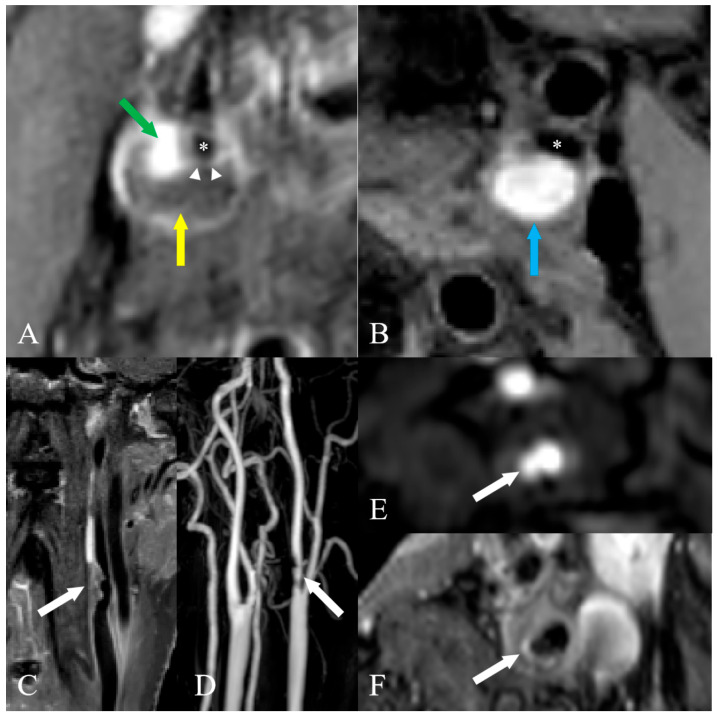 Figure 1
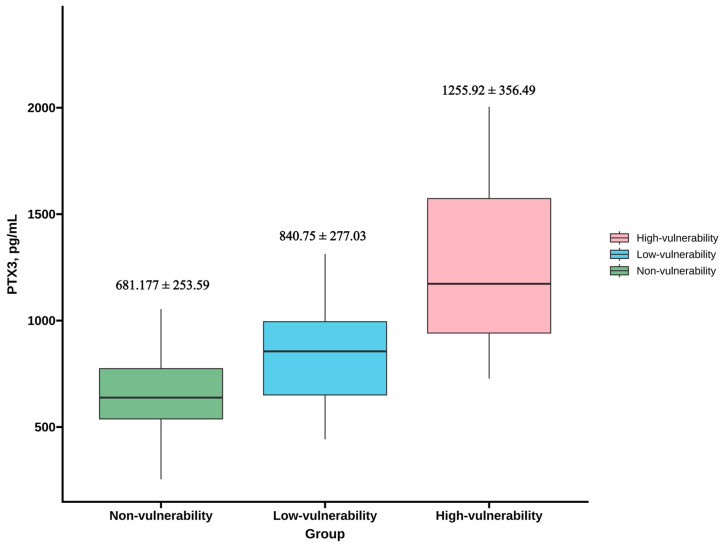 Figure 2
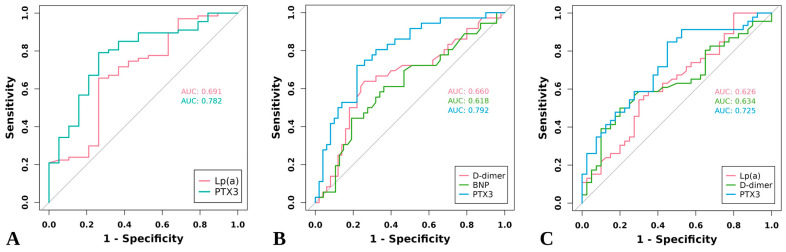 Figure 3
Peer Reviews
No public reviews on file for this paper yet. If you reviewed it on a platform where reviews are public (OpenReview, ICLR, NeurIPS, ICML), you can paste yours below so the community can read it here.
Videos
No videos yet. Explain this paper in a talk, walkthrough, or lecture? Add one.
Taxonomy
TopicsBiomarkers in Disease Mechanisms · Cerebrovascular and Carotid Artery Diseases · Atherosclerosis and Cardiovascular Diseases