The Paradox of Endometriosis in Mayer-Rokitansky-Kuster-Hauser Syndrome: Applying Three Criteria to Discriminate Between Retrograde Menstruation/Implantation and Coelomic Metaplasia/Embryonic Cell Rests Theories
Lutz Konrad, Muhammad Assad Riaz, Felix Zeppernick, Magdalena Zeppernick, Ivo Meinhold-Heerlein, Noemi Salmeri, Paola Viganò, Edgardo Somigliana, Paolo Vercellini

TL;DR
This paper examines whether endometriosis can occur without endometrium in Mayer-Rokitansky-Kuster-Hauser syndrome, supporting the implantation theory over coelomic metaplasia.
Contribution
A systematic evaluation of endometriosis cases in Mayer-Rokitansky-Kuster-Hauser syndrome using three diagnostic criteria and ten theoretical criteria.
Findings
No reported case fully met all three criteria to confirm endometriosis without endometrium.
The implantation theory satisfies all ten theoretical criteria, while coelomic metaplasia theory fails two.
The null hypothesis of endometriosis without endometrium is reasonably rejected.
Abstract
Background/Objectives: The scientific community is still divided between supporters of the implantation theory and researchers who advocate the theory of coelomic metaplasia/embryonic cell remnants to explain the initiation of endometriosis. A frequently cited argument in favor of the coelomic metaplasia/embryonic cell remnants theory is the occurrence of endometriosis in the Mayer-Rokitansky-Kuster-Hauser syndrome, since retrograde menstruation is not possible without endometrium. However, nearly all women with uterovaginal agenesis have uterine remnants that harbour islets of endometrium. Methods: To verify the validity of the coelomic metaplasia/embryonic cell rests theory, we analysed all reports of endometriosis in patients with Mayer-Rokitansky-Kuster-Hauser syndrome without endometrium, published between 1980 and 2025. Three criteria had to be met in order to clearly demonstrate…
Genes, proteins, chemicals, diseases, species, mutations and cell lines named across the full text — each resolved to its canonical identifier and authoritative record.
Click any figure to enlarge with its caption.
 Figure 1
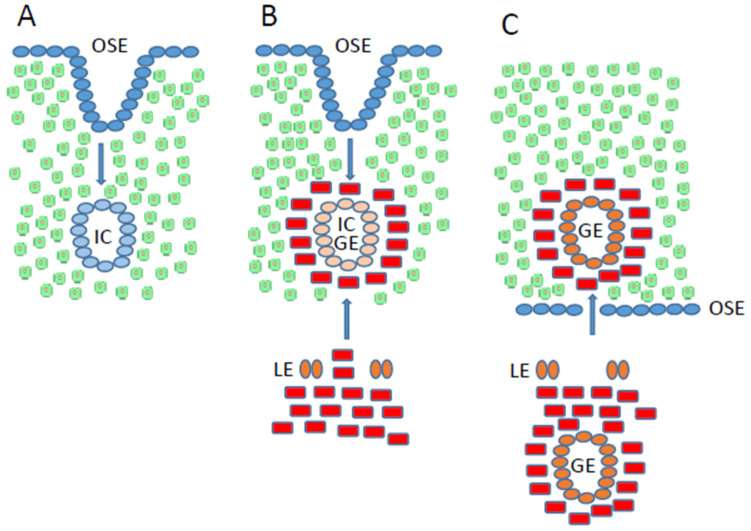 Figure 2
Peer Reviews
No public reviews on file for this paper yet. If you reviewed it on a platform where reviews are public (OpenReview, ICLR, NeurIPS, ICML), you can paste yours below so the community can read it here.
Videos
No videos yet. Explain this paper in a talk, walkthrough, or lecture? Add one.
Taxonomy
TopicsGynecological conditions and treatments · Endometriosis Research and Treatment · Reproductive System and Pregnancy