Tetanus Control in the United States and Global Disaster Settings: Public Health Disparities and Prevention Strategies
Olivia Stala, Suhana Patel, Christian Donlon, Syed Shehroz Hussain, Rahim Hirani, Mill Etienne

TL;DR
This paper reviews tetanus prevention, focusing on disparities in vaccination and risks in disaster zones.
Contribution
The paper emphasizes tetanus risks in disaster settings and highlights inequities in vaccine access.
Findings
Unvaccinated and under-vaccinated populations remain at high risk for tetanus.
Disaster zones face increased tetanus vulnerability due to contaminated wounds and disrupted infrastructure.
Public health strategies must address social and geographic disparities to improve tetanus prevention.
Abstract
Tetanus, a disease caused by the neurotoxin-producing bacteria Clostridium tetani (C. tetani), remains a serious threat, particularly among individuals who are unvaccinated or under-vaccinated. Although public health guidelines in the United States continue to recommend a well-established, multi-dose vaccination schedule to prevent tetanus, recent revisions to the Centers for Disease Control and Prevention webpage language on vaccine safety prompted renewed public discussion. Despite this, extensive evidence continues to demonstrate the effectiveness and safety of tetanus immunization, and certain demographic groups remain disproportionately at risk. Globally and within the United States, natural disaster zones remain especially high-risk environments for tetanus infection. This review examines the pathophysiology of tetanus, current vaccination recommendations, and the social and…
Genes, proteins, chemicals, diseases, species, mutations and cell lines named across the full text — each resolved to its canonical identifier and authoritative record.
Click any figure to enlarge with its caption.
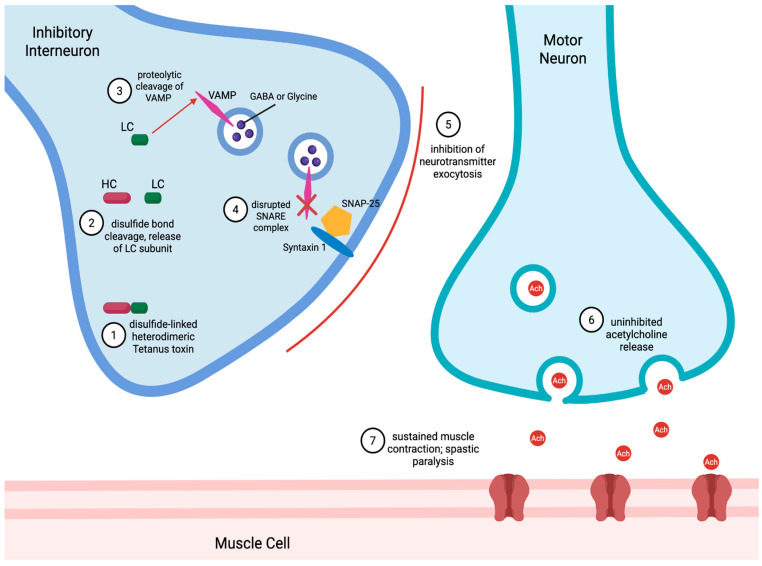 Figure 1
Peer Reviews
No public reviews on file for this paper yet. If you reviewed it on a platform where reviews are public (OpenReview, ICLR, NeurIPS, ICML), you can paste yours below so the community can read it here.
Videos
No videos yet. Explain this paper in a talk, walkthrough, or lecture? Add one.
Taxonomy
TopicsDiphtheria, Corynebacterium, and Tetanus · Botulinum Toxin and Related Neurological Disorders · Bacterial Infections and Vaccines