Circulating CCDC3 as an Indicator of Visceral Fat Accumulation in Patients with Type 2 Diabetes Mellitus
Lin Zhu, Xiaodie Fan, Jiangang Lu, Yutao He, Youyuan Gao, Sirong He, Longbin Lai, Ruobei Zhao, Rui Cheng, Xi Li, Fengning Chuan, Bin Wang

TL;DR
This study finds that a protein called CCDC3 in the blood may indicate visceral fat levels in people with type 2 diabetes, offering a new way to assess health risks.
Contribution
The study identifies CCDC3 as a novel blood-based biomarker for visceral fat accumulation in type 2 diabetes patients.
Findings
Circulating CCDC3 levels were significantly associated with visceral fat area after adjusting for demographic and metabolic factors.
Adding CCDC3 to traditional models improved the accuracy of predicting abdominal obesity.
SHAP analysis confirmed CCDC3's incremental importance over standard measures like waist circumference.
Abstract
Background: Visceral fat plays a central role in cardiometabolic risk among people with type 2 diabetes mellitus (T2DM), yet its assessment in routine clinical practice remains largely dependent on imaging techniques or indirect anthropometric measures. Identifying accessible blood-based markers that reflect visceral adiposity may facilitate improved phenotyping in this population. This study aimed to investigate whether circulating coiled-coil domain–containing protein 3 (CCDC3) reflects visceral fat accumulation in adults with T2DM. Methods: Public RNA-sequencing datasets and human adipose tissue samples were analyzed to identify CCDC3 as a visceral fat–enriched secretory gene. In this cross-sectional study of 160 adults with T2DM undergoing dual-energy X-ray absorptiometry, plasma CCDC3 was measured by ELISA. Associations between plasma CCDC3 and visceral fat area (VFA) were examined…
Genes, proteins, chemicals, diseases, species, mutations and cell lines named across the full text — each resolved to its canonical identifier and authoritative record.
Click any figure to enlarge with its caption.
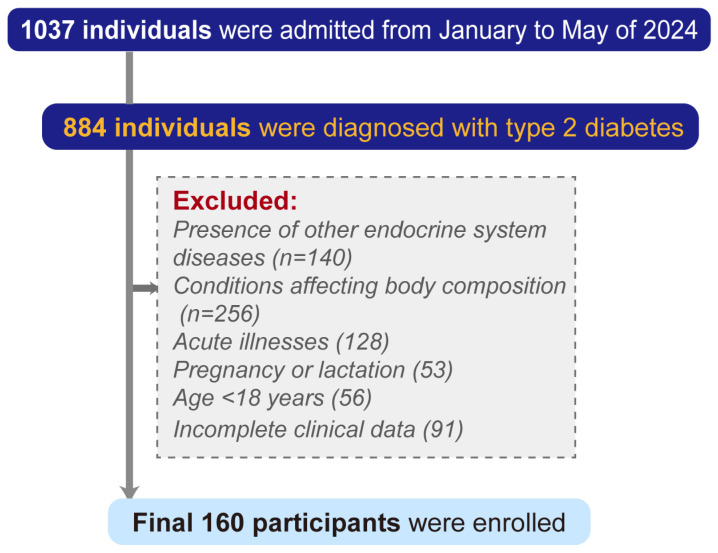 Figure 1
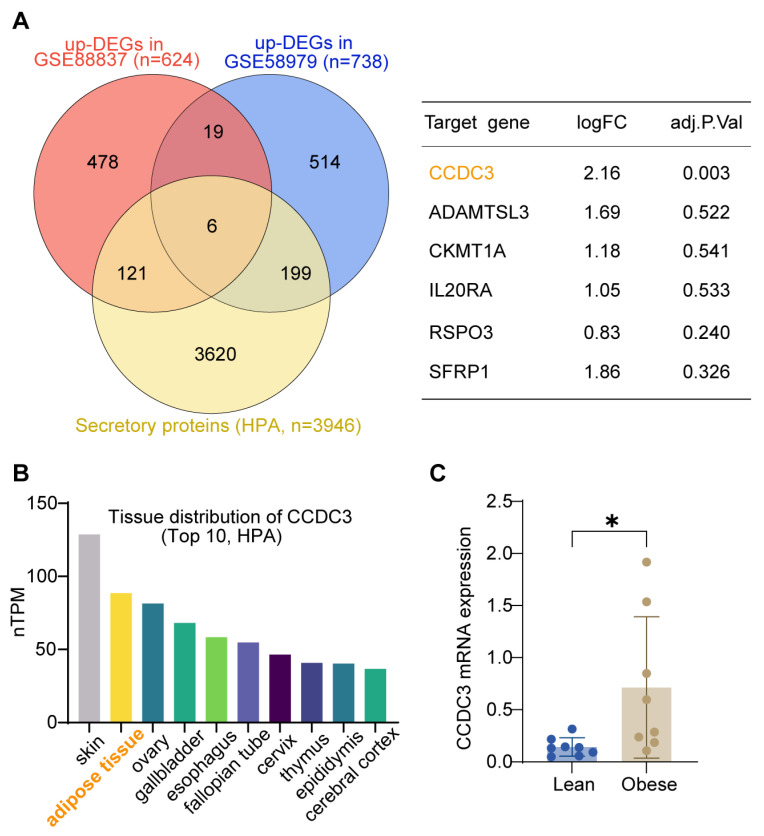 Figure 2
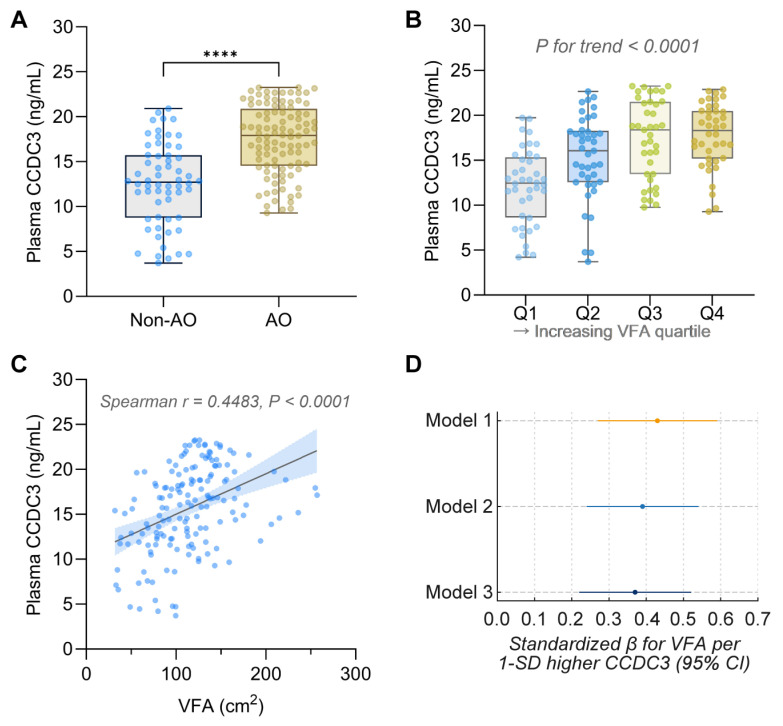 Figure 3
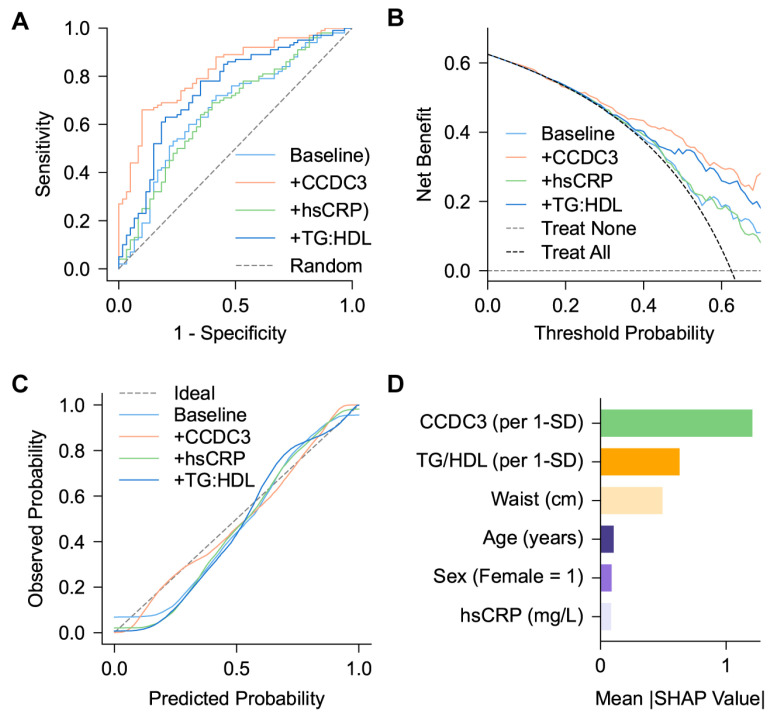 Figure 4
Peer Reviews
No public reviews on file for this paper yet. If you reviewed it on a platform where reviews are public (OpenReview, ICLR, NeurIPS, ICML), you can paste yours below so the community can read it here.
Videos
No videos yet. Explain this paper in a talk, walkthrough, or lecture? Add one.
Taxonomy
TopicsAdipokines, Inflammation, and Metabolic Diseases · Cardiovascular Disease and Adiposity · Adipose Tissue and Metabolism