Association of A1 Segment Morphology with the Rupture Risk and Morphology of Anterior Communicating Artery Aneurysms: A Retrospective, Single-Center Study
Ilhan Aydin, Neslihan Cavusoglu, Berkay Kef, Asya Gokceli, Efecan Cekic, Sahin Hanalioglu, Egemen Gok, Murad Asilturk, Bulent Timur Demirgil

TL;DR
This study found that variations in the A1 segment of the brain's arteries do not significantly affect the risk of aneurysm rupture or aneurysm shape.
Contribution
The study provides new evidence that A1 segment morphology is not an independent predictor of aneurysm rupture risk.
Findings
A1 segment asymmetry was common but not linked to aneurysm rupture risk.
Younger age, male sex, and smoking were associated with rupture in univariate analysis but not in multivariable models.
A1 morphology did not influence aneurysm size or rupture in multivariable analysis.
Abstract
Background/Objectives: A1 segment asymmetry, including hypoplasia and aplasia, is a well-recognized anatomical variation associated with altered hemodynamic stress and anterior communicating artery (ACoA) aneurysm formation. However, its influence on subsequent aneurysm rupture risk remains controversial. This study aimed to evaluate the relationship between A1 segment morphology and aneurysm rupture risk, as well as its association with aneurysm size and morphological complexity. Methods: A retrospective single-institution analysis was conducted on 211 patients treated for ACoA aneurysms between June 2016 and March 2025. A1 segment morphology was assessed using digital subtraction angiography and categorized as symmetric, hypoplastic (diameter < 1 mm or <50% of the contralateral vessel), or aplastic. Demographic, clinical, and radiological variables were recorded. Statistical analyses…
Genes, proteins, chemicals, diseases, species, mutations and cell lines named across the full text — each resolved to its canonical identifier and authoritative record.
Click any figure to enlarge with its caption.
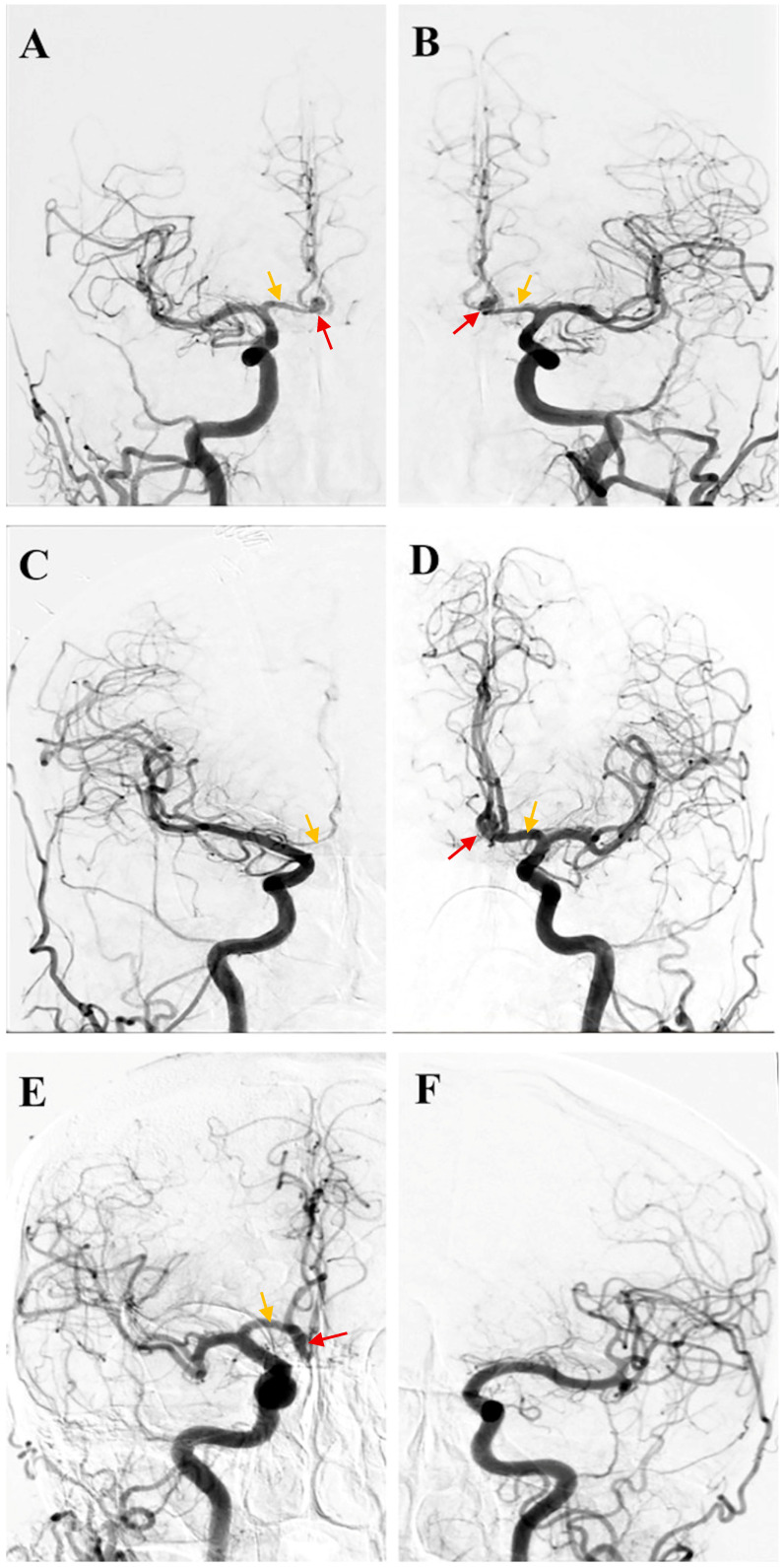 Figure 1
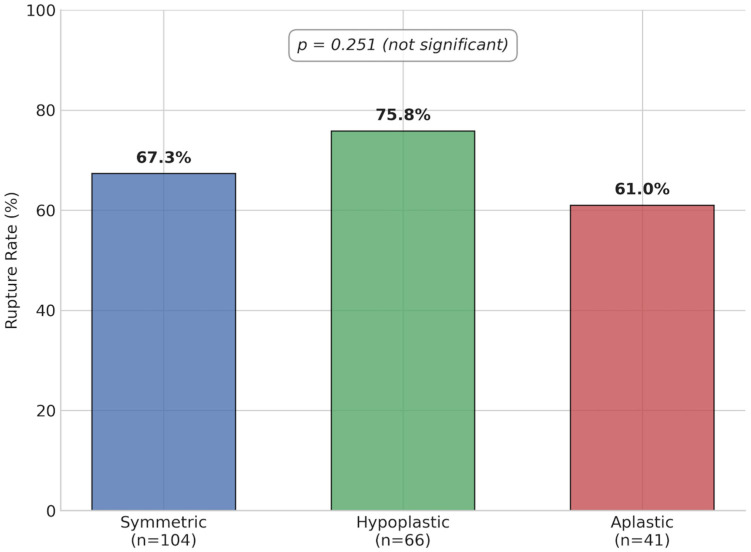 Figure 2
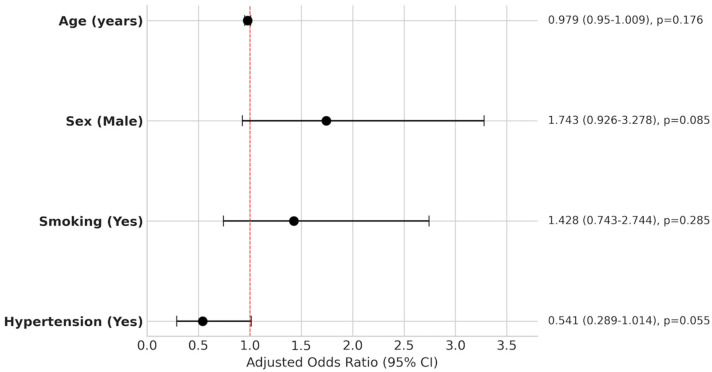 Figure 3
Peer Reviews
No public reviews on file for this paper yet. If you reviewed it on a platform where reviews are public (OpenReview, ICLR, NeurIPS, ICML), you can paste yours below so the community can read it here.
Videos
No videos yet. Explain this paper in a talk, walkthrough, or lecture? Add one.
Taxonomy
TopicsIntracranial Aneurysms: Treatment and Complications · Vascular Malformations Diagnosis and Treatment · Vascular Anomalies and Treatments