The Clinical, Histological, and Genetic Spectrum of RYR1 Variants—A Multi-Center Israeli Cohort Study
Mira Ginsberg, Marina Michelson, Sharon Aharoni, Liora Sagie, Yael Michaeli, Ditza Rotenberg, Vitaly Finkelshtein, Keren Yosovich, Zohar Argov, Andrea Nissenkorn, Dorit Lev, Menachem Sadeh, Ron Dabby

TL;DR
This study explores the range of symptoms and genetic changes in RYR1 gene among Israeli patients, showing how different gene regions affect disease severity.
Contribution
The study expands the known clinical and histological spectrum of RYR1-related disorders and identifies a link between Bsol domain variants and disease severity.
Findings
RYR1 variants are associated with diverse clinical features, including perinatal weakness and respiratory issues.
Variants in the Bsol domain correlate with more severe disease outcomes.
Muscle biopsies showed varied histological features like fiber-size variation and fibrosis.
Abstract
Background: Variants in the ryanodine receptor 1 (RYR1) gene have been linked to a range of disorders, from congenital myopathy to adult-onset manifestations, with phenotypes varying from mild to severe. Methods: A retrospective review was conducted on an Israeli cohort of 36 individuals with RYR1 variants, identified through genetic testing as part of a national collaboration among multiple pediatric and adult neuromuscular clinics. Clinical features, molecular data, laboratory results, electromyographic findings, and muscle histology were analyzed. Each variant was classified according to its respective domain within the RYR1 gene. Results: Thirty-six cases were included in the analysis; 31 were from 11 unrelated families, and 5 were sporadic. Nine individuals were asymptomatic with normal CK levels. Most of the 27 affected patients presented with variable degrees of perinatal…
Genes, proteins, chemicals, diseases, species, mutations and cell lines named across the full text — each resolved to its canonical identifier and authoritative record.
Click any figure to enlarge with its caption.
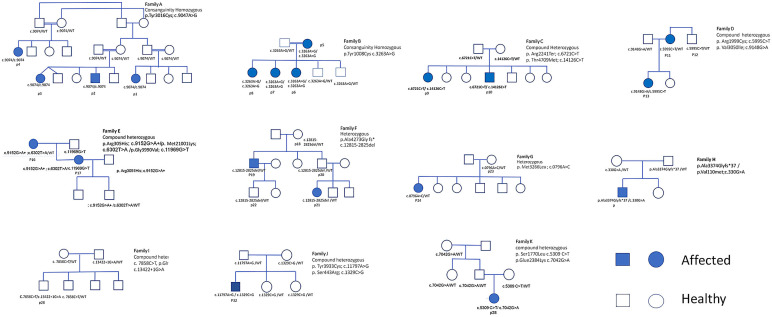 Figure 1
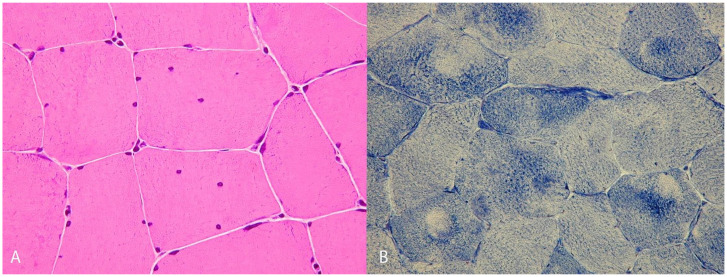 Figure 2
 Figure 3
Peer Reviews
No public reviews on file for this paper yet. If you reviewed it on a platform where reviews are public (OpenReview, ICLR, NeurIPS, ICML), you can paste yours below so the community can read it here.
Videos
No videos yet. Explain this paper in a talk, walkthrough, or lecture? Add one.
Taxonomy
TopicsIon channel regulation and function · Mitochondrial Function and Pathology · Erythrocyte Function and Pathophysiology