Carbohydrate and Fat Oxidation in Muscle Assessed with Exercise Calorimetry in 6465 Subjects
Jean-Frédéric Brun, Emmanuel Varlet, Justine Myzia, Emmanuelle Varlet-Marie, Eric Raynaud de Mauverger, Jacques Mercier

TL;DR
This study analyzed how muscles use fat and carbohydrates during exercise in over 6,000 people, finding that body composition, age, and sex significantly influence these metabolic processes.
Contribution
The study is the first to comprehensively characterize the determinants of carbohydrate oxidation during exercise, identifying sex, age, and adiposity as key factors.
Findings
Women exhibited relatively higher lipid oxidation compared to men after adjusting for body composition.
Carbohydrate oxidation increased with higher BMI, fat mass, and age, while decreasing with greater muscle mass.
Leaner individuals preferentially oxidized lipids at comparable exercise intensities compared to those with higher adiposity.
Abstract
Background/Objectives: Exercise calorimetry provides a means to quantify the relative contributions of lipid and carbohydrate (CHO) oxidation across a range of exercise intensities. Although lipid oxidation capacity has been widely studied—particularly in relation to exercise prescription for individuals with obesity—the factors governing CHO oxidation during exercise are less clearly defined. This study therefore aimed to investigate, within a large single-center cohort, not only the established determinants of maximal lipid oxidation (LIPOXmax) but also those influencing CHO oxidation. Methods: Exercise calorimetry was performed in a cohort of 6465 individuals (4561 women and 1904 men; mean age 46.5 years; mean BMI 33.6 kg/m2). Two principal physiological indices were derived: LIPOXmax, defined as the exercise intensity eliciting maximal rates of fat oxidation, and the carbohydrate…
Genes, proteins, chemicals, diseases, species, mutations and cell lines named across the full text — each resolved to its canonical identifier and authoritative record.
Click any figure to enlarge with its caption.
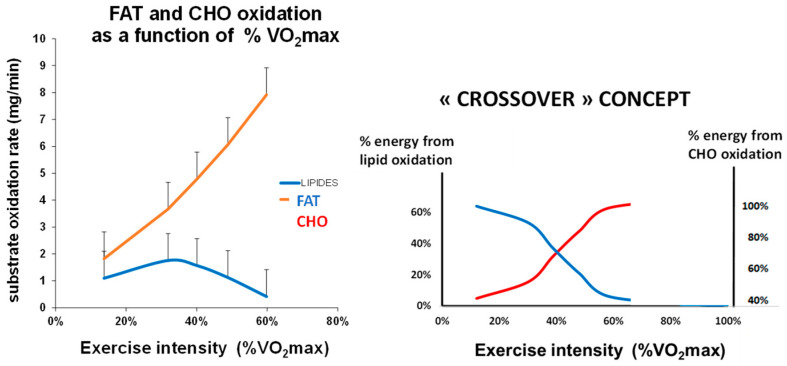 Figure 1
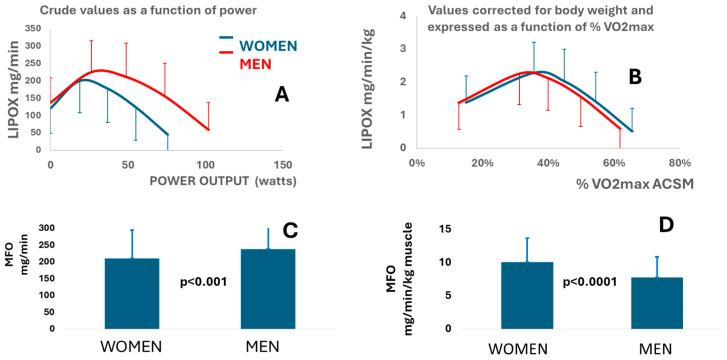 Figure 2
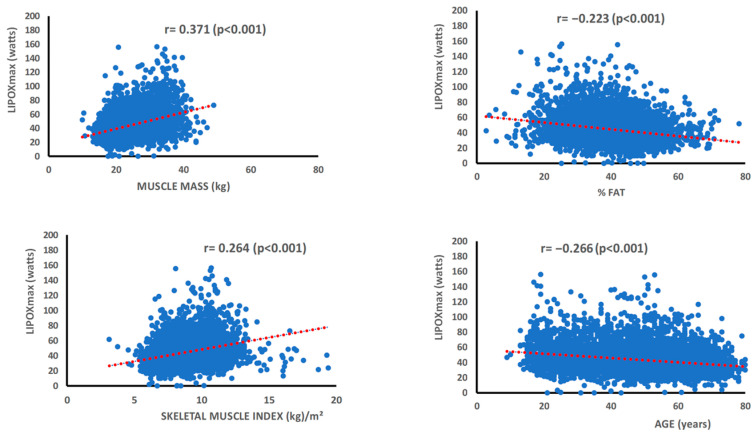 Figure 3
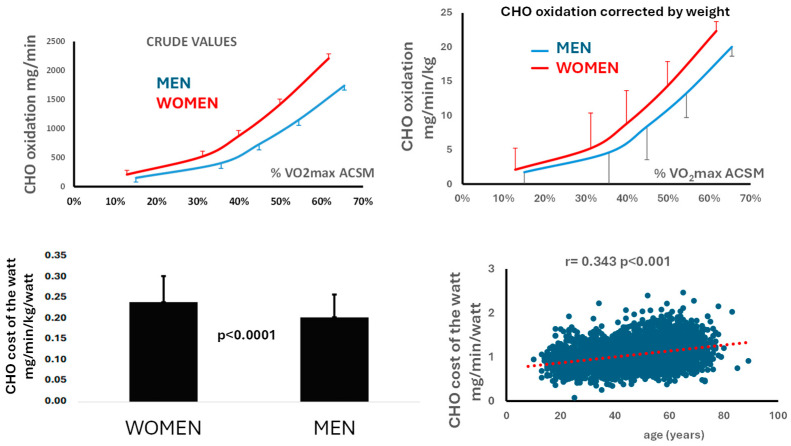 Figure 4
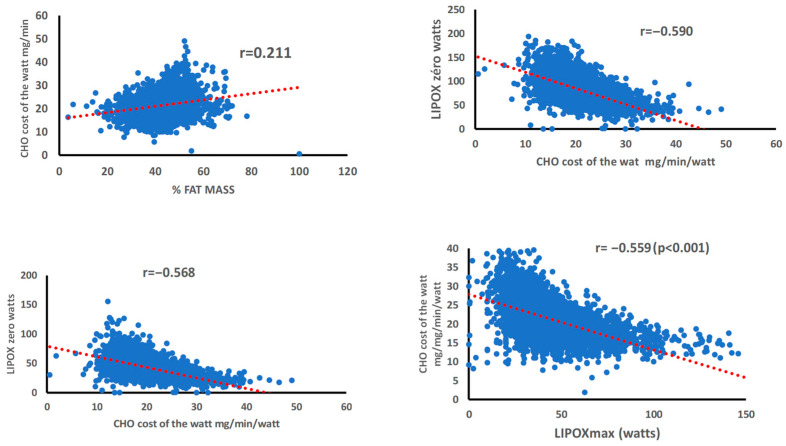 Figure 5
Peer Reviews
No public reviews on file for this paper yet. If you reviewed it on a platform where reviews are public (OpenReview, ICLR, NeurIPS, ICML), you can paste yours below so the community can read it here.
Videos
No videos yet. Explain this paper in a talk, walkthrough, or lecture? Add one.
Taxonomy
TopicsMuscle metabolism and nutrition · Clinical Nutrition and Gastroenterology · Exercise and Physiological Responses