The Role of Homocysteine in Pediatric MASLD: A Bipotential Biomarker of Cardiovascular Risk and Liver Fibrosis
Antonella Mosca, Nadia Panera, Giulia Andolina, Luca Della Volpe, Anna Pastore, Maria Rita Braghini, Lidia Monti, Paola Francalanci, Giovanna Soglia, Andrea Pietrobattista, Anna Alisi

TL;DR
This study explores homocysteine as a potential biomarker for liver fibrosis and cardiovascular risk in children with fatty liver disease.
Contribution
The study is the first to investigate homocysteine's role in pediatric MASLD and its association with liver fibrosis and metabolic risk.
Findings
Elevated homocysteine levels are independently linked to liver fibrosis and metabolic risk factors in children with MASLD.
Homocysteine showed 81% predictive accuracy for liver fibrosis, but combined models with other scores had only modest accuracy.
The study highlights homocysteine as a potential, but not definitive, non-invasive biomarker for pediatric MASLD.
Abstract
The increasing prevalence of metabolic dysfunction-associated fatty liver disease (MASLD) in children requires robust, non-invasive biomarkers to enable accurate disease staging and risk stratification. Elevated serum levels of homocysteine (Hcy) have emerged as potential risk factors for cardiometabolic disease in adults, including MASLD. In this observational retrospective study, we investigated the role of serum Hcy levels as a potential biomarker for disease severity and liver fibrosis in a pediatric cohort of 182 children with MASLD. In 89 patients, liver biopsy allowed the classification into metabolic dysfunction-associated steatohepatitis (MASH). Associations between Hcy, metabolic parameters, fibrosis scores, and histological features were examined, and the diagnostic performance of Hcy for liver fibrosis was evaluated using ROC analysis. Multivariate analyses identified…
Genes, proteins, chemicals, diseases, species, mutations and cell lines named across the full text — each resolved to its canonical identifier and authoritative record.
Click any figure to enlarge with its caption.
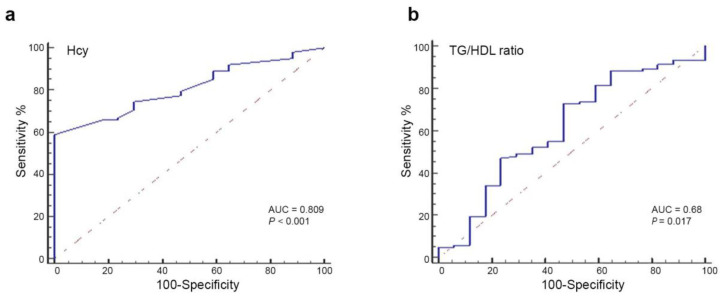 Figure 1
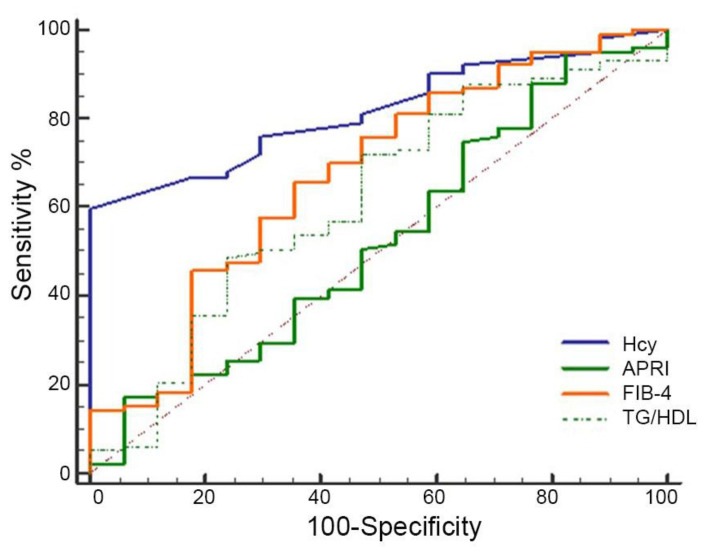 Figure 2
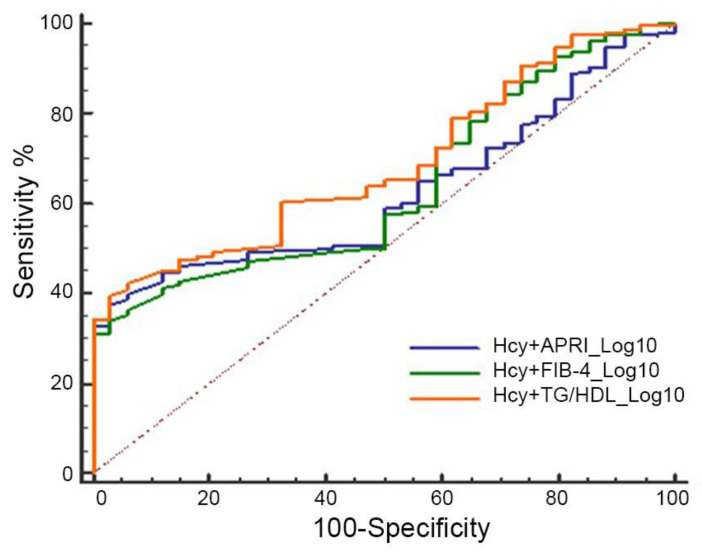 Figure 3
Peer Reviews
No public reviews on file for this paper yet. If you reviewed it on a platform where reviews are public (OpenReview, ICLR, NeurIPS, ICML), you can paste yours below so the community can read it here.
Videos
No videos yet. Explain this paper in a talk, walkthrough, or lecture? Add one.
Taxonomy
TopicsLiver Disease Diagnosis and Treatment · Folate and B Vitamins Research · Liver Disease and Transplantation