Sickle Cell Disease and Male Infertility: Pathophysiological Mechanisms, Clinical Manifestations, and Fertility Preservation Strategies—A Narrative Review
Christos Roidos, Aris Kaltsas, Evangelos N. Symeonidis, Vasileios Tzikoulis, Nikolaos Pantazis, Chara Tsiampali, Natalia Palapela, Athanasios Zachariou, Nikolaos Sofikitis, Fotios Dimitriadis

TL;DR
This review explores how sickle cell disease affects male fertility, the underlying mechanisms, and options for preserving fertility in affected men.
Contribution
The paper provides a comprehensive narrative review on the pathophysiology and fertility preservation strategies for male infertility in sickle cell disease.
Findings
Recurrent vaso-occlusion and chronic hypoxia can damage the seminiferous epithelium and impair Leydig cell function.
Oxidative stress and inflammation contribute to sperm DNA and membrane damage in men with SCD.
Fertility preservation methods like semen cryopreservation and TESE are recommended before treatments like hydroxyurea or transplantation.
Abstract
Sickle cell disease (SCD) is an inherited hemoglobinopathy in which hemoglobin S polymerization drives hemolysis and vaso-occlusion with progressive organ morbidity. Male reproductive impairment is increasingly recognized but remains underreported. This narrative review summarizes mechanistic pathways, clinical manifestations, and fertility preservation options relevant to men with SCD. PubMed, the Cochrane Library, and Medscape were searched through 31 December 2025 for human studies addressing endocrine changes, semen quality, priapism and erectile dysfunction, oxidative stress, and treatment-related gonadotoxicity. Evidence supports converging mechanisms: recurrent vaso-occlusion and chronic hypoxia may injure the seminiferous epithelium and impair Leydig cell steroidogenesis; oxidative stress and inflammation contribute to sperm DNA and membrane damage; and disease-modifying or…
Genes, proteins, chemicals, diseases, species, mutations and cell lines named across the full text — each resolved to its canonical identifier and authoritative record.
Click any figure to enlarge with its caption.
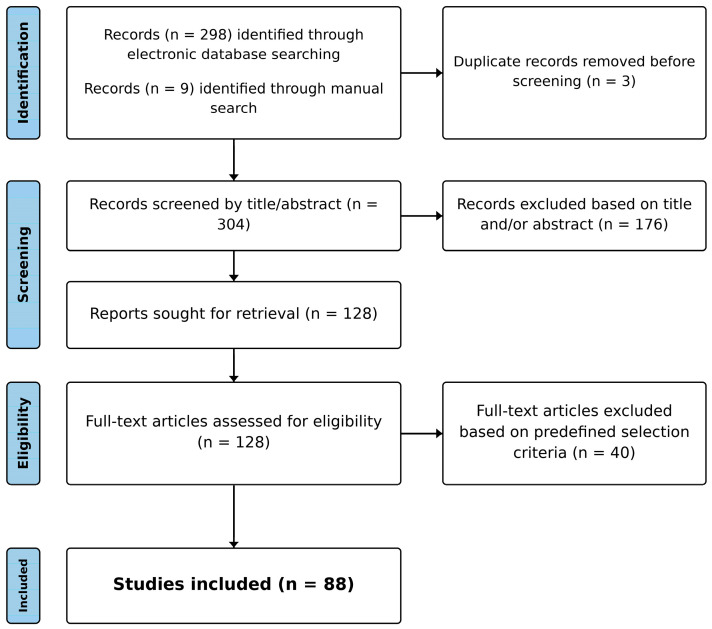 Figure 1
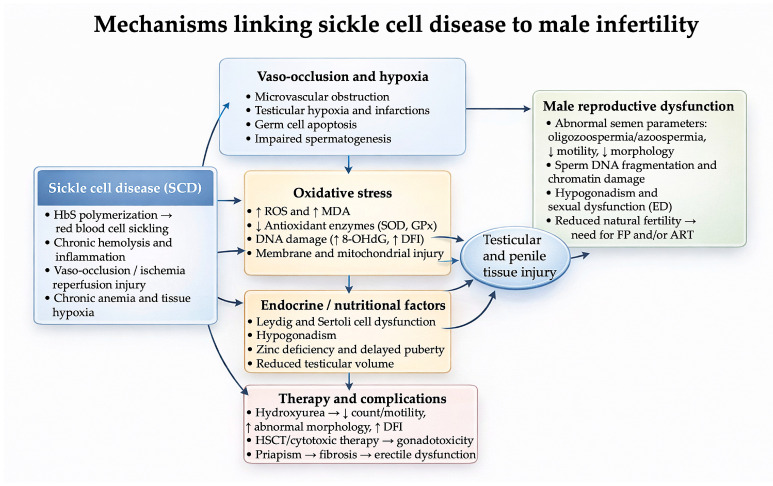 Figure 2
Peer Reviews
No public reviews on file for this paper yet. If you reviewed it on a platform where reviews are public (OpenReview, ICLR, NeurIPS, ICML), you can paste yours below so the community can read it here.
Videos
No videos yet. Explain this paper in a talk, walkthrough, or lecture? Add one.
Taxonomy
TopicsSperm and Testicular Function · Hemoglobinopathies and Related Disorders · Male Reproductive Health Studies