Histological and Immunohistochemical Characterization of the Tibial ACL Remnant: Implications for Ligament Healing
Sorin Florescu, Blidişel Iulian Alexandru, George Andrei Drăghici, Dragoş Vasile Nica, Boru Casiana, Cosmin Grațian Damian

TL;DR
This study explores how the tibial part of the ACL ligament heals, showing that preserving it during surgery could improve recovery due to active biological processes.
Contribution
The study identifies a biologically active repair niche in the tibial ACL remnant with coordinated vascular, neural, and stromal responses.
Findings
ACL remnants show significantly higher microvascular density and synovial angiogenesis compared to controls.
Injured ACLs have increased stellate stromal cells and CD34-positive fibrocytes, indicating active remodeling.
Neural networks in control ligaments are richer in small-caliber fibers, which are vulnerable during ACL rupture.
Abstract
Background and Objectives: The pathways mediating the beneficial effect of tibial stump preservation for anterior cruciate ligament (ACL) reconstruction remain insufficiently clarified. This study investigated key vascular, neural, and stromal aspects of cellular remodeling processes occurring across lesion stages in tibial remnant pre-reconstruction. Materials and Methods: Biopsies were obtained from 25 patients undergoing arthroscopic ACL reconstruction (paired free-end and tibial insertion sampling) and 10 from quasi-normal, macroscopically intact ligaments (controls). We evaluated intergroup differences in microvascular density using a t-test. Group comparisons for angiogenesis (CD34), neural components (S100, neurofilament-associated proteins—NFAPs), and stromal activation (vimentin and actin) were conducted using Chi-square or Fisher’s exact tests. Results: ACL remnants revealed a…
Genes, proteins, chemicals, diseases, species, mutations and cell lines named across the full text — each resolved to its canonical identifier and authoritative record.
Click any figure to enlarge with its caption.
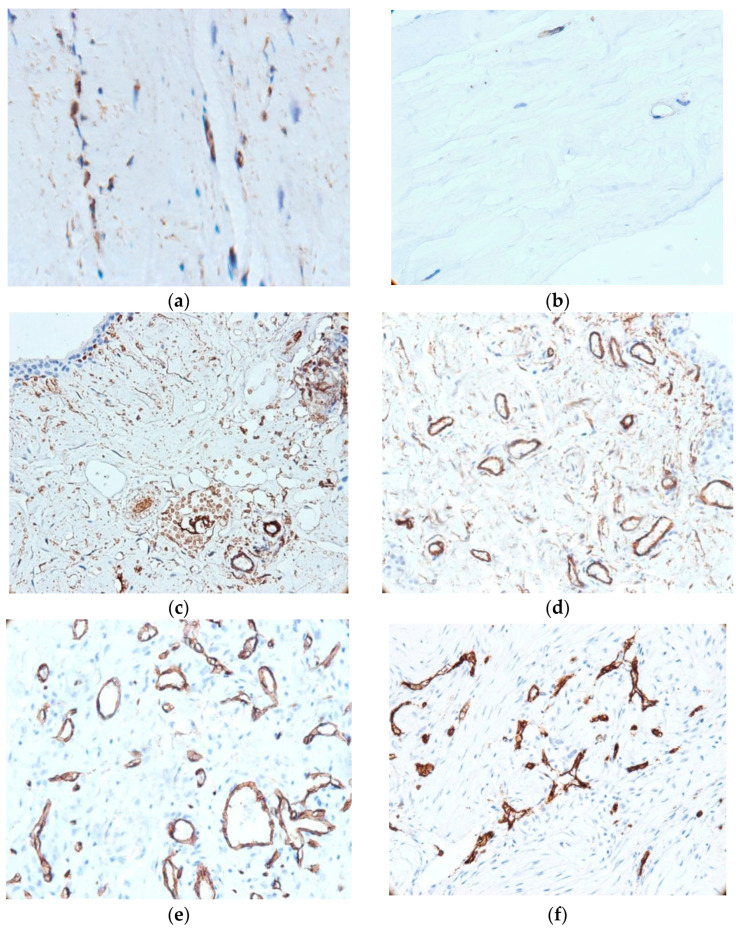 Figure 1
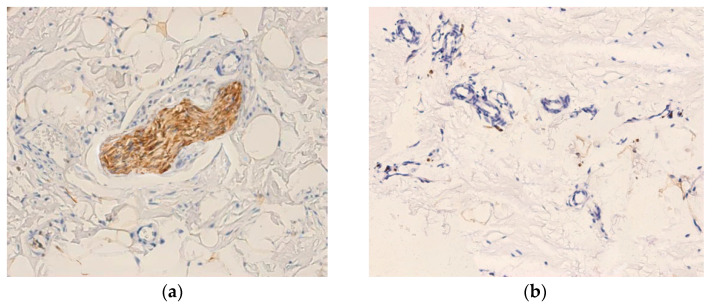 Figure 2
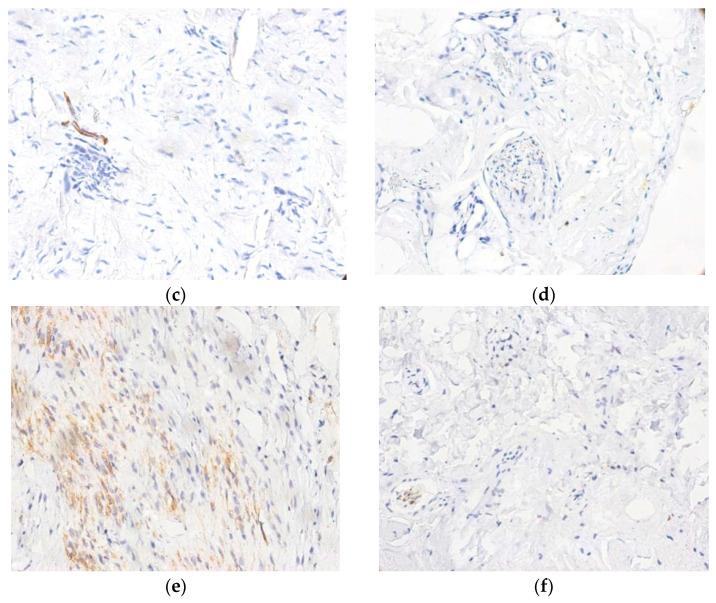 Figure 3
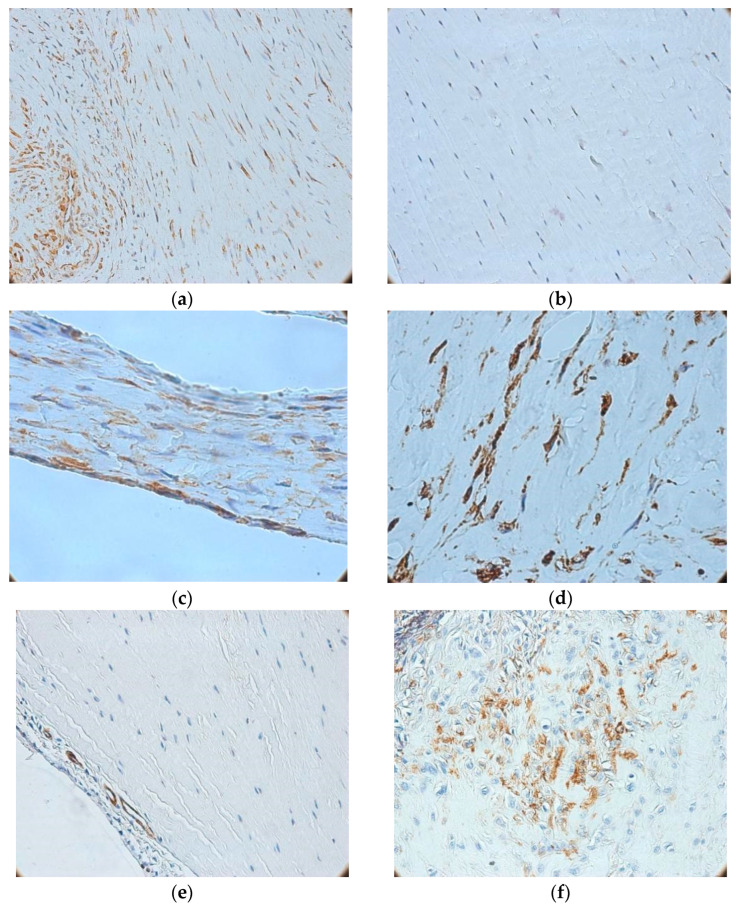 Figure 4
Peer Reviews
No public reviews on file for this paper yet. If you reviewed it on a platform where reviews are public (OpenReview, ICLR, NeurIPS, ICML), you can paste yours below so the community can read it here.
Videos
No videos yet. Explain this paper in a talk, walkthrough, or lecture? Add one.
Taxonomy
TopicsKnee injuries and reconstruction techniques · Connective Tissue Growth Factor Research · Reconstructive Surgery and Microvascular Techniques