Biomechanical Comparison of Three Different Fixation Methods for Unstable Basicervical Intertrochanteric Fractures Using a Novel Cephalomedullary Nail
Kyung-Jae Lee, Kyu Tae Hwang, Incheol Kook, Se-Won Lee, Sung-Jae Lee, Jin-Ho Yoon, Je-Hyun Yoo

TL;DR
This study compares three fixation methods for hip fractures using a new nail design and finds that a longer anti-rotation screw improves stability.
Contribution
A novel cephalomedullary nail with a long anti-rotation screw is introduced and shown to reduce rotational instability in hip fracture models.
Findings
Group 3 showed the least rotational change in the sagittal plane and lowest axial migration.
Failure load was slightly higher in Groups 2 and 3, but not significantly different.
No significant difference was found between 75 mm and 95 mm anti-rotation screw groups.
Abstract
Background and Objectives: This biomechanical study aimed to compare the fixation stability of proximal fragments and assess the mechanical properties in models of unstable basicervical intertrochanteric fractures. Materials and Methods: Thirty-six synthetic femur models were utilized. After cephalomedullary nail insertion, unstable basicervical intertrochanteric fractures were created using an engraving machine. Specimens were divided into three groups based on the femoral head fixation method: Group 1 (n = 12, single 100 mm lag screw); Group 2 (n = 12, lag screw + 75 mm anti-rotation screw); and Group 3 (n = 12, lag screw + 95 mm anti-rotation screw). The anti-rotation screws were full-threaded locking screws positioned just below the lag screw. After applying 10,000 vertical cyclic loads, stereophotogrammetry was used to evaluate the proximal fragment rotation in three planes…
Genes, proteins, chemicals, diseases, species, mutations and cell lines named across the full text — each resolved to its canonical identifier and authoritative record.
Click any figure to enlarge with its caption.
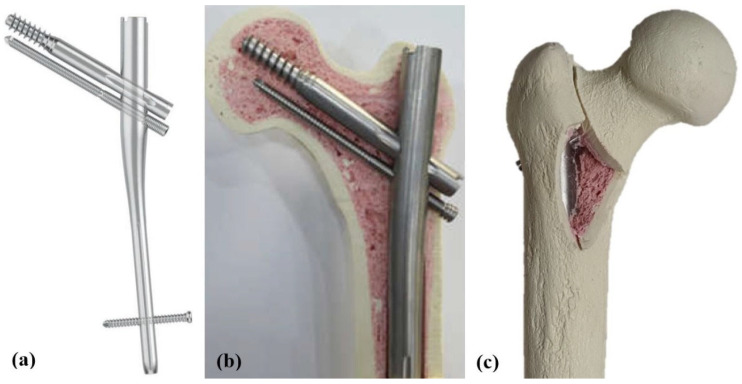 Figure 1
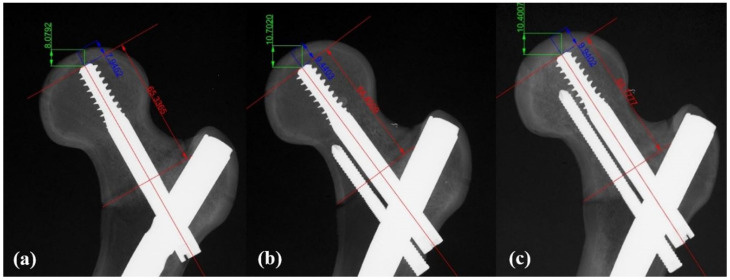 Figure 2
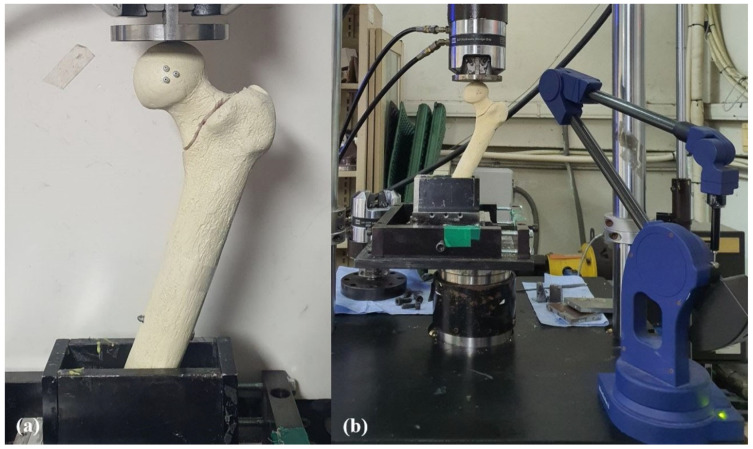 Figure 3
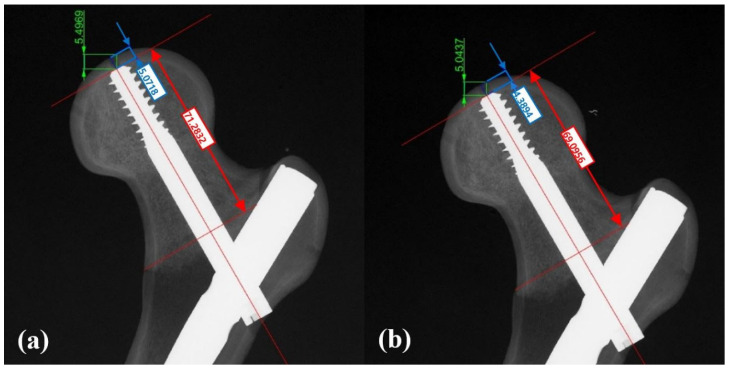 Figure 4
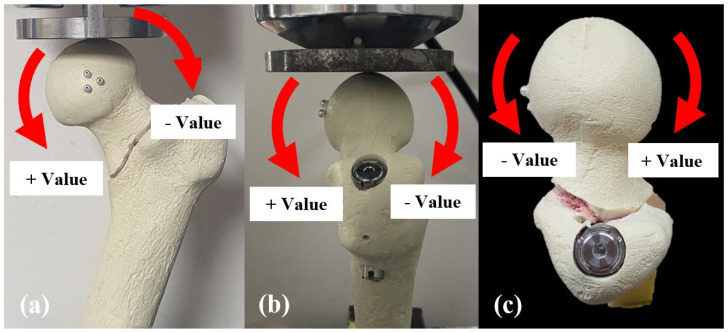 Figure 5
Peer Reviews
No public reviews on file for this paper yet. If you reviewed it on a platform where reviews are public (OpenReview, ICLR, NeurIPS, ICML), you can paste yours below so the community can read it here.
Videos
No videos yet. Explain this paper in a talk, walkthrough, or lecture? Add one.
Taxonomy
TopicsHip and Femur Fractures · Bone health and osteoporosis research · Spinal Fractures and Fixation Techniques