Efficacy of SGLT2 Inhibitors on Clinical Outcomes After Transcatheter Aortic Valve Replacement: A Systematic Review and Meta‐Analysis
Shaikh Muhammad Daniyal, Naveen Murad Khatoon, Anas Rasool, Isbah Gul, Sabula Tabish, Shireen Asifa, Ayan Khalid, Zunaira Aftab, Muhammad Burhan, Syeda Laiba Fahim, Habiba Tauqir Gondal, Muhammad Asfandyar Nadir, Syed Zaeem Ahmed, Danish Ali Ashraf, Somaiya Ahmed

TL;DR
SGLT2 inhibitors may reduce mortality and heart failure hospitalizations after aortic valve replacement, but more research is needed.
Contribution
This study is the first to evaluate the impact of SGLT2 inhibitors on outcomes after transcatheter aortic valve replacement.
Findings
SGLT2 inhibitors reduced the composite outcome of mortality or heart failure hospitalization after TAVR.
The drugs also lowered all-cause mortality and heart failure hospitalizations individually.
Larger randomized trials are needed to confirm these findings.
Abstract
Sodium‐glucose cotransporter 2 (SGLT2) inhibitors improve cardiovascular (CV) outcomes in patients with heart failure (HF) and type 2 diabetes. Their effect in patients undergoing transcatheter aortic valve replacement (TAVR) for severe aortic stenosis (AS), however, remains unclear. This study evaluated whether SGLT2 inhibitors reduce all‐cause mortality and HF hospitalisations after TAVR. A systematic search of PubMed, ScienceDirect, Cochrane (CENTRAL), Scopus and Embase was performed through April 2025 for studies comparing post‐TAVR outcomes between SGLT2 inhibitor users and non‐users. Outcomes of interest included a composite of all‐cause mortality or heart failure (HF) hospitalisation, along with the individual components of all‐cause mortality and HF hospitalisation. All outcomes were extracted at 1 year. Pooled hazard ratios (HRs) with 95% confidence intervals (CIs) were…
Genes, proteins, chemicals, diseases, species, mutations and cell lines named across the full text — each resolved to its canonical identifier and authoritative record.
Click any figure to enlarge with its caption.
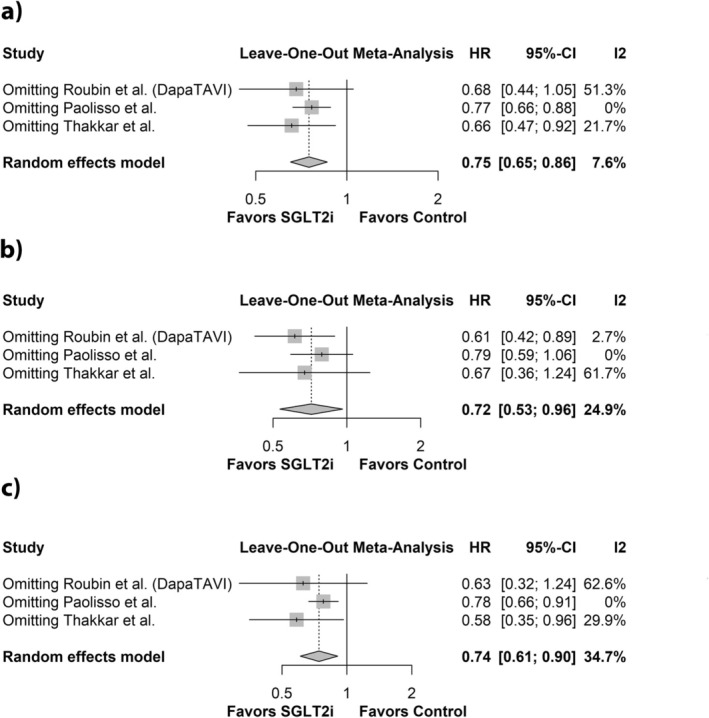 Figure 1
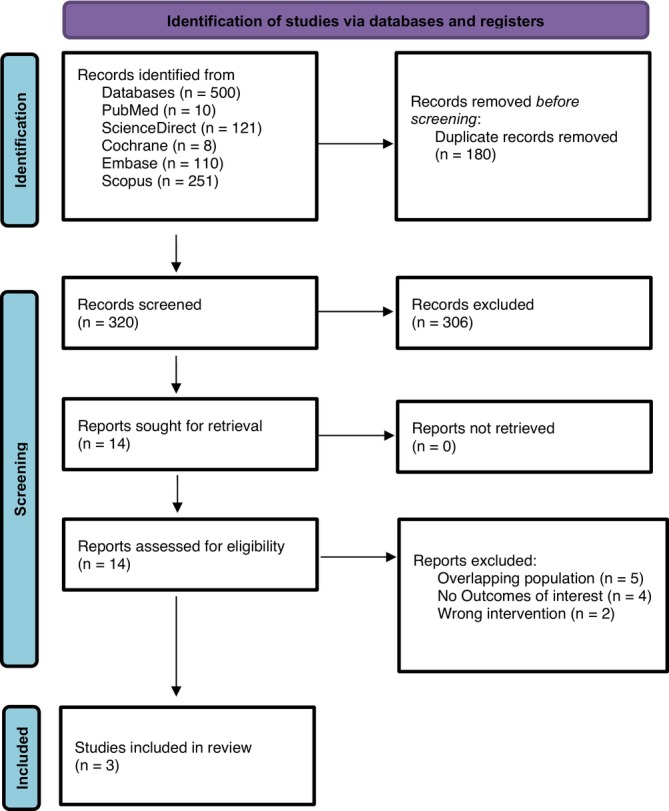 Figure 2
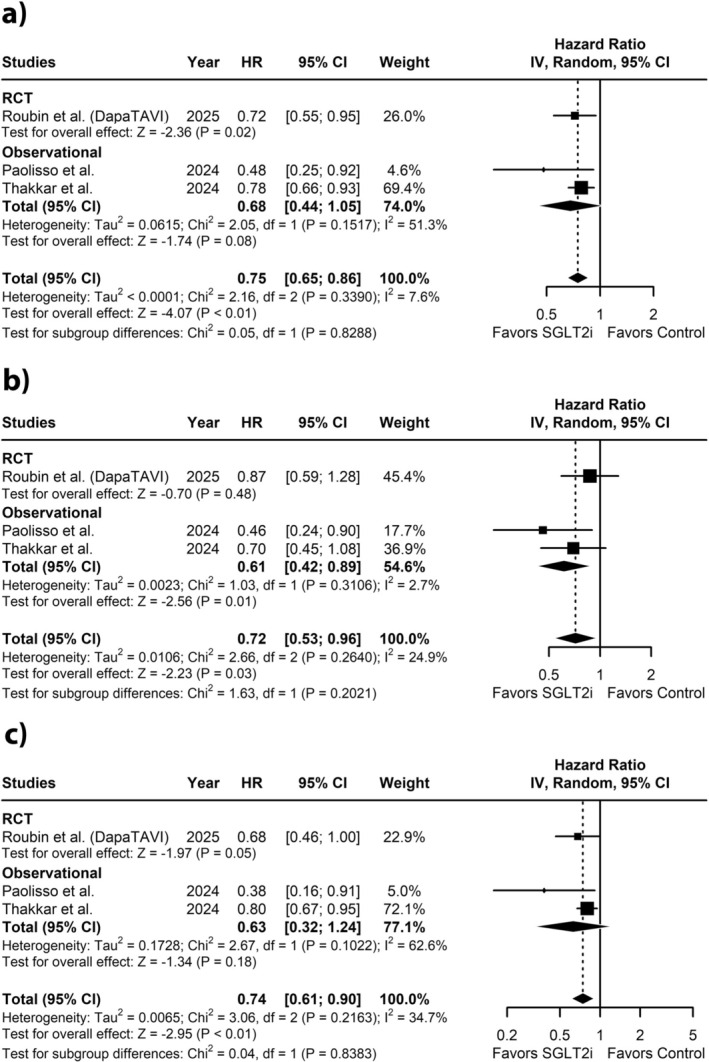 Figure 3
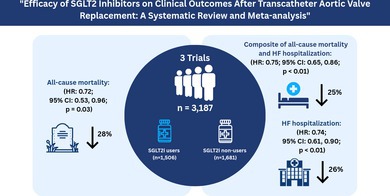 Figure 4
Peer Reviews
No public reviews on file for this paper yet. If you reviewed it on a platform where reviews are public (OpenReview, ICLR, NeurIPS, ICML), you can paste yours below so the community can read it here.
Videos
No videos yet. Explain this paper in a talk, walkthrough, or lecture? Add one.
Taxonomy
TopicsCardiac Valve Diseases and Treatments · Aortic Disease and Treatment Approaches · Gastroesophageal reflux and treatments