Echocardiographic Features and Clinical Outcomes of Functional vs. Anatomical Pulmonary Atresia with Intact Ventricular Septum in Neonates
Yalun Qu, Shuang Yang, Yuefeng Cao, Jiachen Li, Zhongyi Han, Dong Wang, Yao Yang, Yongtao Wu, Qiang Wang

TL;DR
This study compares two rare heart conditions in newborns using echocardiography to guide treatment decisions and improve outcomes.
Contribution
The study identifies specific echocardiographic features that can distinguish between functional and anatomical pulmonary atresia in neonates.
Findings
Neonates with FPA had larger right atrial areas and better right ventricular development compared to PA/IVS.
Echocardiographic parameters like right atrial area and right-to-left ventricular ratio effectively differentiated the two conditions.
FPA neonates had better outcomes with conservative management, while PA/IVS required surgery and had higher mortality.
Abstract
(1) Background: Functional pulmonary atresia (FPA) and pulmonary atresia with intact ventricular septum (PA/IVS) are rare neonatal congenital heart diseases with similar early clinical manifestations but distinct pathophysiology and treatment strategies, making early and accurate differentiation clinically important. (2) Methods: This single-center retrospective study included 43 neonates diagnosed with FPA (n = 12) or PA/IVS (n = 31) between December 2016 and March 2025. Echocardiographic parameters and clinical data were compared between groups, and receiver operating characteristic curve analysis was performed to evaluate the usefulness of selected echocardiographic indices for differentiation in clinical practice. (3) Results: Compared with PA/IVS, neonates with FPA exhibited significantly larger right atrial area, relatively better preserved right ventricular development, larger…
Genes, proteins, chemicals, diseases, species, mutations and cell lines named across the full text — each resolved to its canonical identifier and authoritative record.
Click any figure to enlarge with its caption.
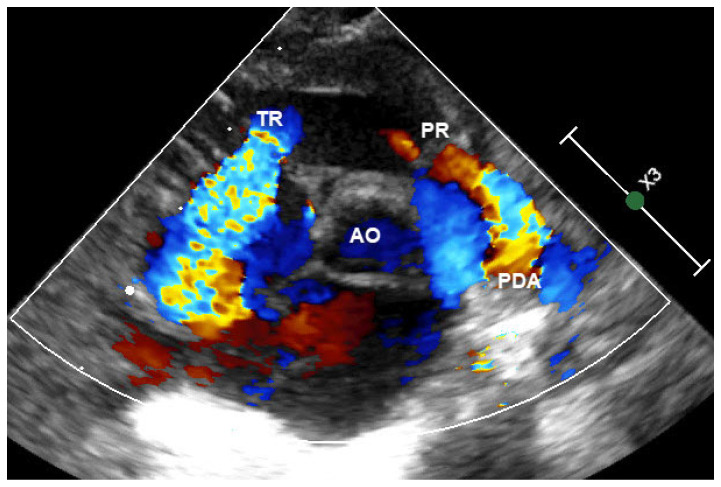 Figure 1
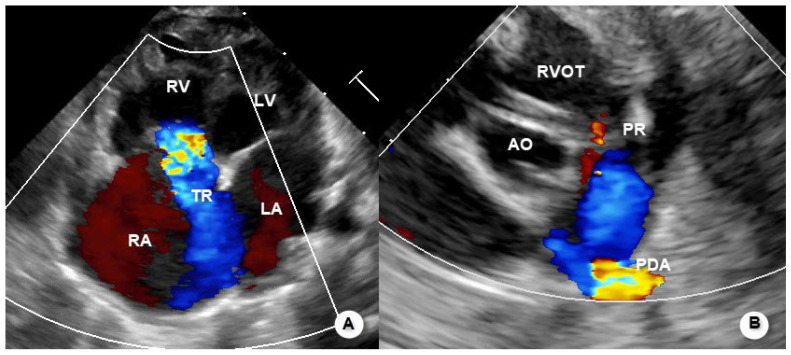 Figure 2
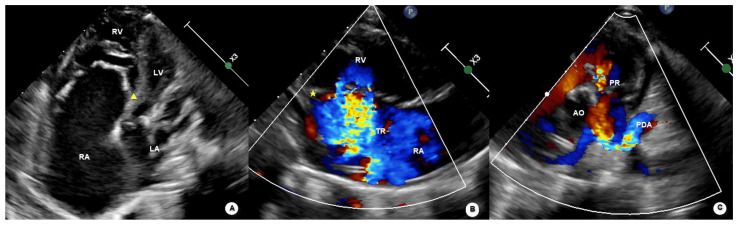 Figure 3
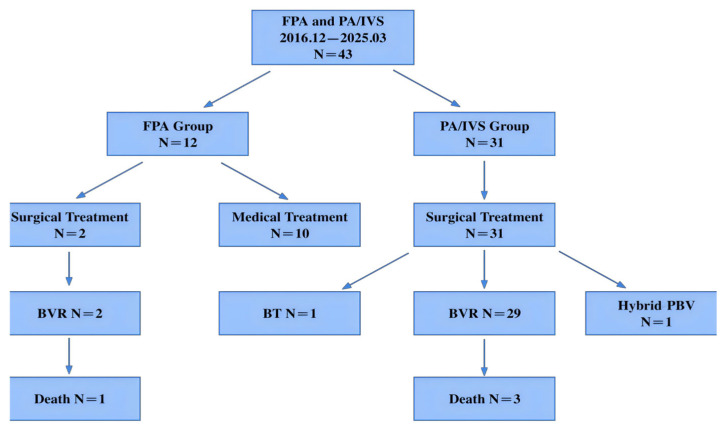 Figure 4
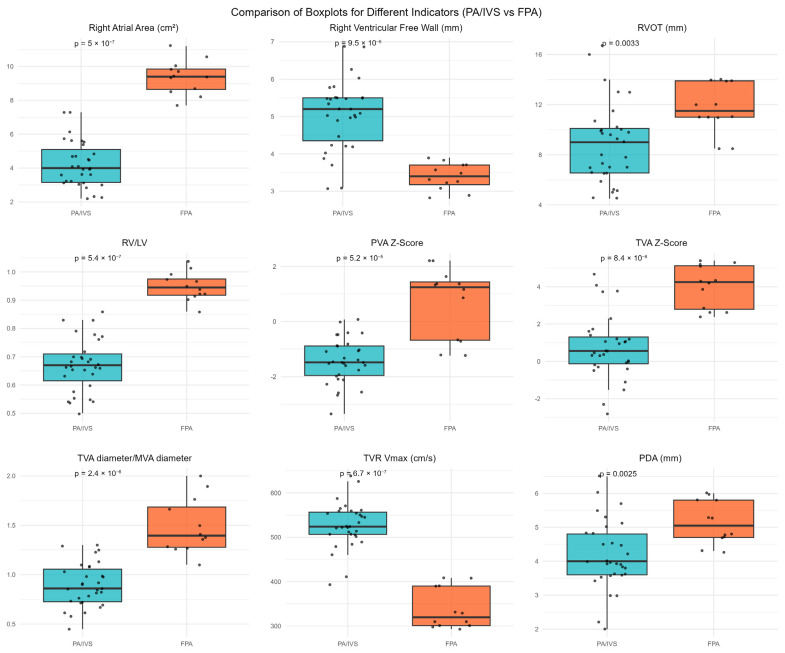 Figure 5
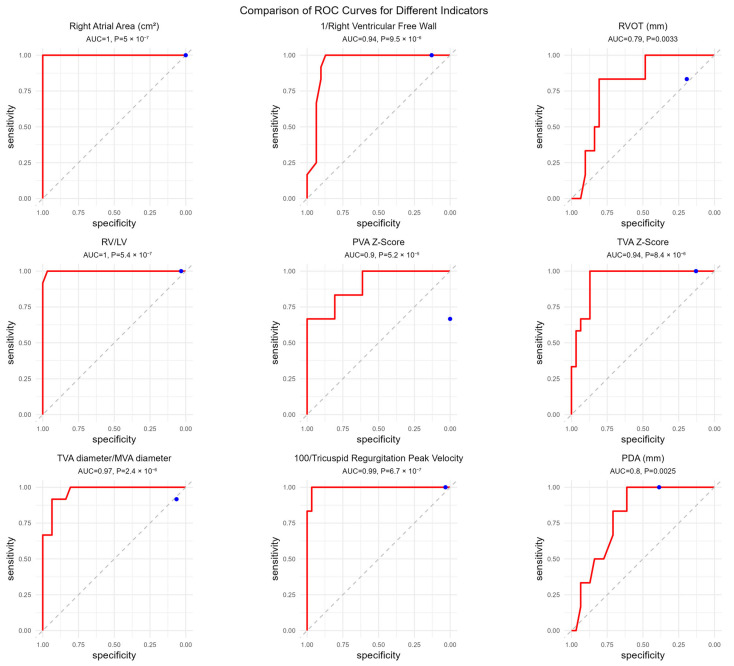 Figure 6
Peer Reviews
No public reviews on file for this paper yet. If you reviewed it on a platform where reviews are public (OpenReview, ICLR, NeurIPS, ICML), you can paste yours below so the community can read it here.
Videos
No videos yet. Explain this paper in a talk, walkthrough, or lecture? Add one.
Taxonomy
TopicsCongenital Heart Disease Studies · Tracheal and airway disorders · Congenital Diaphragmatic Hernia Studies