Artificial Intelligence for Opioid Safety Surveillance from Clinical Text: A Clinically Focused Review
Md Muntasir Zitu, Dwight Owen, Ashish Manne, Yuxi Zhu, Samar Binkheder, Lang Li

TL;DR
This paper reviews how artificial intelligence can detect opioid-related harms in clinical text, offering a more accurate and detailed approach than traditional methods.
Contribution
The paper synthesizes 47 studies on AI methods for opioid safety surveillance, highlighting advancements from rule-based systems to transformer models.
Findings
AI methods can identify opioid-related events missed by traditional coding systems like ICD-10.
Transformer-based models and large language models improve extraction of contextual details from clinical narratives.
Current systems are best suited for detection-to-triage support rather than autonomous diagnosis.
Abstract
Opioid-related iatrogenic harms, including opioid use disorder, overdose, and opioid-induced respiratory depression, constitute a major patient safety challenge. Although clinicians document key safety signals in unstructured clinical narratives, many of these indicators are not readily captured by conventional surveillance approaches that rely on structured administrative data. This clinically focused narrative review synthesizes 47 empirical studies published between 2009 and 2025 that applied artificial intelligence (AI) methods to identify opioid-related harms from clinical text and to address the resulting ascertainment gap. Across studies, administrative coding systems, including ICD-10, often under-ascertain opioid-related events, whereas text-based AI can identify additional cases and contextual details often documented primarily in narrative records, such as fluctuating mental…
Genes, proteins, chemicals, diseases, species, mutations and cell lines named across the full text — each resolved to its canonical identifier and authoritative record.
Click any figure to enlarge with its caption.
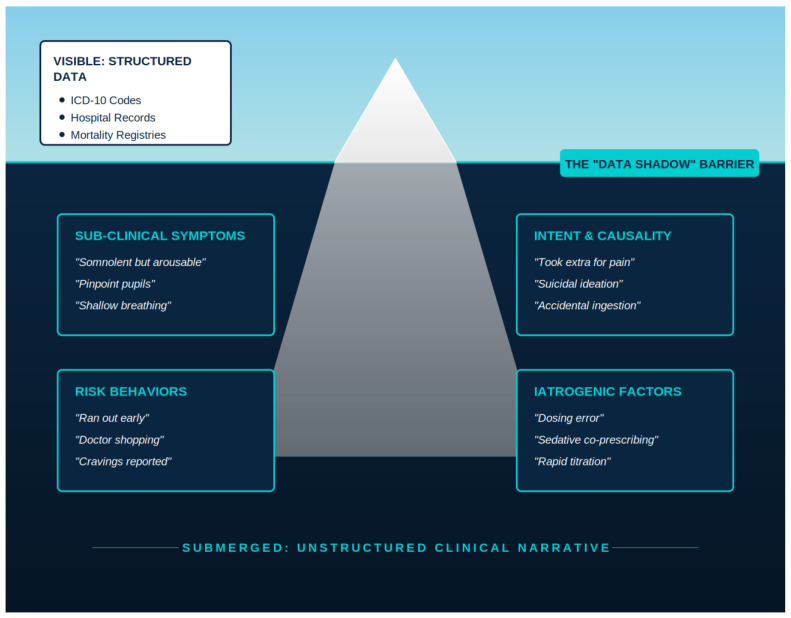 Figure 1
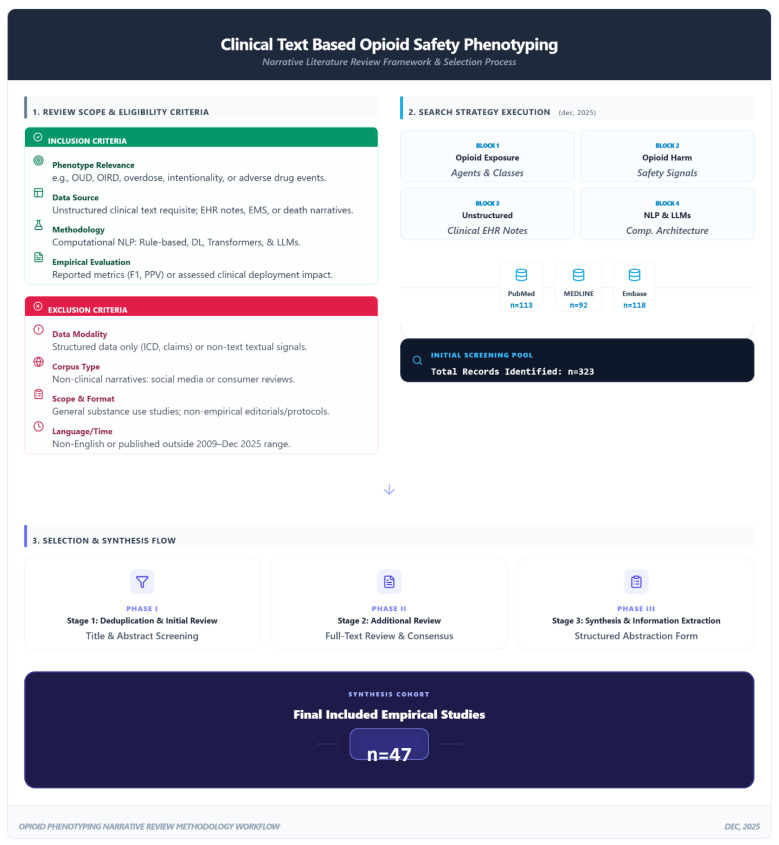 Figure 2
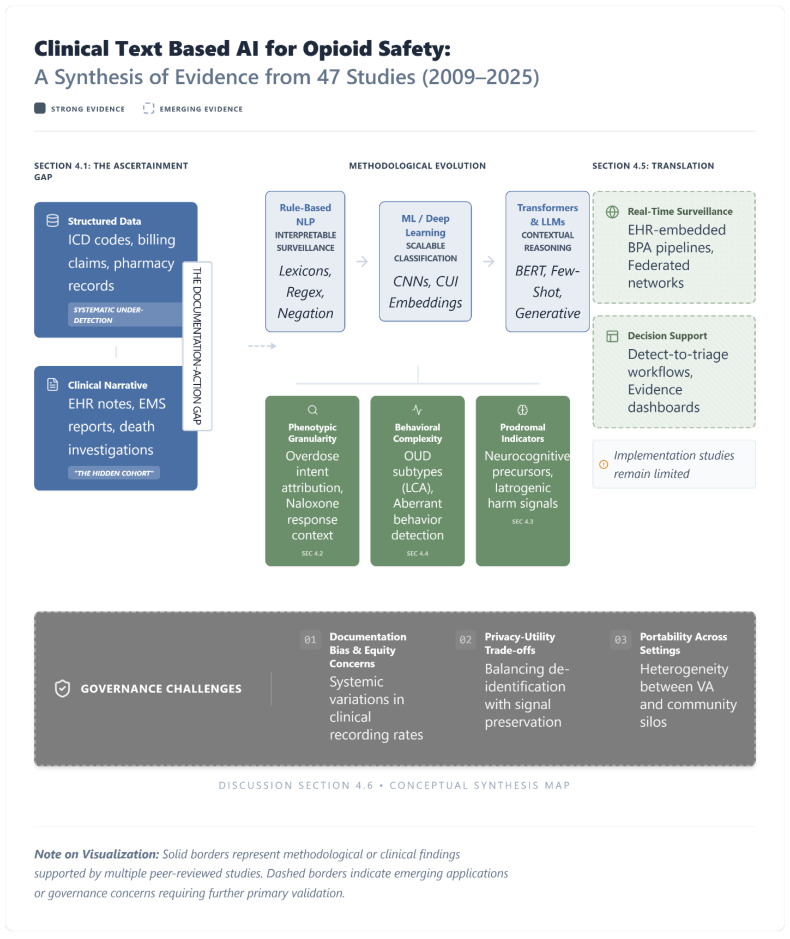 Figure 3
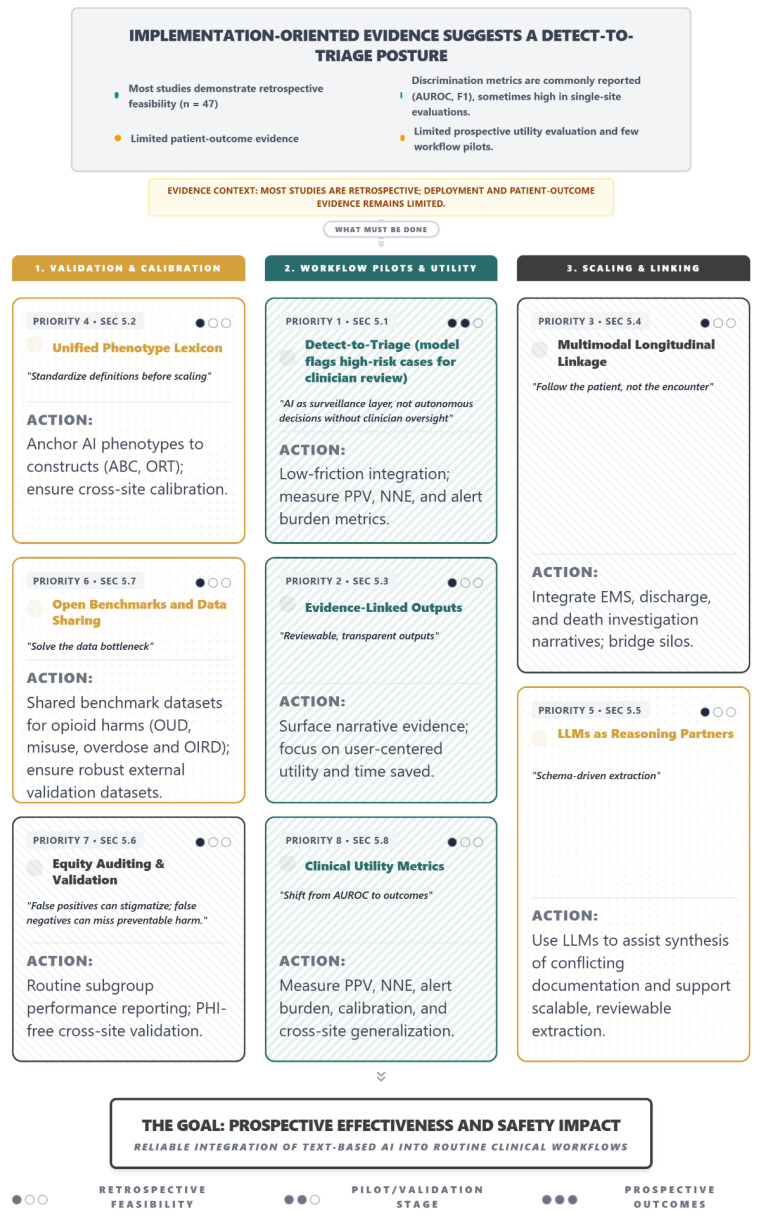 Figure 4
Peer Reviews
No public reviews on file for this paper yet. If you reviewed it on a platform where reviews are public (OpenReview, ICLR, NeurIPS, ICML), you can paste yours below so the community can read it here.
Videos
No videos yet. Explain this paper in a talk, walkthrough, or lecture? Add one.
Taxonomy
TopicsOpioid Use Disorder Treatment · Machine Learning in Healthcare · Artificial Intelligence in Healthcare and Education