A Twenty-Year Retrospective Cohort Study of Mortality and Morbidities in Adult Trauma Patients with Blunt, Sharp, and Firearm Injuries
Sophia Rosella Lee, Aaron Wang Lee, Michael J. Erickson, Steven E. Wolf, Juquan Song

TL;DR
A 20-year study shows that while survival rates for trauma patients have improved, firearm injuries are linked to rising shock-related complications and blood transfusion needs.
Contribution
This study provides a comprehensive 20-year analysis of mortality and morbidities in trauma patients by injury type, revealing demographic and clinical trends.
Findings
Mortality rates for all injury types dropped from 6-12% in 2004 to under 1% in 2023.
Firearm injuries saw a 533% increase in acute post-hemorrhagic anemia and a 450% rise in blood transfusion rates.
Firearm injury patients became significantly younger over 20 years, unlike blunt or sharp injury patients.
Abstract
Background and Objectives: Traumatic injuries are a major public health issue, being the leading cause of death in the U.S. Advancements in medical care, injury prevention, and regional trauma systems have improved survival rates, but there is limited information on outcomes for survivors. Blunt, sharp, and firearm injuries are the primary mechanisms in trauma forensics. This study examines patient outcomes for blunt, sharp, and firearm injuries over 20 years. Materials and Methods: De-identified data were collected from the TriNetX Research network in June 2024. Patients aged 18–90 were categorized by injury type (blunt, sharp, firearm) from 2004 to 2023. Trends were analyzed by stratifying the data into 20 consecutive one-year intervals. Mortality, blood transfusions, traumatic shock, hypovolemic shock, and acute post-hemorrhagic anemia were recorded annually. Statistical analysis was…
Genes, proteins, chemicals, diseases, species, mutations and cell lines named across the full text — each resolved to its canonical identifier and authoritative record.
Click any figure to enlarge with its caption.
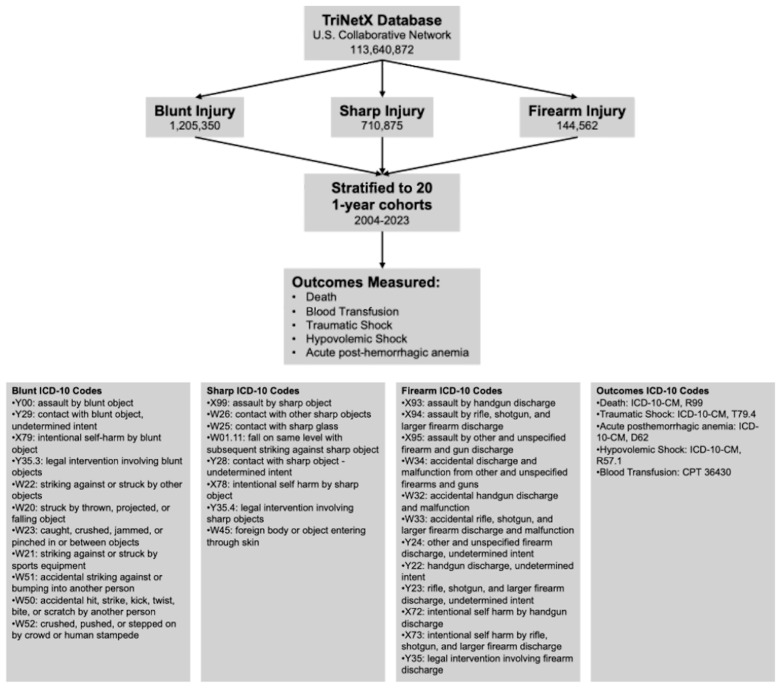 Figure 1
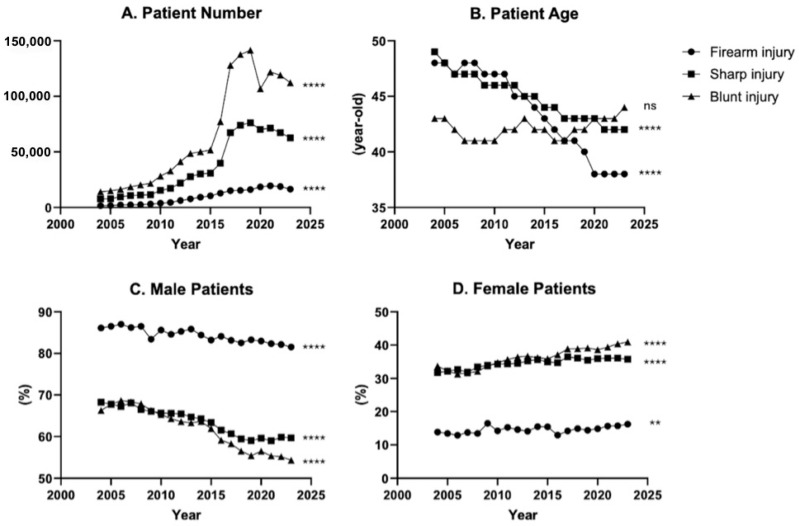 Figure 2
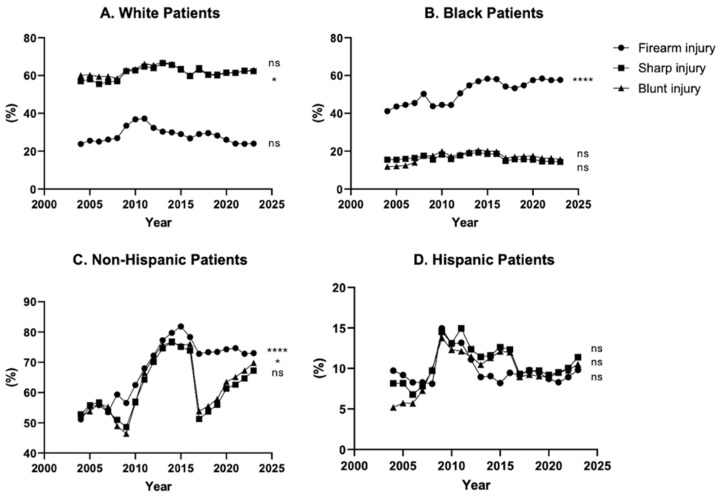 Figure 3
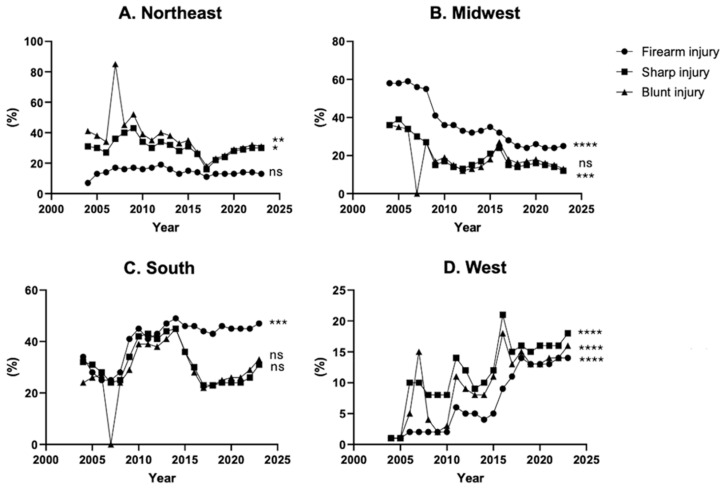 Figure 4
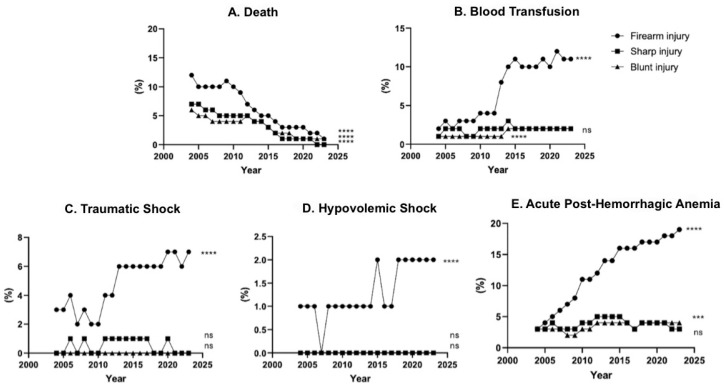 Figure 5
Peer Reviews
No public reviews on file for this paper yet. If you reviewed it on a platform where reviews are public (OpenReview, ICLR, NeurIPS, ICML), you can paste yours below so the community can read it here.
Videos
No videos yet. Explain this paper in a talk, walkthrough, or lecture? Add one.
Taxonomy
TopicsTrauma and Emergency Care Studies · Trauma, Hemostasis, Coagulopathy, Resuscitation · Abdominal Trauma and Injuries