Diagnostic and Severity Assessment of Coronary Artery Disease Using ApoB/ApoA-I Ratio: Insights from a Statin-Treated Eastern European Cohort
Raul-Alexandru Jigoranu, Ovidiu Mitu, Alexandru Florinel Oancea, Radu-Stefan Miftode, Ana Maria Buburuz, Amin Bazyani, Radu-Sebastian Gavril, Theodor-Constantin Stamate, Cristina Andreea Adam, Ionela-Larisa Miftode, Antoniu Octavian Petris, Irina-Iuliana Costache Enache

TL;DR
This study shows that the ApoB/ApoA-I ratio is a strong predictor of coronary artery disease severity in patients on statins, outperforming traditional measures like LDL-C.
Contribution
The study demonstrates that the ApoB/ApoA-I ratio is an independent predictor of significant coronary stenosis and severity in a statin-treated Eastern European cohort.
Findings
The ApoB/ApoA-I ratio was significantly higher in patients with significant CAD compared to those with non-significant CAD.
The ratio correlated strongly with CAD severity as measured by the Gensini score and predicted high-risk features like three-vessel disease.
Lipoprotein(a) provided only marginal additional predictive value in multivariate models.
Abstract
Background and Objectives: Atherosclerosis continues to be a major determinant of the global health burden, with ischemic heart disease representing one of the leading causes of morbidity and mortality worldwide. Although cardiovascular (CV) prevention strategies focus on pro-atherogenic lipoproteins, such as LDL-C, non-HDL-C, and apoB, the balance between atherogenic and anti-atherogenic lipoproteins may better reflect the overall atherogenic burden. Apolipoprotein B (apoB) reflects the total number of circulating atherogenic particles, whereas apolipoprotein A-I (apoA) is the main protein component of HDL, the major anti-atherogenic lipoprotein. Integrating these two parameters into the apoB/apoA ratio results in a composite biomarker that reflects this balance. In this study, we aimed to evaluate whether the apoB/apoA ratio can predict the presence and the severity of coronary artery…
Genes, proteins, chemicals, diseases, species, mutations and cell lines named across the full text — each resolved to its canonical identifier and authoritative record.
Click any figure to enlarge with its caption.
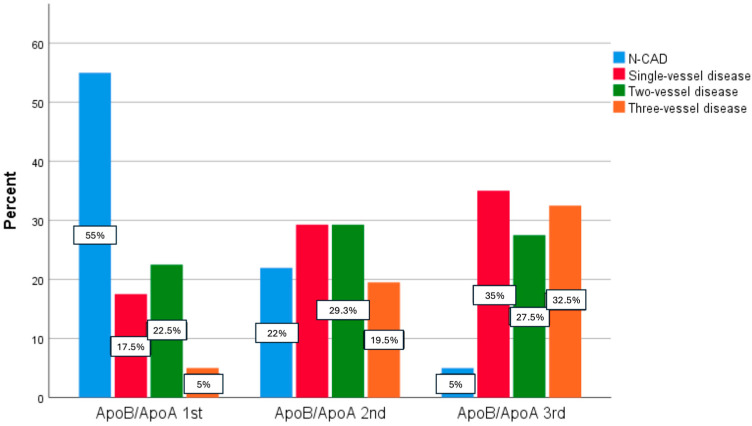 Figure 1
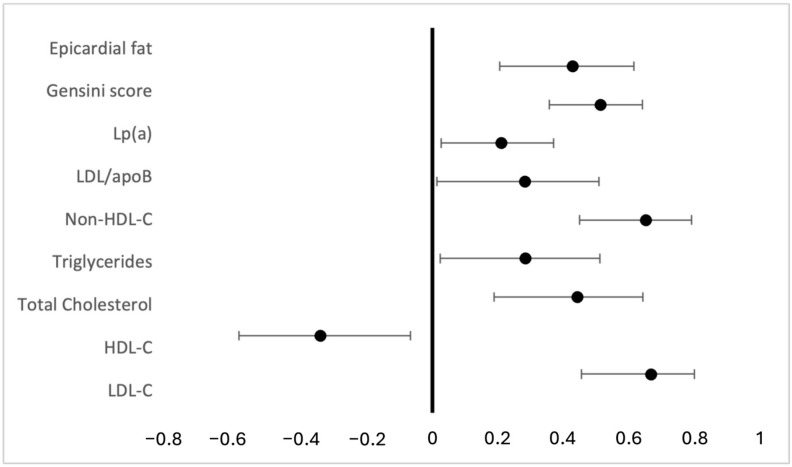 Figure 2
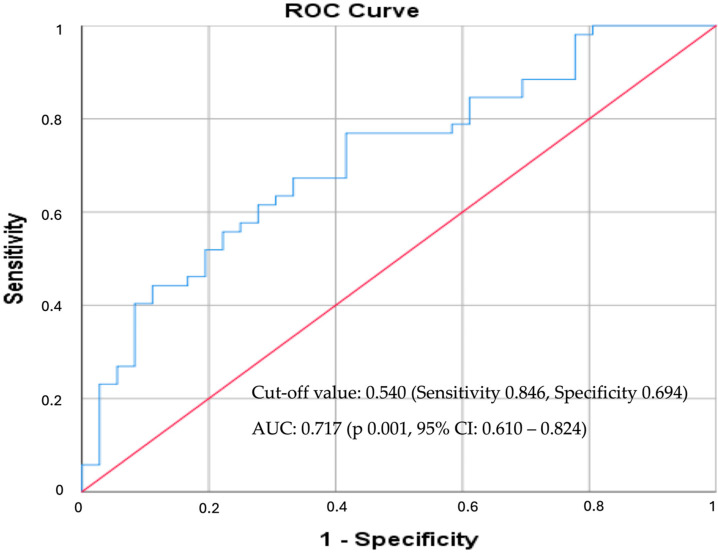 Figure 3
Peer Reviews
No public reviews on file for this paper yet. If you reviewed it on a platform where reviews are public (OpenReview, ICLR, NeurIPS, ICML), you can paste yours below so the community can read it here.
Videos
No videos yet. Explain this paper in a talk, walkthrough, or lecture? Add one.
Taxonomy
TopicsLipoproteins and Cardiovascular Health · Diabetes, Cardiovascular Risks, and Lipoproteins · Atherosclerosis and Cardiovascular Diseases