Robot-Assisted Hysterectomy Provides Higher Sentinel Node Detection and Lower Conversion Rates Compared to Laparoscopy in Endometrial Cancer
Balázs Lintner, Zsófia Havrán, Gabriella Vajda, Lotti Lőczi, Marianna Török, Petra Merkely, Ferenc Bánhidy, Emese Keszthelyi, Richárd Tóth, Márton Keszthelyi

TL;DR
Robot-assisted hysterectomy improves sentinel node detection and reduces conversion to open surgery compared to traditional laparoscopy in early-stage endometrial cancer.
Contribution
Demonstrates real-world clinical advantages of robot-assisted hysterectomy over conventional laparoscopy in endometrial cancer surgery.
Findings
Robot-assisted hysterectomy had a 98% sentinel lymph node detection rate versus 90.2% for laparoscopy.
Conversion to laparotomy occurred in 0% of robot-assisted cases versus 11.5% of laparoscopic cases.
Operative time and key pathological outcomes were comparable between the two techniques.
Abstract
Background: Minimally invasive hysterectomy with sentinel lymph node (SLN) mapping is standard for early-stage endometrial cancer, but comparative real-world data on robot-assisted (RAH) versus conventional laparoscopy (TLH) remain limited. This study aimed to compare the two techniques in a real-world clinical setting. Methods: We retrospectively reviewed medical records of 140 patients with FIGO stage I endometrial cancer who underwent RAH or TLH at Semmelweis University between January 2022 and December 2024. We analyzed patient demographics, sentinel lymph node (SLN) detection rates, conversion rates, operative time, pathological characteristics. Results: Baseline demographic and oncologic characteristics were comparable. SLN detection was significantly higher in the RAH group compared to TLH (98% vs. 90.2%, p = 0.04). Conversion to laparotomy occurred in 0% of RAH cases versus…
Genes, proteins, chemicals, diseases, species, mutations and cell lines named across the full text — each resolved to its canonical identifier and authoritative record.
Click any figure to enlarge with its caption.
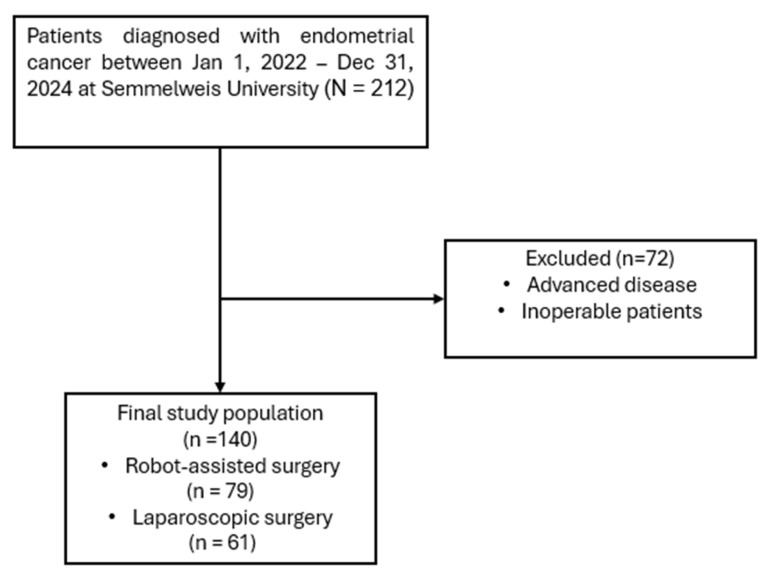 Figure 1
 Figure 2
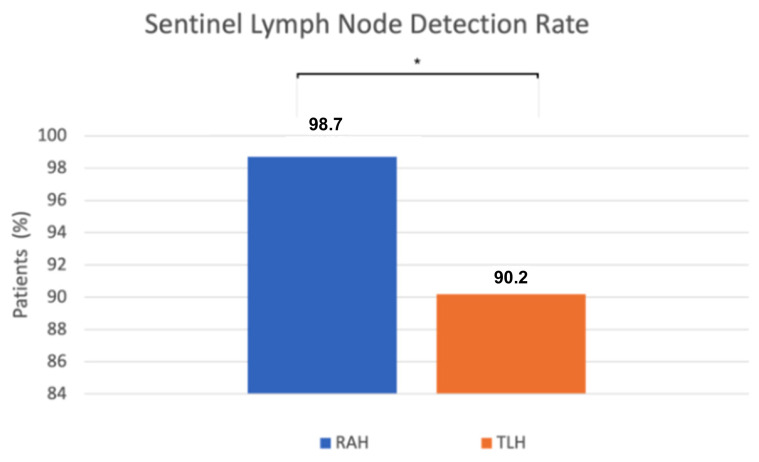 Figure 3
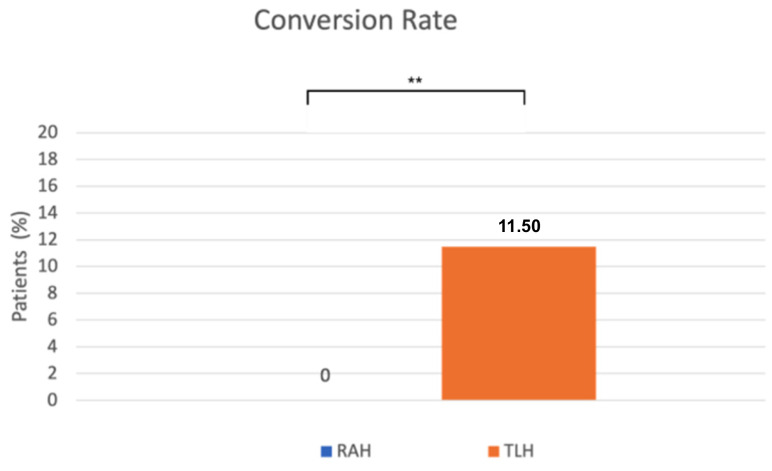 Figure 4
Peer Reviews
No public reviews on file for this paper yet. If you reviewed it on a platform where reviews are public (OpenReview, ICLR, NeurIPS, ICML), you can paste yours below so the community can read it here.
Videos
No videos yet. Explain this paper in a talk, walkthrough, or lecture? Add one.
Taxonomy
TopicsEndometrial and Cervical Cancer Treatments · Minimally Invasive Surgical Techniques · Gynecological conditions and treatments