Neurological Complications After Thoracic Endovascular Repair (TEVAR): A Narrative Review of the Incidence, Mechanisms and Strategies for Prevention and Management
Francesca Miceli, Marta Ascione, Rocco Cangiano, Antonio Marzano, Alessia Di Girolamo, Giovanni Gagliardo, Luca di Marzo, Wassim Mansour

TL;DR
This review discusses neurological complications after TEVAR, focusing on their incidence, causes, and strategies to prevent and manage them.
Contribution
The paper provides a contemporary narrative review of neurological complications after TEVAR, emphasizing individualized prevention and management strategies.
Findings
Perioperative stroke occurs in ~2–6% of TEVAR cases, with higher rates when the left subclavian artery is covered without revascularization.
Spinal cord ischemia incidence ranges from ~2–9%, influenced by aortic extent and urgency.
Postoperative delirium occurs in ~13% of TEVAR-treated type B dissections and correlates with longer hospitalization.
Abstract
Background: Thoracic endovascular aortic repair (TEVAR) has evolved the management of descending thoracic aortic disease, but neurological complications—particularly spinal cord ischemia (SCI), stroke, and postoperative delirium—remain among the most feared adverse events, adversely affecting survival, quality of life, and functional independence. Objectives: The aim of this study was to provide a contemporary narrative synthesis (2000–2025) of the incidence, mechanisms, risk factors, prevention, and management of neurological complications after TEVAR, emphasizing how current evidence supports individualized and risk-adapted strategies for prevention and management. Methods: A narrative, non-systematic search (PubMed/MEDLINE, Scopus, Cochrane Library; 2000–2025) was conducted using terms related to TEVAR, SCI, cerebrovascular events, delirium, and cognitive dysfunction. Priority was…
Genes, proteins, chemicals, diseases, species, mutations and cell lines named across the full text — each resolved to its canonical identifier and authoritative record.
Click any figure to enlarge with its caption.
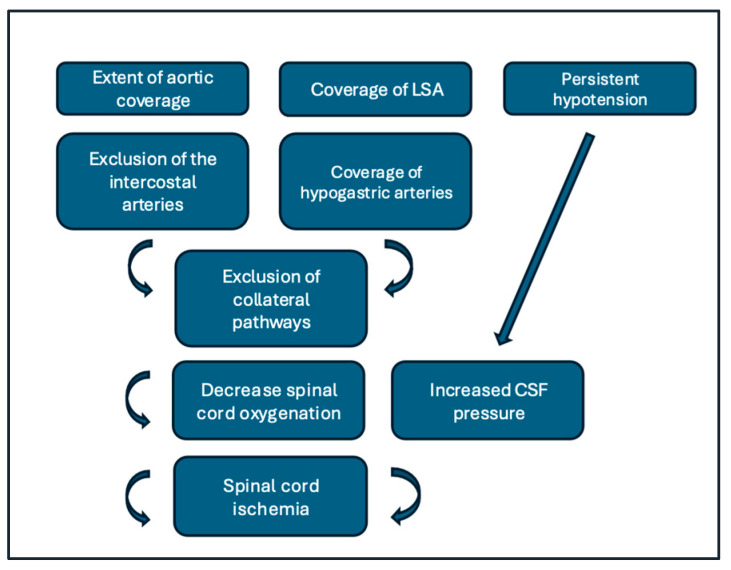 Figure 1
Peer Reviews
No public reviews on file for this paper yet. If you reviewed it on a platform where reviews are public (OpenReview, ICLR, NeurIPS, ICML), you can paste yours below so the community can read it here.
Videos
No videos yet. Explain this paper in a talk, walkthrough, or lecture? Add one.
Taxonomy
TopicsAortic Disease and Treatment Approaches · Intensive Care Unit Cognitive Disorders · Cardiac and Coronary Surgery Techniques