Comparative Finite Element Evaluation of Polymeric and Metallic Bioresorbable Sinus Stents Under Quasi-Static Radial Compression
Wenyu Fu, Aiping Yang, Aike Qiao

TL;DR
This study compares how different biodegradable materials affect the mechanical performance of sinus stents under compression, focusing on their ability to maintain shape and provide support after implantation.
Contribution
The study introduces a finite element evaluation method to compare the mechanical behavior of polymeric and metallic bioresorbable stents under radial compression.
Findings
Mg alloy stents show the highest radial pressure and functional recovery range, ensuring better scaffolding stability.
PCL stents achieve full elastic recovery but provide negligible radial pressure, limiting their clinical effectiveness.
PLGA stents exhibit poor recovery and insufficient support, making them less suitable for clinical use.
Abstract
To address the issues of displacement and insufficient positional stability observed in the clinical use of the PROPEL Mini stent, this study investigates the influence of different biodegradable materials on the mechanical properties of the stent under the constraint of a fixed monofilament braided closed-loop geometry. Finite element analyses are conducted using Abaqus/Explicit to quantitatively evaluate the nonlinear mapping between nominal diameter, axial length, and radial pressure throughout a loading–unloading cycle. The results reveal that while axial behavior is consistent during compression, material-specific plasticity causes irreversible geometric sets in Mg alloy and PLGA models, whereas the PCL stent achieves total elastic recovery to its initial dimensions. During unloading, the Mg alloy stent recovers to a nominal diameter of 28 mm with a reduced axial length of…
Genes, proteins, chemicals, diseases, species, mutations and cell lines named across the full text — each resolved to its canonical identifier and authoritative record.
Click any figure to enlarge with its caption.
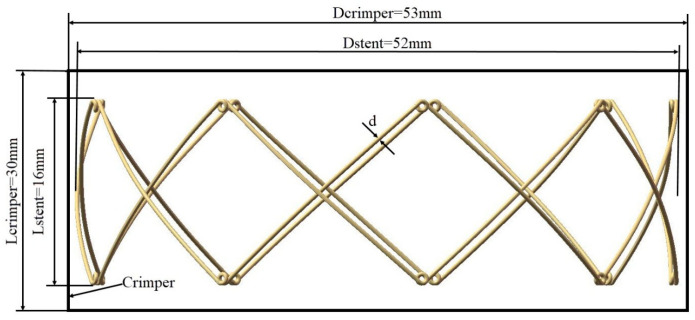 Figure 1
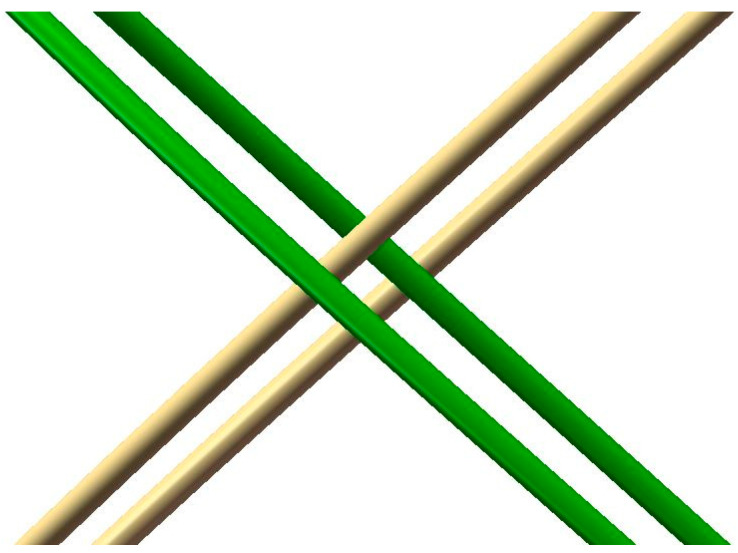 Figure 2
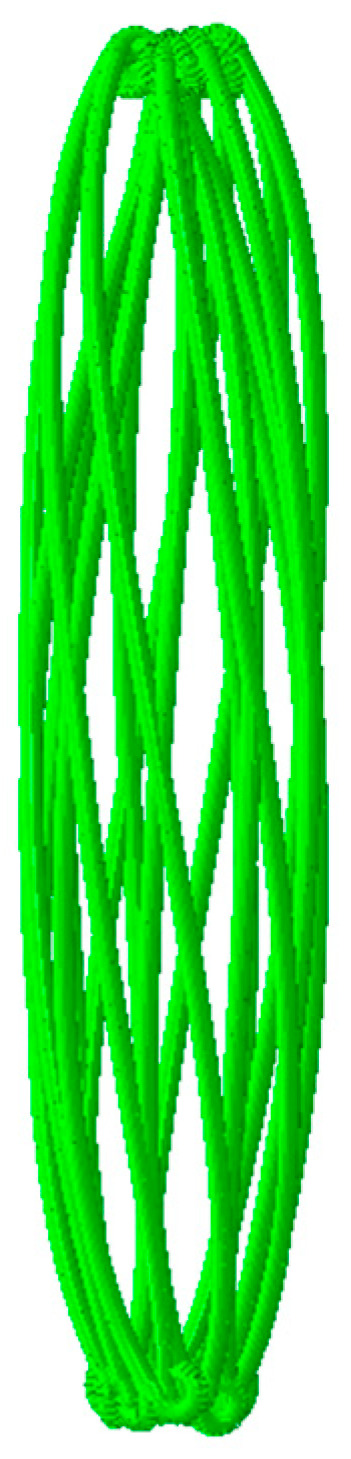 Figure 3
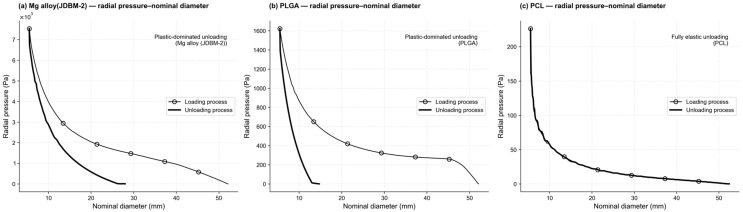 Figure 4
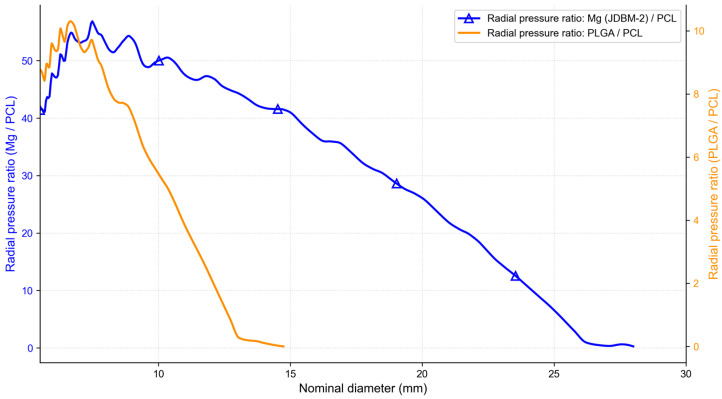 Figure 5
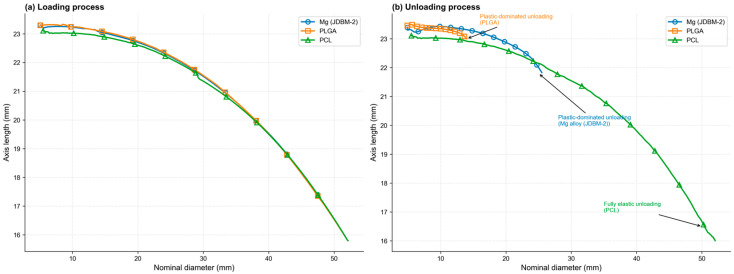 Figure 6
 Figure 7
Peer Reviews
No public reviews on file for this paper yet. If you reviewed it on a platform where reviews are public (OpenReview, ICLR, NeurIPS, ICML), you can paste yours below so the community can read it here.
Videos
No videos yet. Explain this paper in a talk, walkthrough, or lecture? Add one.
Taxonomy
TopicsMagnesium Alloys: Properties and Applications · Orthopaedic implants and arthroplasty · Bone Tissue Engineering Materials