High-Throughput Sequencing Supports Strong Geographical Patterns in the Cladia aggregata Complex (Ascomycota, Lecanorales) and Identifies the Asian Clade as an Independent Species
John de Abreu, Alejandrina Barcenas-Peña, Vasun Poengsungnoen, Xinyu Wang, Jen-Pan Huang, Helge Thorsten Lumbsch, Felix Grewe

TL;DR
This study uses DNA sequencing to identify a new lichen species in Asia and reveals strong geographical patterns in the Cladia aggregata complex.
Contribution
The discovery of a new lichen species, Cladia asiatica, based on genetic data from Asian populations.
Findings
Asian Cladia samples form a distinct, monophyletic clade, indicating a new species.
American Cladia samples split into two clades, with Caribbean samples representing C. aggregata sensu stricto.
Next-generation sequencing reveals hidden diversity and resolves phylogeny in lichen-forming fungi.
Abstract
The Cladia aggregata group of lichen-forming fungi comprises multiple species that are difficult to differentiate based on phenotypic characters. It has a wide distribution across several continents, but is most diverse in Australasia. We aimed to delimit the species complex further, investigate the relatedness of the lineages, and examine their distributional ranges and phenotypic traits. We used Restriction Site Associated DNA Sequencing (RAD-seq) to compare thousands of loci across 91 individuals from the Americas, Asia, and Australasia. All Asian samples formed a distinct, monophyletic clade in all phylogenetic trees, while the American samples divided into two clades, one comprising South American samples and another comprising Caribbean samples, with the latter representing C. aggregata sensu stricto, as the type specimen was collected in Jamaica. Further population-genomic…
Genes, proteins, chemicals, diseases, species, mutations and cell lines named across the full text — each resolved to its canonical identifier and authoritative record.
Click any figure to enlarge with its caption.
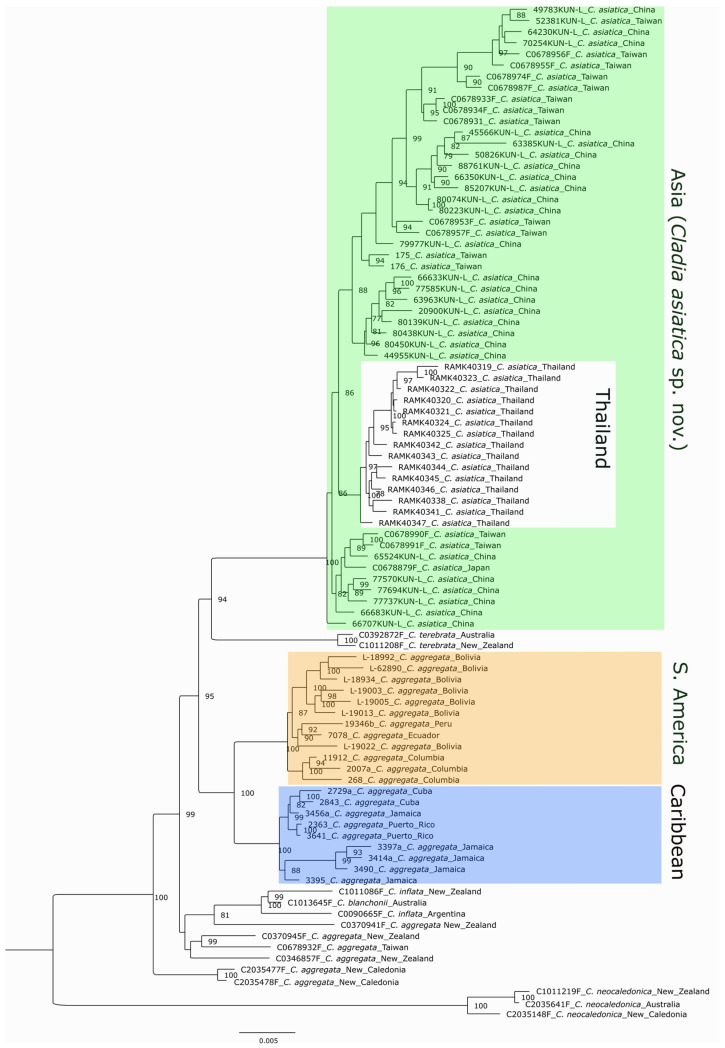 Figure 1
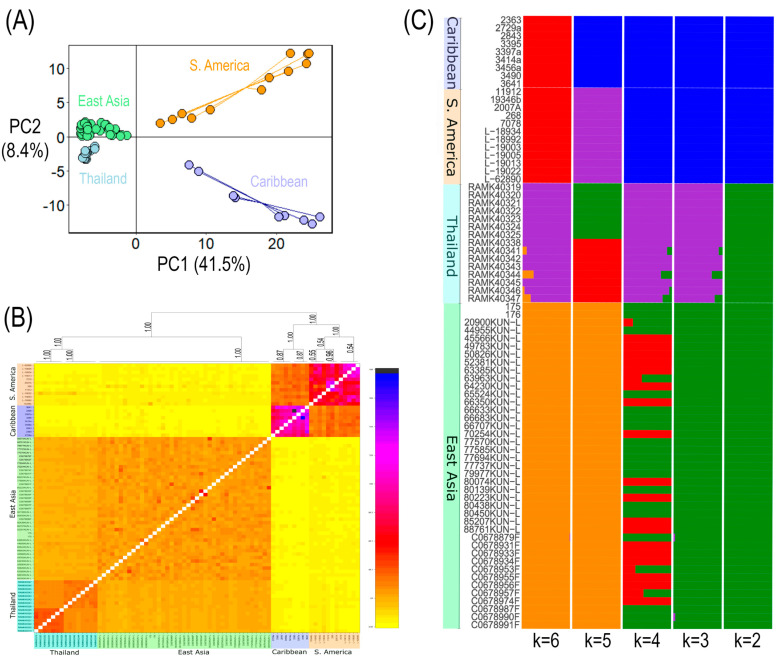 Figure 2
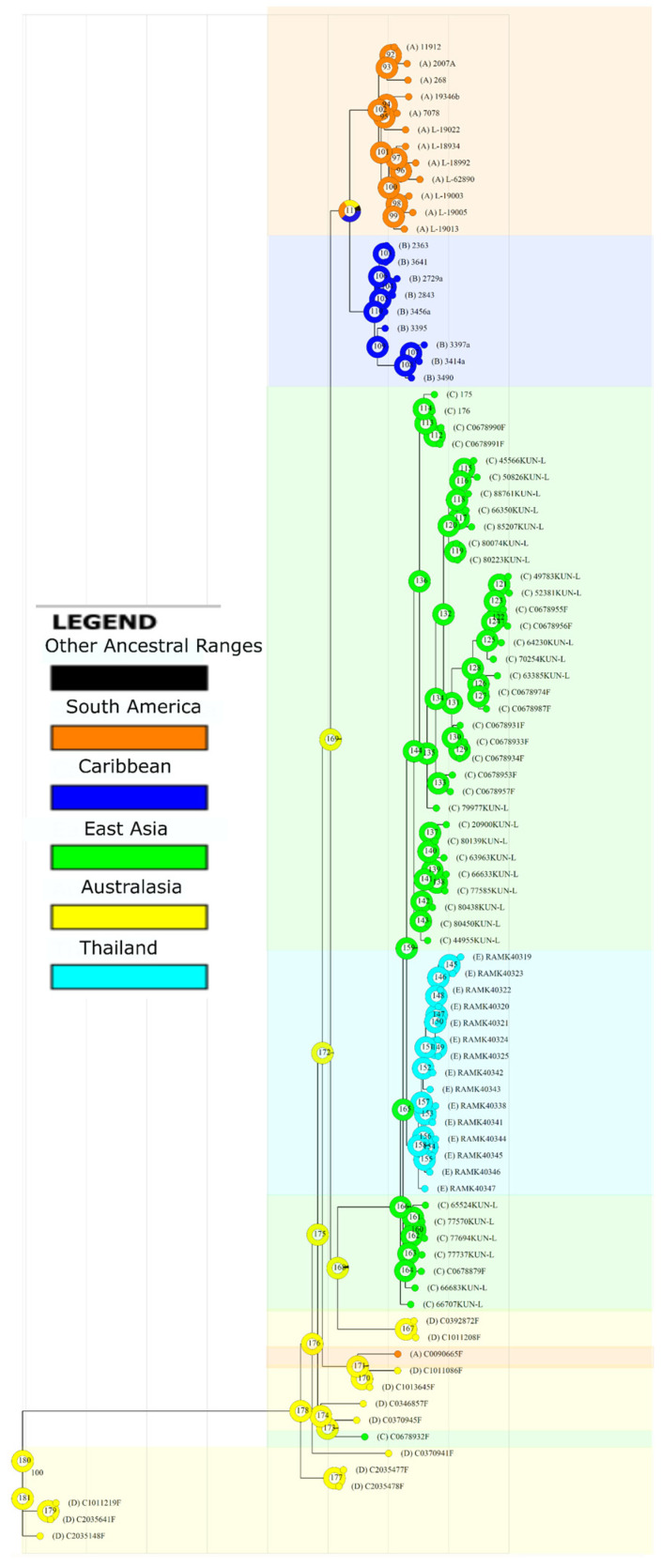 Figure 3
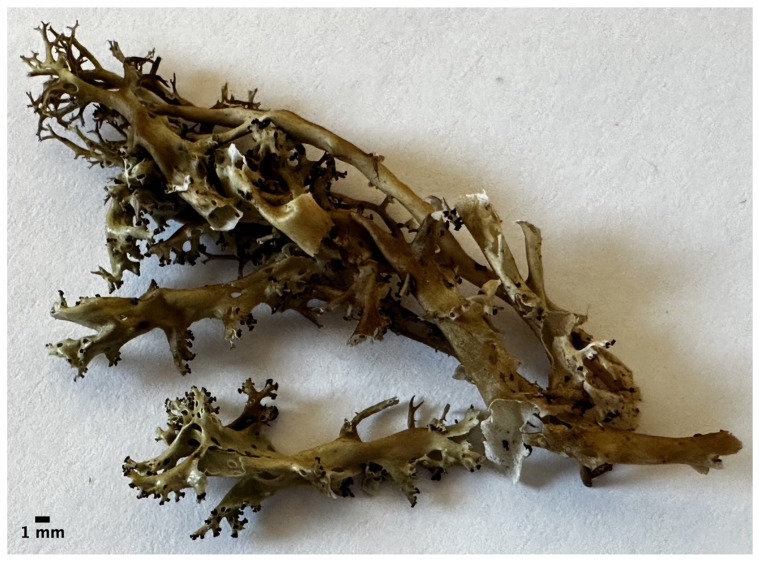 Figure 4
Peer Reviews
No public reviews on file for this paper yet. If you reviewed it on a platform where reviews are public (OpenReview, ICLR, NeurIPS, ICML), you can paste yours below so the community can read it here.
Videos
No videos yet. Explain this paper in a talk, walkthrough, or lecture? Add one.
Taxonomy
TopicsLichen and fungal ecology · Mycorrhizal Fungi and Plant Interactions · Plant Pathogens and Fungal Diseases