Toward a Phenotype-Driven Continuum Model in Trigger Finger: Proposing a Sonographic Framework for Personalized Management
Sang-Hyun Kim, Jihyo Hwang, Yonghyun Yoon, Jaeik Choi, Gyungseog Ko, Hyeongjik Kim, Dongyeun Sung, Rowook Park, Jaehyun Shim, Jonghyeok Lee, Seungbeom Kim, Youngmo Kim, King Hei Stanley Lam

TL;DR
This paper introduces a new ultrasound-based framework for managing trigger finger by classifying patients into distinct phenotypes to guide personalized treatment.
Contribution
The novelty lies in proposing a phenotype-driven, sonographic model for trigger finger management that integrates anatomy, biomechanics, and ultrasound-guided interventions.
Findings
A continuum model is proposed emphasizing origin-to-insertion assessment of the flexor apparatus.
Sonographic phenotyping categorizes trigger finger into pulley-dominant, tendon-dominant, and mixed patterns.
A stepwise treatment algorithm is introduced, matching interventions to specific phenotypes.
Abstract
Background: The traditional A1-centric paradigm for trigger finger (TF) management does not fully capture heterogeneous pathology spanning isolated pulley stenosis, tendon degeneration, and impaired tendon–sheath gliding. Methods: A comprehensive literature synthesis (2010–2025) integrating anatomy, biomechanics, and ultrasound-guided interventions was performed to develop a testable, phenotype-driven framework. Results: A continuum model is proposed emphasizing (i) origin-to-insertion assessment of the flexor apparatus, (ii) pragmatic ultrasound phenotyping into pulley-dominant, tendon-dominant, and mixed patterns, and (iii) a stepwise, phenotype-matched management pathway incorporating conservative care, ultrasound-guided injection, selected adjuncts (e.g., hydrodissection, prolotherapy, ESWT) for tendon-dominant or mixed presentations, and percutaneous or open release when an A1…
Genes, proteins, chemicals, diseases, species, mutations and cell lines named across the full text — each resolved to its canonical identifier and authoritative record.
Click any figure to enlarge with its caption.
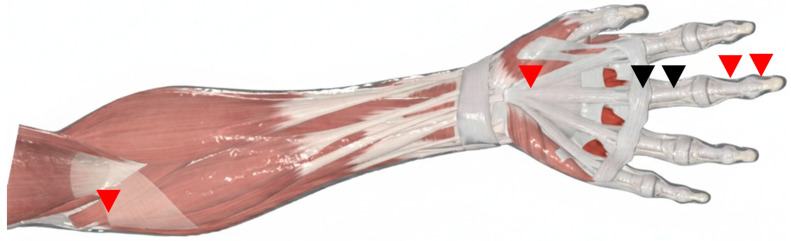 Figure 1
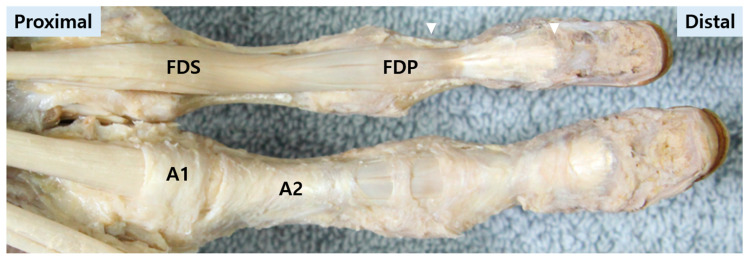 Figure 2
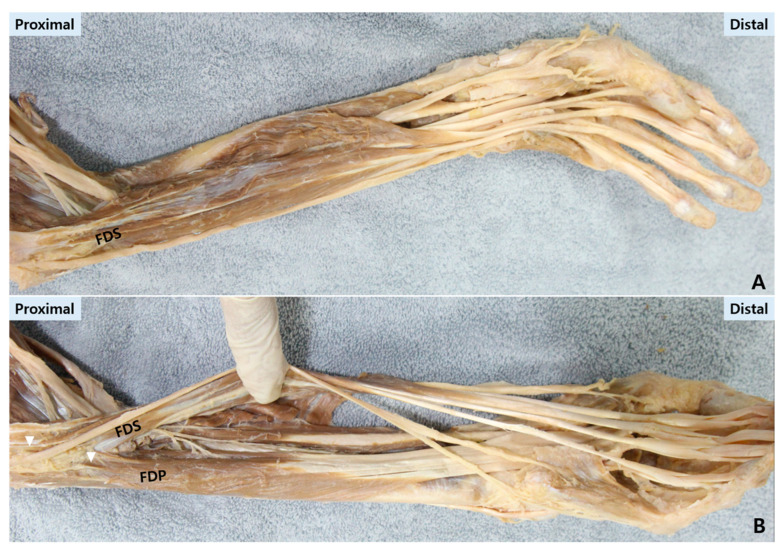 Figure 3
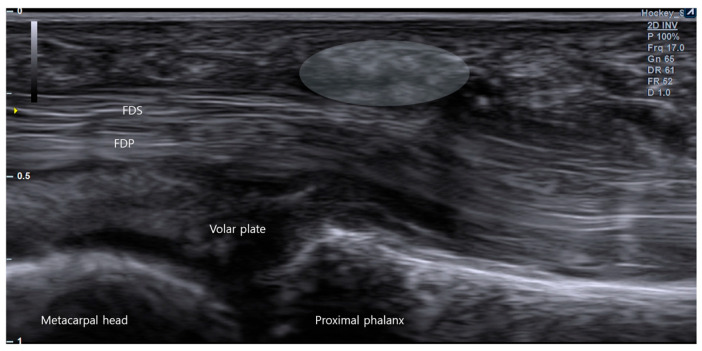 Figure 4
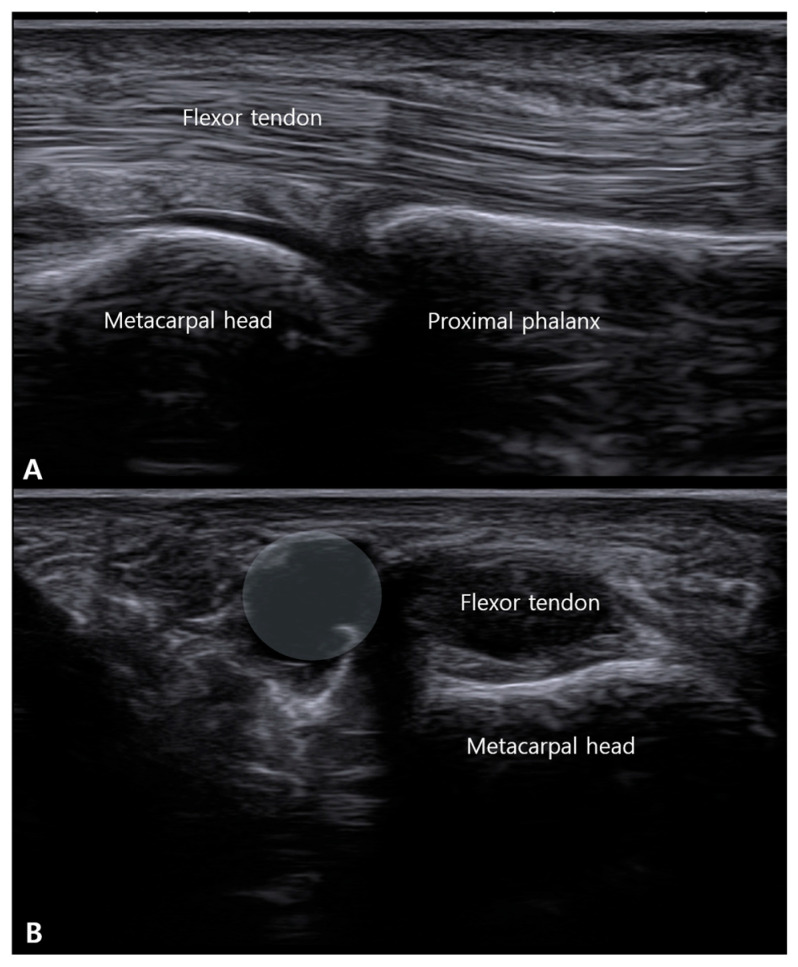 Figure 5
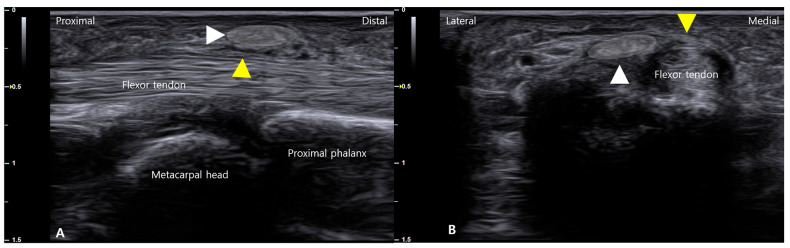 Figure 6
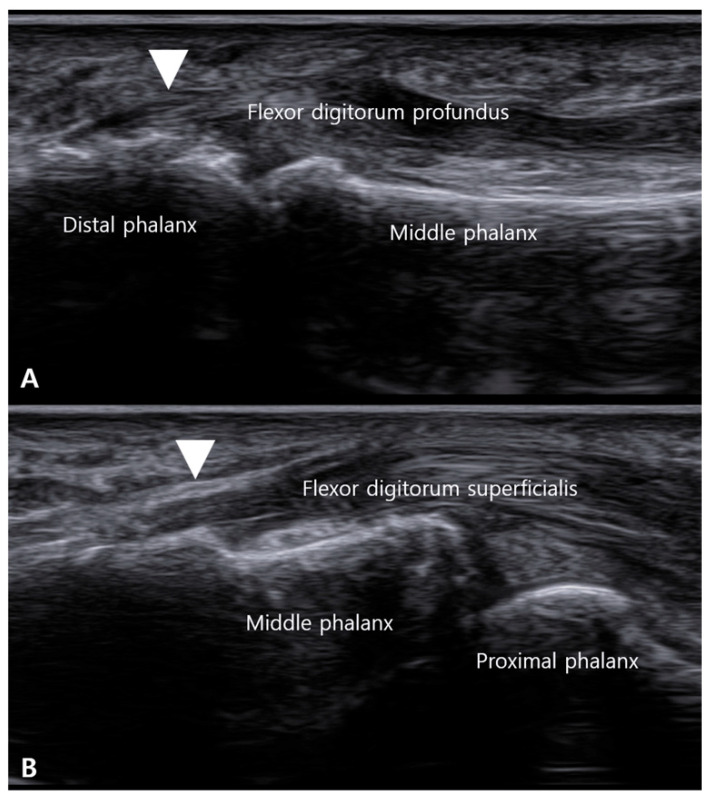 Figure 7
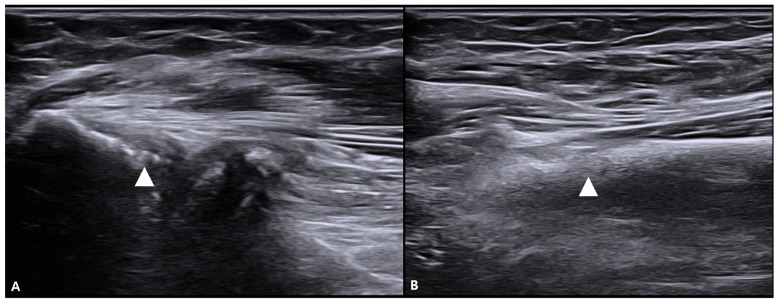 Figure 8
Peer Reviews
No public reviews on file for this paper yet. If you reviewed it on a platform where reviews are public (OpenReview, ICLR, NeurIPS, ICML), you can paste yours below so the community can read it here.
Videos
No videos yet. Explain this paper in a talk, walkthrough, or lecture? Add one.
Taxonomy
TopicsOrthopedic Surgery and Rehabilitation · Shoulder Injury and Treatment · Tendon Structure and Treatment