Drug-Coated Balloons in Coronary Bifurcation Disease: A State-of-the-Art Review
Saad M. Ezad, Natasha Khullar, Peter O’Kane, Jonathan Hinton

TL;DR
Drug-coated balloons offer a new way to treat complex heart artery issues without permanent implants.
Contribution
This review highlights the emerging role of drug-coated balloons in managing coronary bifurcation disease.
Findings
Drug-coated balloons deliver medication directly to vessel walls, promoting healing.
They simplify procedures and avoid permanent metallic implants in bifurcation treatments.
Abstract
Coronary bifurcation disease remains one of the more challenging lesion subsets to treat with percutaneous coronary intervention due to bifurcation geometry and increased risk of target lesion failure. Whilst a provisional approach is preferred in most bifurcations, two-stent techniques may be required where there is a high risk of side branch compromise or a bailout; however, this further increases procedure complexity. Drug-coated balloons (DCBs) are emerging as a promising alternative that allow vessel healing without leaving behind a permanent metallic implant by delivering antiproliferative medication directly to the vessel wall and simplifying procedures. This state-of-the-art review summarises the current evidence and the evolving role of DCBs in the management of coronary bifurcation lesions with a focus on patient- and lesion-specific factors that might influence the treatment…
Genes, proteins, chemicals, diseases, species, mutations and cell lines named across the full text — each resolved to its canonical identifier and authoritative record.
Click any figure to enlarge with its caption.
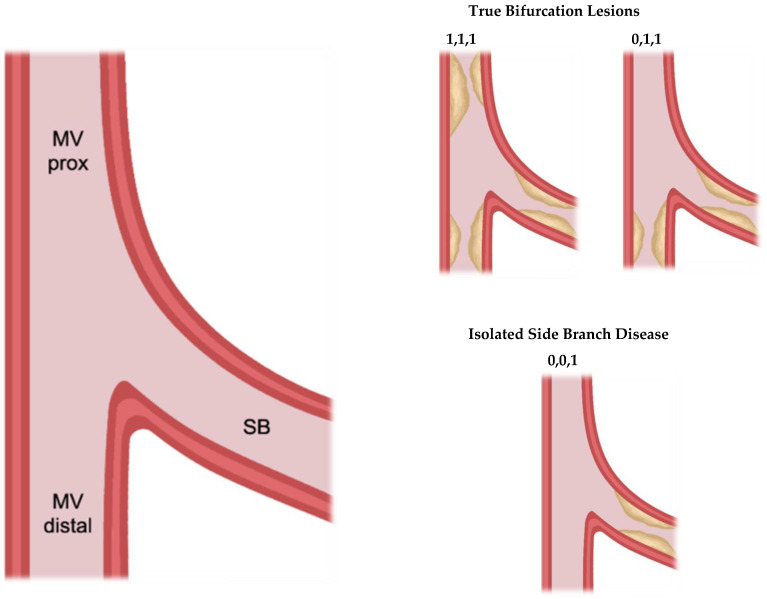 Figure 1
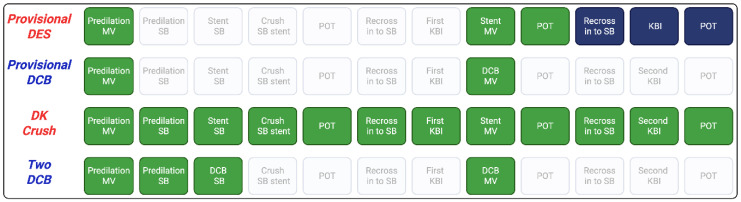 Figure 2
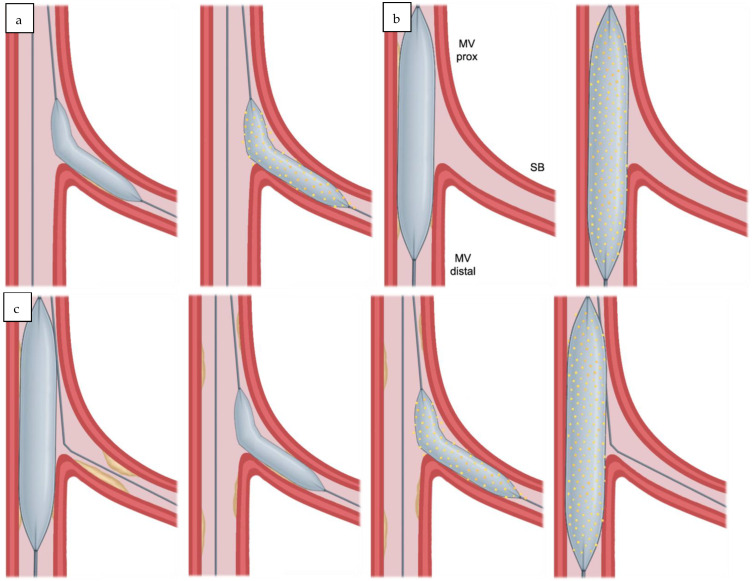 Figure 3
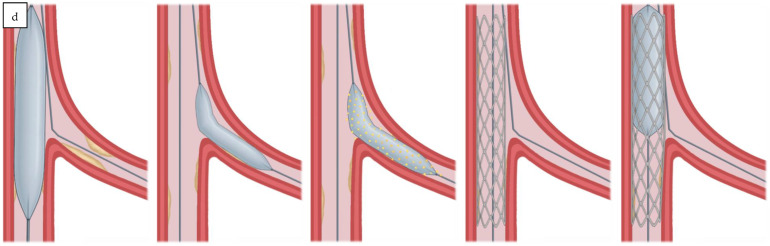 Figure 4
Peer Reviews
No public reviews on file for this paper yet. If you reviewed it on a platform where reviews are public (OpenReview, ICLR, NeurIPS, ICML), you can paste yours below so the community can read it here.
Videos
No videos yet. Explain this paper in a talk, walkthrough, or lecture? Add one.
Taxonomy
TopicsCoronary Interventions and Diagnostics · Cardiac Imaging and Diagnostics · Cerebrovascular and Carotid Artery Diseases