Impact of Jaw-Sucking Movements on Postural Muscles Tension in Young Adults
Agnieszka Ptak, Małgorzata Stefańska

TL;DR
This study found that jaw-sucking movements can increase tension in certain postural muscles depending on body position in young adults.
Contribution
The study introduces new insights into how jaw movements influence postural muscle tension across different body positions.
Findings
Jaw movements in the prone position significantly increased gastrocnemius muscle tension.
In the all-fours position, both gastrocnemius and gluteus maximus muscles showed increased tension.
Standing position showed higher tension in trapezius and gluteus maximus muscles during jaw activity.
Abstract
Background: The objective of this study was to assess the tension of selected postural muscles during the jaw-sucking movement in four body positions (standing position, all-fours position, lying on front, lying on the side). Material and Methods: The research involved 30 young adults with an average age of 22.6 ± 0.72 years. Suprahyoid, trapezius, gluteus maximus, and gastrocnemius muscles were assessed in all study participants in the standing, kneeling, and belly lying positions (prone position). Measurements were taken twice for each position: once without jaw activity and once with jaw movements simulating sucking. Muscle function was determined by measuring muscle tension using surface electromyography (sEMG). Results: Engaging jaw movements in the prone position resulted in significantly increased tension in the gastrocnemius muscle. In the all-fours position, there was a notable…
Genes, proteins, chemicals, diseases, species, mutations and cell lines named across the full text — each resolved to its canonical identifier and authoritative record.
Click any figure to enlarge with its caption.
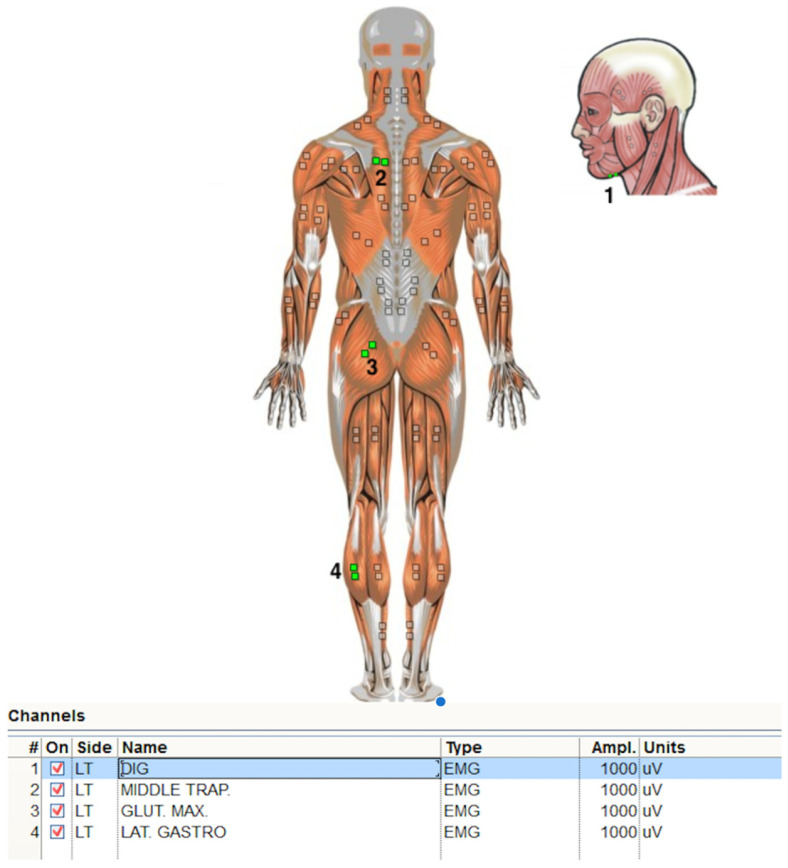 Figure 1
Peer Reviews
No public reviews on file for this paper yet. If you reviewed it on a platform where reviews are public (OpenReview, ICLR, NeurIPS, ICML), you can paste yours below so the community can read it here.
Videos
No videos yet. Explain this paper in a talk, walkthrough, or lecture? Add one.
Taxonomy
TopicsTemporomandibular Joint Disorders · Occupational health in dentistry · Orthodontics and Dentofacial Orthopedics