Effects of Balanced Dietary Patterns and/or Integrated Exercise on Serum 1,5-Anhydroglucitol and CVD Risk Factors in Individuals with Prediabetes
Ting Zhu, Da Pan, Lanlan Gui, Wei Yan, Ligang Yang, Wang Liao, Shaokang Wang, Guiju Sun

TL;DR
This study identifies 1,5-anhydroglucitol as a key biomarker for diabetes progression and shows that lifestyle changes can improve blood sugar levels in prediabetic individuals.
Contribution
The study introduces 1,5-anhydroglucitol as a sensitive biomarker for dysglycemia that responds to lifestyle interventions.
Findings
1,5-anhydroglucitol (1,5-AG) effectively differentiates prediabetic from diabetic individuals with high accuracy.
A combined diet and exercise intervention improved blood glucose markers and increased serum 1,5-AG levels in prediabetic individuals.
The intervention showed a trend toward reduced diabetes incidence but had limited impact on cardiovascular risk factors like BMI and blood pressure.
Abstract
This study aimed to identify metabolomic biomarkers for diabetes progression and validate their response to lifestyle intervention. A two-phase design was employed: first, untargeted metabolomics distinguished normoglycemic, prediabetic (PDM), and diabetic (DM) individuals, identifying 1,5-anhydroglucitol (1,5-AG) as the most significant biomarker for differentiating PDM from DM (apparent AUC = 0.97, 95% CI: 0.95–1.00; corrected AUC = 0.94, 95% CI: 0.83–1.00; q < 0.001). Second, in a 3-month randomized controlled trial involving 300 adults with PDM, the combined diet and exercise intervention significantly improved fasting blood glucose and glycated hemoglobin levels, while concurrently elevating serum 1,5-AG levels compared with the control group, though it did not yield significant improvements in other cardiovascular disease-related risk factors including body mass index, waist…
Genes, proteins, chemicals, diseases, species, mutations and cell lines named across the full text — each resolved to its canonical identifier and authoritative record.
Click any figure to enlarge with its caption.
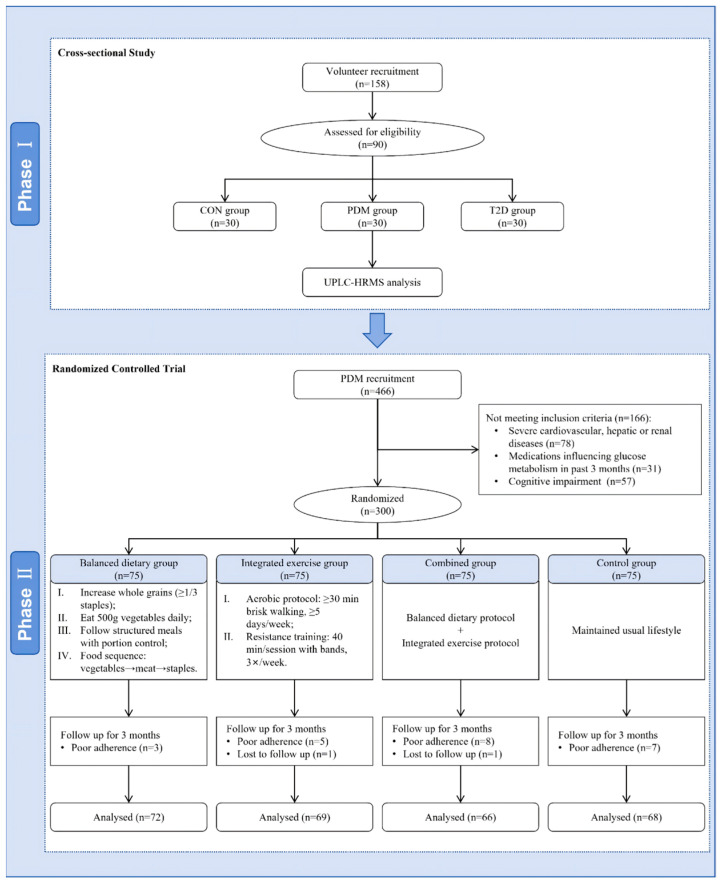 Figure 1
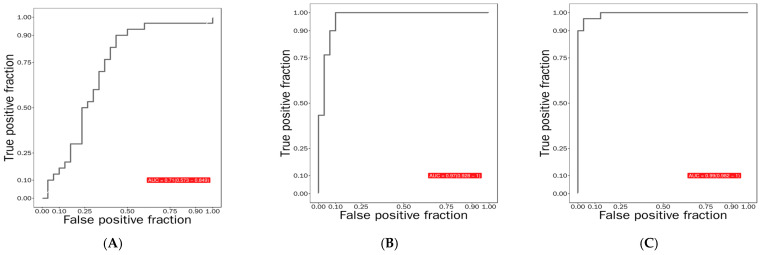 Figure 2
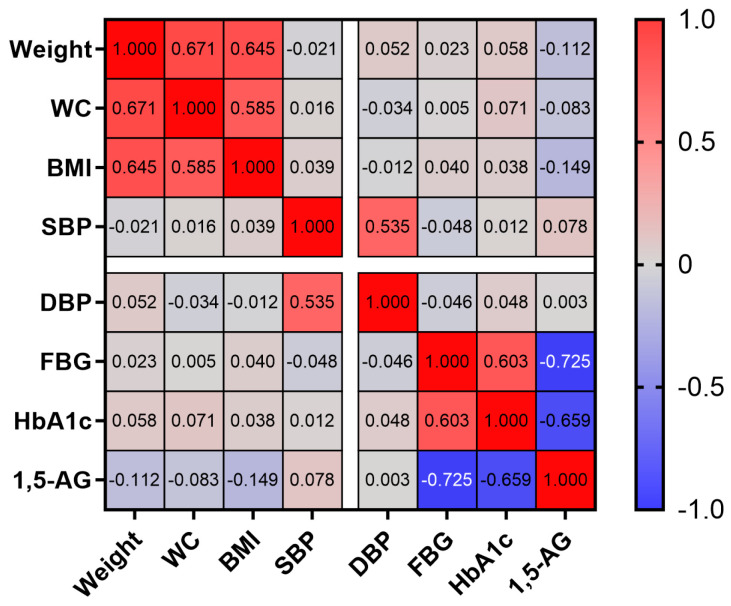 Figure 3
Peer Reviews
No public reviews on file for this paper yet. If you reviewed it on a platform where reviews are public (OpenReview, ICLR, NeurIPS, ICML), you can paste yours below so the community can read it here.
Videos
No videos yet. Explain this paper in a talk, walkthrough, or lecture? Add one.
Taxonomy
TopicsMetabolomics and Mass Spectrometry Studies · Diet, Metabolism, and Disease · Diet and metabolism studies