Hemoglobin-to-Red Cell Distribution Width Ratio and Vitamin D Status as Early Predictors of Cardiovascular Risk in Primary Sjögren’s Syndrome
Francesca Coppi, Francesco Sbarra, Aurora Vicenzi, Cecilia Campani, Martina Moretti, Dilia Giuggioli, Caterina Vacchi, Amelia Spinella, Daniela Aschieri, Anna Vittoria Mattioli, Francesco Fedele, Alessio Baccarani, Marcello Pinti, Alessandra Dei Cas, Federica Fantuzzi

TL;DR
This study explores how blood markers like hemoglobin-to-RDW ratio and vitamin D levels can predict heart risks in patients with Sjögren’s syndrome.
Contribution
The study introduces HRR as a novel composite biomarker for early cardiovascular risk in primary Sjögren’s syndrome.
Findings
Lower HRR is linked to higher pulmonary artery pressures and poorer right heart function in pSS patients.
The association between HRR and heart function is stronger in patients with low vitamin D levels.
HRR reflects the interplay between anemia, inflammation, and cardiovascular health in pSS.
Abstract
Introduction: Primary Sjögren’s (pSS) is an autoimmune disease that affects several organs, especially the heart, and raises cardiovascular risk. Investigating the associations of hemoglobin-to-red cell distribution width (RDW) ratio (HRR), vitamin D status, and cardiac function could provide valuable insights and biomarkers regarding early cardiovascular risk in patients with pSS. Method: This cross-sectional study involved 61 patients diagnosed with pSS based on ACR/EULAR criteria. Data on demographics, hematological (Hb, RDW), echocardiography, and serum vitamin D levels were collected. Echocardiograms were conducted by trained cardiologists following established guidelines, while vitamin D levels were measured using ELISA. Statistical analyses, including univariate linear regression, were performed with SPSS in order to identify whether HRR tertiles were related to cardiac function…
Genes, proteins, chemicals, diseases, species, mutations and cell lines named across the full text — each resolved to its canonical identifier and authoritative record.
Click any figure to enlarge with its caption.
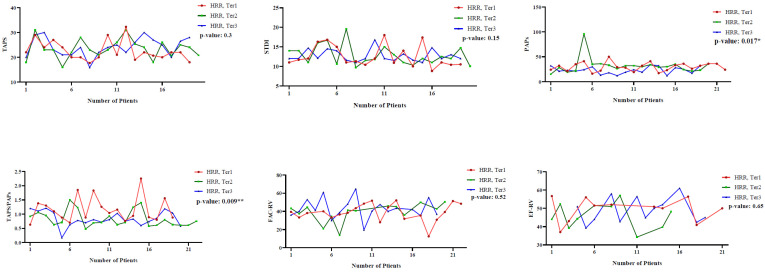 Figure 1
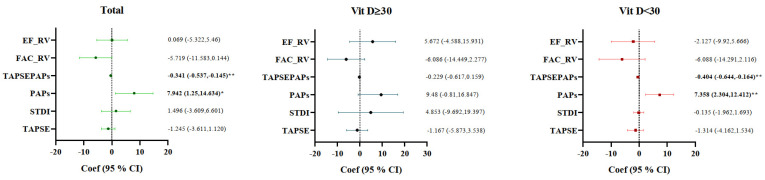 Figure 2
Peer Reviews
No public reviews on file for this paper yet. If you reviewed it on a platform where reviews are public (OpenReview, ICLR, NeurIPS, ICML), you can paste yours below so the community can read it here.
Videos
No videos yet. Explain this paper in a talk, walkthrough, or lecture? Add one.
Taxonomy
TopicsInflammatory Biomarkers in Disease Prognosis · Salivary Gland Disorders and Functions · GDF15 and Related Biomarkers