Symptom-Oriented, Connectome-Informed Deep Brain Stimulation for Asymmetric Dystonic Tremor: Unilateral Ventral Intermediate Nucleus (VIM) DBS Targeting a Tremor-Dominant Network
Olga Mateo-Sierra, Javier Ricardo Pérez-Sánchez, Beatriz De la Casa-Fages, María Teresa Del Castillo, Pilar Fernández, Pascual Elvira, José Paz, Francisco Grandas

TL;DR
A new deep brain stimulation approach targeting tremor networks improves severe dystonic tremor more effectively than traditional methods.
Contribution
Demonstrates a symptom-focused, brain network-based DBS strategy for asymmetric dystonic tremor.
Findings
Unilateral VIM DBS reduced tremor severity by 73.5% in a patient with treatment-resistant dystonic tremor.
Functional improvements included restored handwriting and bimanual motor tasks after stimulation.
Clinical benefits remained stable for six months without adverse effects.
Abstract
Background: Deep brain stimulation (DBS) has traditionally followed diagnosis-driven, nucleus-centered targeting paradigms. Increasing evidence supports a circuit-based framework in which clinical outcomes depend on modulation of symptom-relevant networks rather than diagnostic labels alone. This approach is particularly relevant in mixed movement disorder phenotypes such as dystonic tremor, where the most disabling symptom may not align with the conventional surgical target. Methods: We report a clinically illustrative single case treated using a symptom-oriented, connectome-informed DBS strategy. Clinical phenotype, tremor severity, functional impairment, prior medical and botulinum toxin treatments, and longitudinal outcomes were systematically reviewed. DBS target selection prioritized the dominant, treatment-refractory symptom rather than the underlying dystonia diagnosis. Surgical…
Genes, proteins, chemicals, diseases, species, mutations and cell lines named across the full text — each resolved to its canonical identifier and authoritative record.
Click any figure to enlarge with its caption.
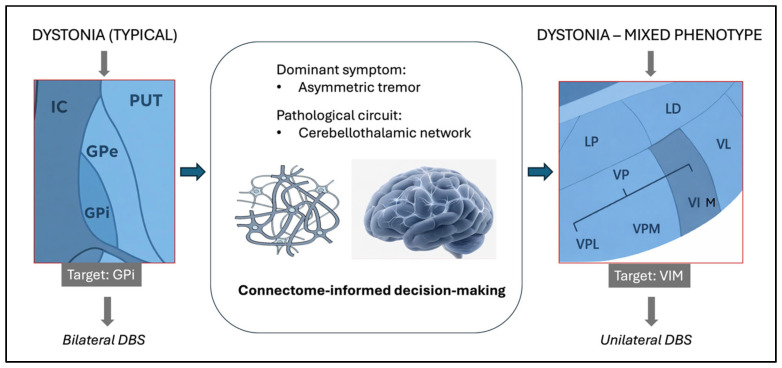 Figure 1
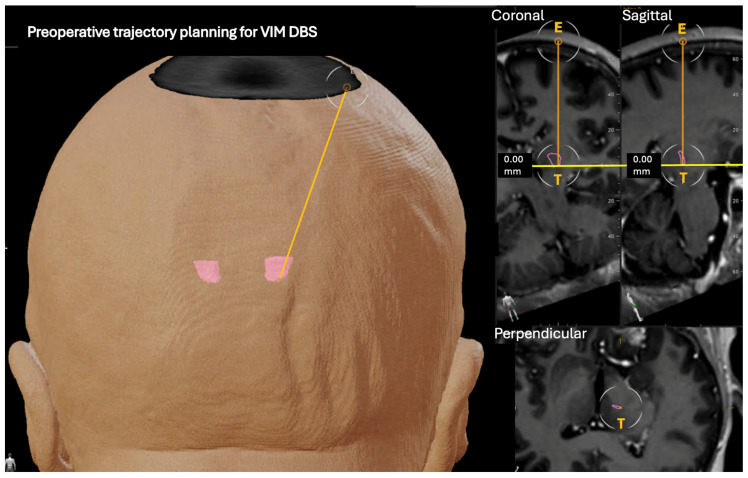 Figure 2
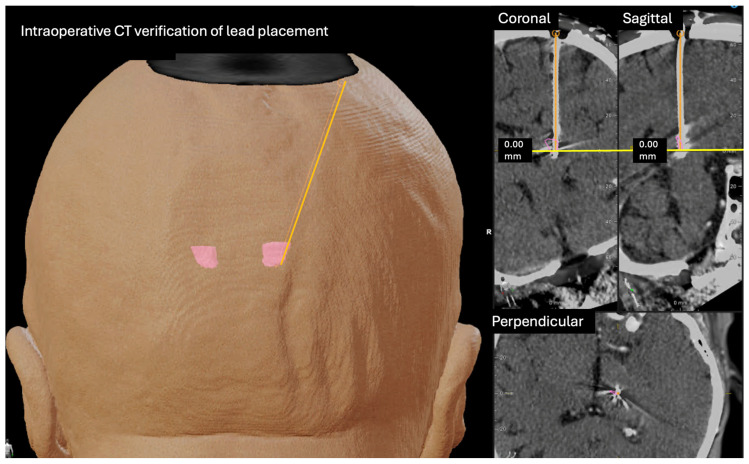 Figure 3
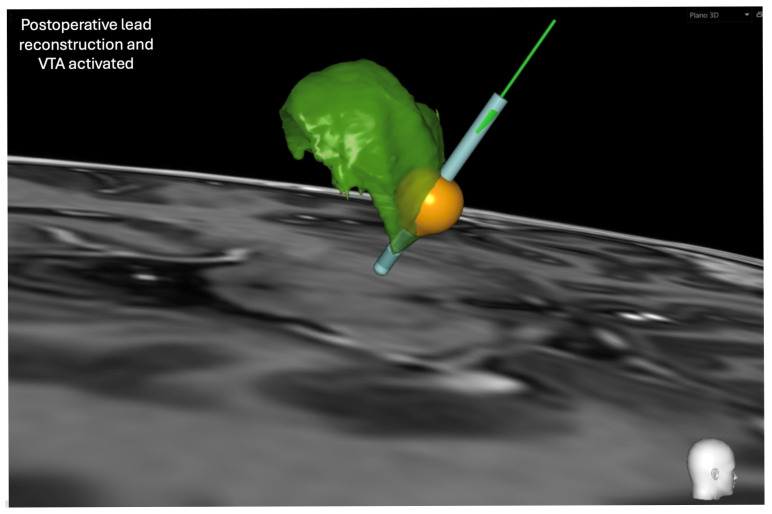 Figure 4
Peer Reviews
No public reviews on file for this paper yet. If you reviewed it on a platform where reviews are public (OpenReview, ICLR, NeurIPS, ICML), you can paste yours below so the community can read it here.
Videos
No videos yet. Explain this paper in a talk, walkthrough, or lecture? Add one.
Taxonomy
TopicsNeurological disorders and treatments · Botulinum Toxin and Related Neurological Disorders · Glycogen Storage Diseases and Myoclonus