Association Between Body Mass Index and Clinical Outcomes of CDK4/6 Inhibitors in HR+/HER2− Metastatic Breast Cancer: A Real-World Cohort Study
Seval Orman, Miray Aydoğan, Nisanur Sarıyar Busery, Sedat Yıldırım, Hacer Şahika Yıldız, Hamit Bal, Utku Dönem Gündoğdu, Seval Ay Ersoy, Deniz Işık, Hatice Odabaş, Nedim Turan

TL;DR
The study finds that body mass index (BMI) in metastatic breast cancer patients treated with CDK4/6 inhibitors is not clearly linked to survival outcomes when categorized as normal or overweight, but a U-shaped pattern suggests risks at extreme BMI levels.
Contribution
This study reveals a non-linear relationship between BMI and survival outcomes in metastatic breast cancer patients treated with CDK4/6 inhibitors, challenging dichotomous BMI categorization.
Findings
Dichotomized BMI categories were not independently associated with progression-free or overall survival.
Non-linear modeling showed increased risk at both low and high BMI extremes.
Propensity score matching confirmed no significant survival differences between BMI groups.
Abstract
Background: Body mass index (BMI) has been widely investigated as a potential prognostic factor in breast cancer; however, its clinical relevance in patients with hormone receptor-positive/human epidermal growth factor receptor 2-negative (HR+/HER2−) metastatic breast cancer treated with CDK4/6 inhibitors remains controversial, particularly in contemporary real-world settings. This study aimed to evaluate the association between baseline BMI and clinical outcomes, including survival and treatment-related toxicity, in a real-world cohort. Methods: This single-centre retrospective observational cohort study included patients with HR+/HER2− metastatic breast cancer treated with endocrine therapy and a CDK4/6 inhibitor (palbociclib or ribociclib) in the metastatic setting between January 2018 and May 2025. Patients were categorised by baseline BMI (<25 vs. ≥25 kg/m2). Progression-free…
Genes, proteins, chemicals, diseases, species, mutations and cell lines named across the full text — each resolved to its canonical identifier and authoritative record.
Click any figure to enlarge with its caption.
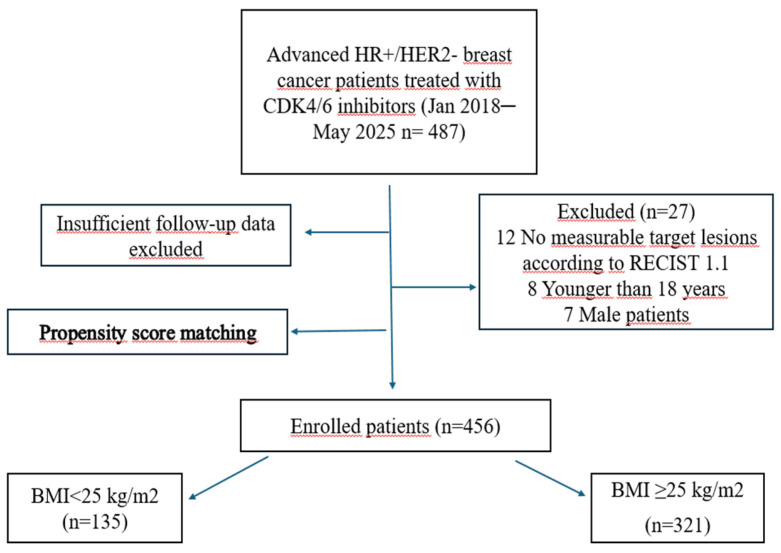 Figure 1
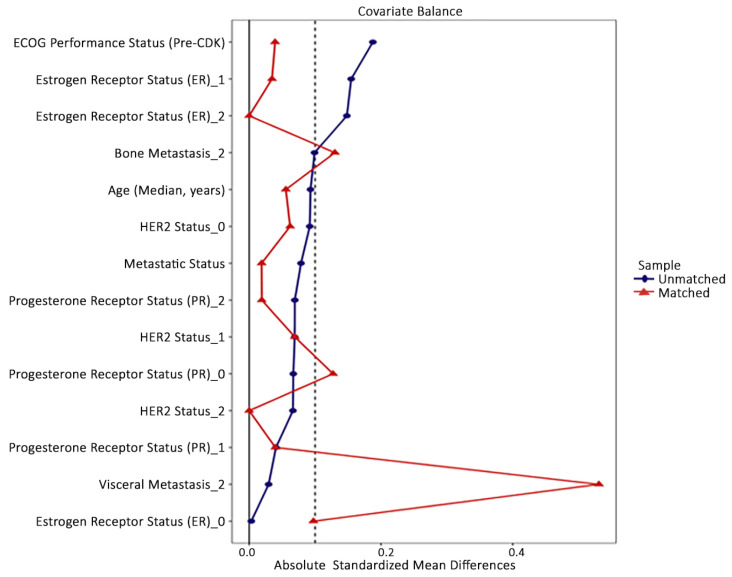 Figure 2
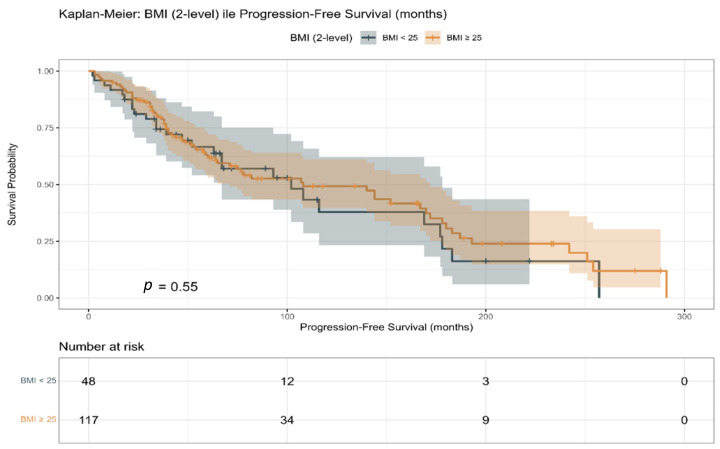 Figure 3
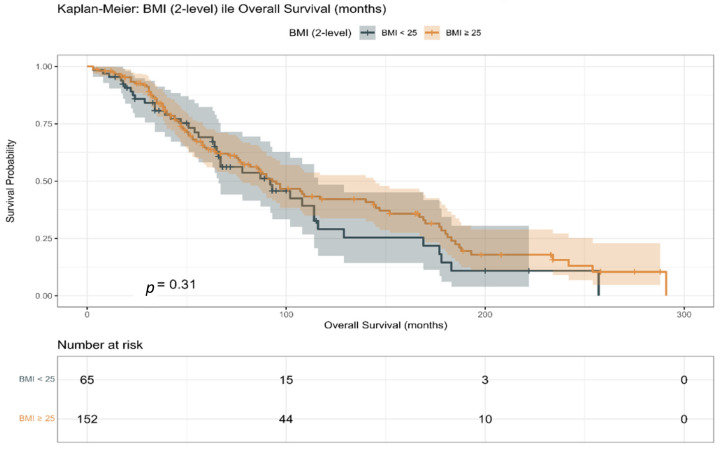 Figure 4
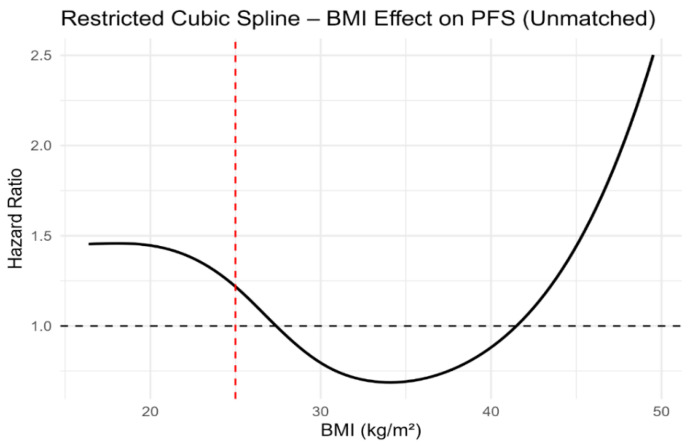 Figure 5
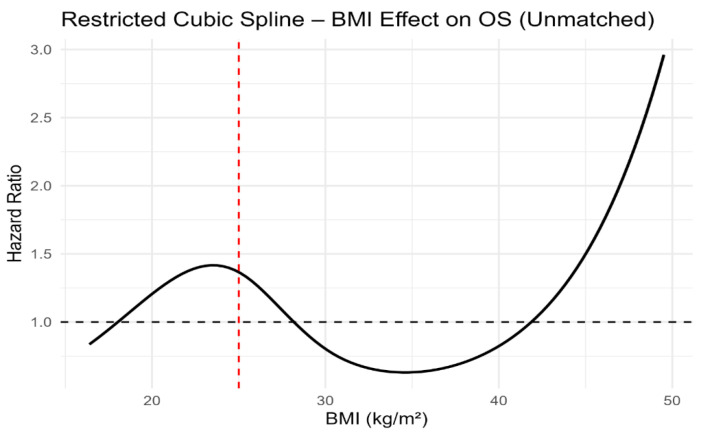 Figure 6
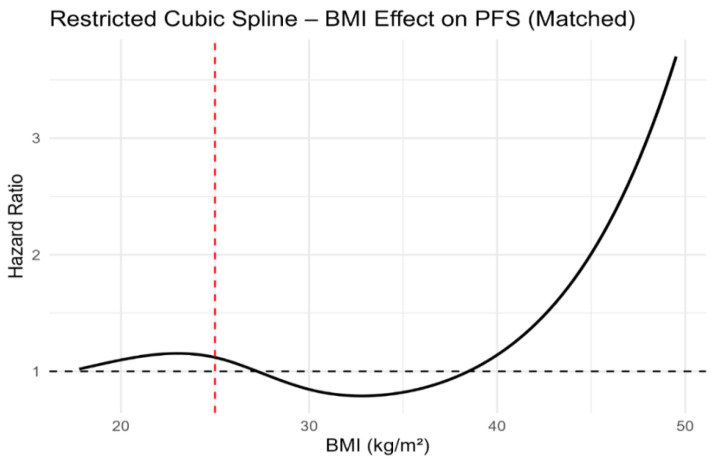 Figure 7
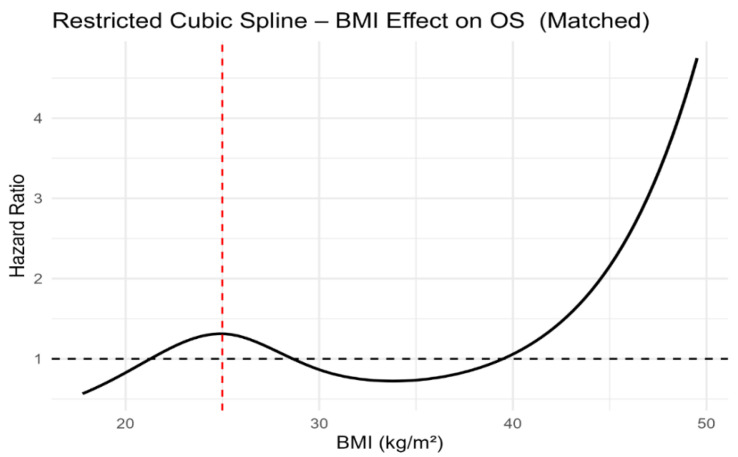 Figure 8
Peer Reviews
No public reviews on file for this paper yet. If you reviewed it on a platform where reviews are public (OpenReview, ICLR, NeurIPS, ICML), you can paste yours below so the community can read it here.
Videos
No videos yet. Explain this paper in a talk, walkthrough, or lecture? Add one.
Taxonomy
TopicsAdvanced Breast Cancer Therapies · Cancer Risks and Factors · Cancer-related cognitive impairment studies