Can Physical Activity, Sleep Parameters, and Sleep–Wake Patterns Predict Outcome of Combined Chronotherapy in Mood Disorder During Routine Clinical Practice? An Exploratory Study
Stella J. M. Druiven, Olga Minaeva, Benno C. M. Haarman, Ybe Meesters, Robert A. Schoevers, Jeanine Kamphuis, Harriëtte Riese

TL;DR
This study explores if changes in physical activity and sleep patterns can predict which patients with severe depression will benefit most from combined chronotherapy.
Contribution
The study provides preliminary evidence that disrupted sleep-wake patterns may indicate better response to combined chronotherapy in depression.
Findings
Actigraphy assessments during combined chronotherapy are feasible for tracking sleep and activity patterns.
Responders to treatment had higher initial depressive symptoms and disrupted sleep patterns compared to nonresponders.
Both responders and nonresponders showed improvements in depressive symptoms and sleep fragmentation after treatment.
Abstract
Background/Objectives: Combined chronotherapy (CCT), which combines repeated sleep deprivation and light therapy, is used in the clinical treatment of severe depression. Despite its potential to rapidly reduce depressive symptoms, CCT is infrequently used in clinical practice. We explored whether actigraphy-derived within-patient changes in physical activity, sleep parameters, and sleep–wake patterns prior to CCT can help identify those most likely to benefit from this treatment, supporting personalized mental health care. Methods: Actigraphy data from nine severely depressed patients were collected before, during, and after CCT. Data were assessed with a questionnaire on depressive symptoms (Inventory of Depressive Symptomatology—Self Report, IDS-SR) and actigraphy measures for sleep–wake patterns and physical activity: daily mean activity level, rhythm (intradaily variability (IV),…
Genes, proteins, chemicals, diseases, species, mutations and cell lines named across the full text — each resolved to its canonical identifier and authoritative record.
Click any figure to enlarge with its caption.
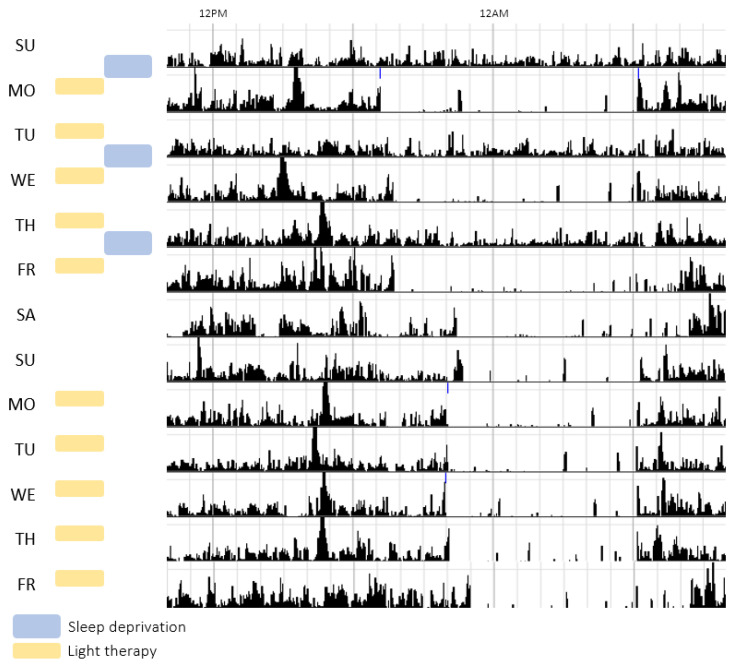 Figure 1
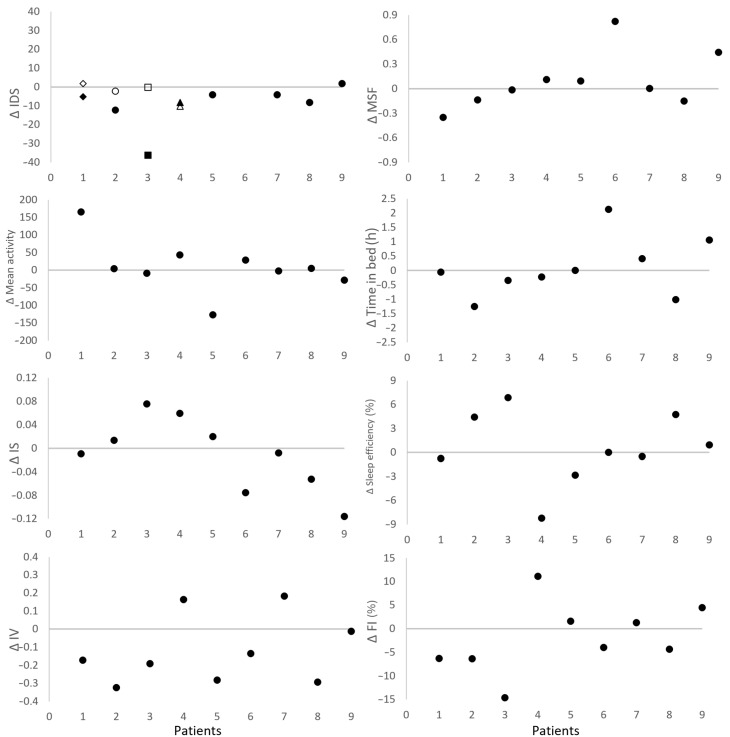 Figure 2
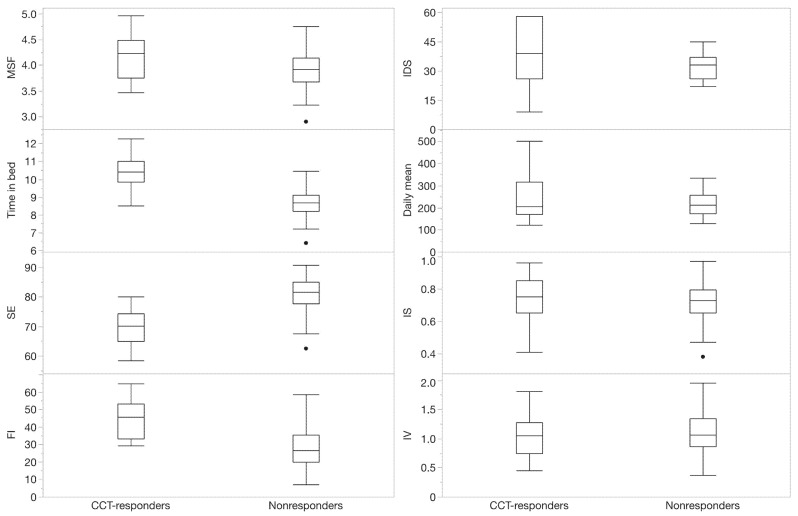 Figure 3
Peer Reviews
No public reviews on file for this paper yet. If you reviewed it on a platform where reviews are public (OpenReview, ICLR, NeurIPS, ICML), you can paste yours below so the community can read it here.
Videos
No videos yet. Explain this paper in a talk, walkthrough, or lecture? Add one.
Taxonomy
TopicsSleep and related disorders · Circadian rhythm and melatonin · Treatment of Major Depression