Prevalence and Predictors of Priapism Among Patients with Sickle Cell Disease: A Cross-Sectional Study
Mortadah Alsalman, Jawad Alnajjar, Ridha Alhussain, Abdulah Alshakhs, Zainab Alkhmis, Abdullah Alghafli, Hassan Alradhi, Mujtaba Alzuwayr, Nawal Eltayeb Omer Mohammed, Zaenb Alsalman, Ahmed Al-Suliman

TL;DR
This study finds that 13.8% of male sickle cell disease patients experience priapism, with blood transfusion history being a key predictor.
Contribution
Identifies blood transfusion history as a novel independent predictor of priapism in sickle cell disease patients.
Findings
33.3% of priapism patients report episodes occurring monthly or less frequently.
45.5% of priapism episodes occur during sleep.
Hydroxyurea users experience priapism at significantly younger ages compared to non-users.
Abstract
Background and Objectives: Priapism, most commonly the ischemic (low-flow) type, is a debilitating complication affecting males with sickle cell disease (SCD), making prevention a critical aspect of care. This study aimed to determine the prevalence of priapism and identify its associated predictors among adult patients with SCD. Materials and Methods: This cross-sectional study was conducted at the Hereditary Blood Disorder Centre in the Eastern Province of Saudi Arabia from February 2024 to August 2025. Results: A total of 240 male SCD patients were included, of whom 33 (13.8%) reported a lifetime history of priapism. The median age at the first priapism episode was 29 years. Multivariate logistic regression identified a history of blood transfusion as the only significant independent predictor of priapism (aOR = 10.36, 95% CI: 1.32–81.14, p = 0.026). Episode frequency varied, with…
Genes, proteins, chemicals, diseases, species, mutations and cell lines named across the full text — each resolved to its canonical identifier and authoritative record.
Click any figure to enlarge with its caption.
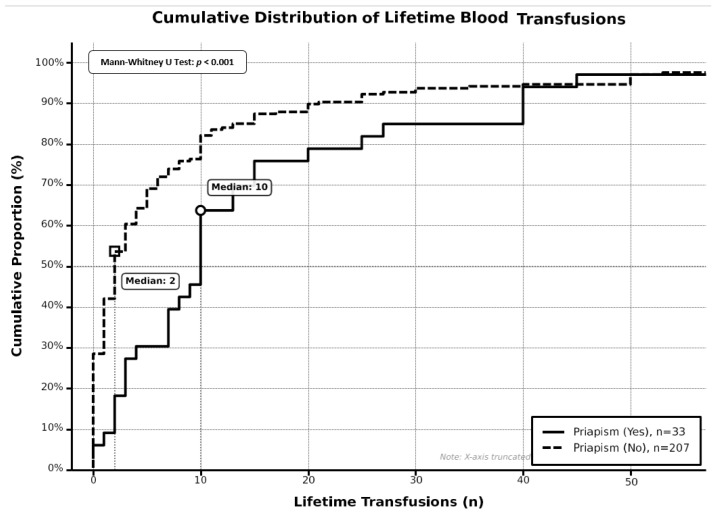 Figure 1
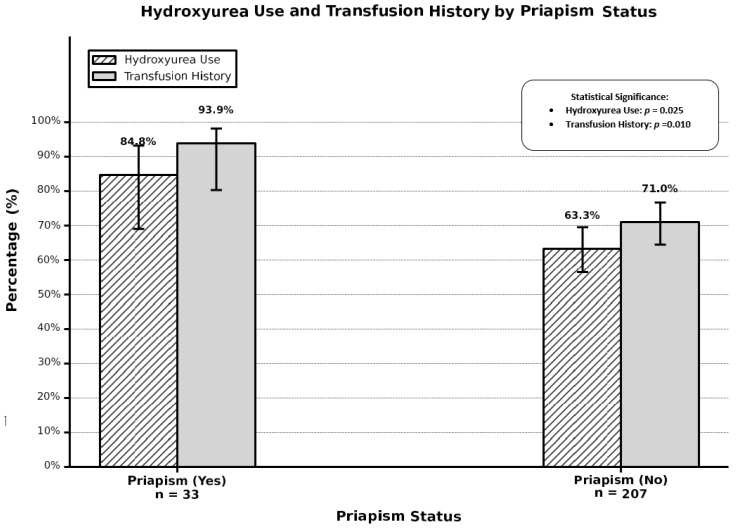 Figure 2
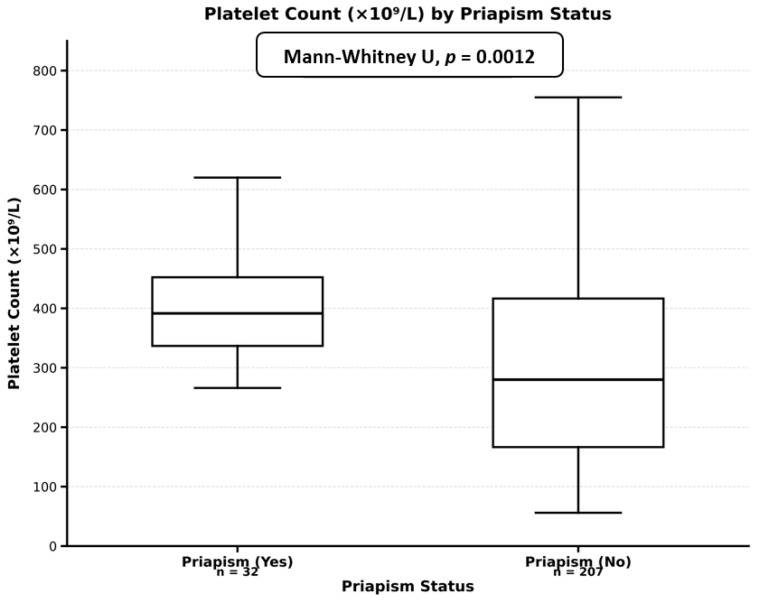 Figure 3
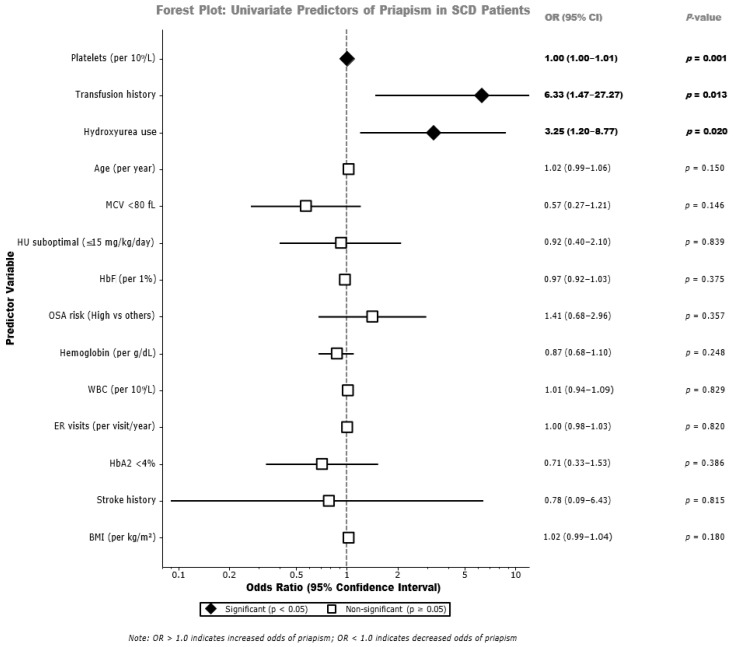 Figure 4
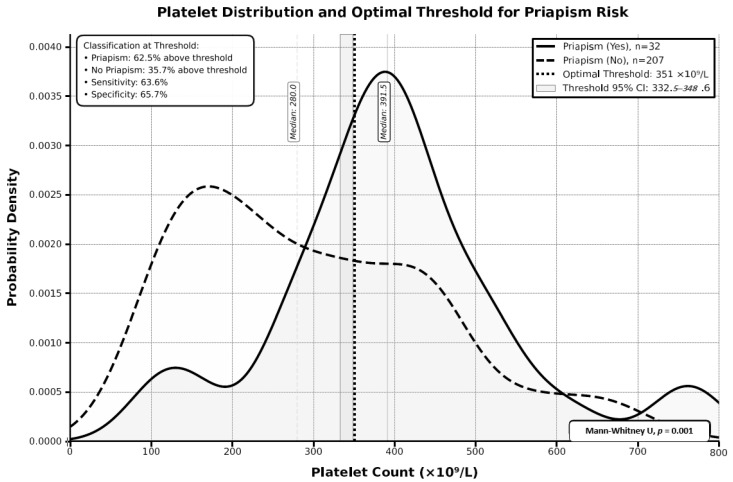 Figure 5
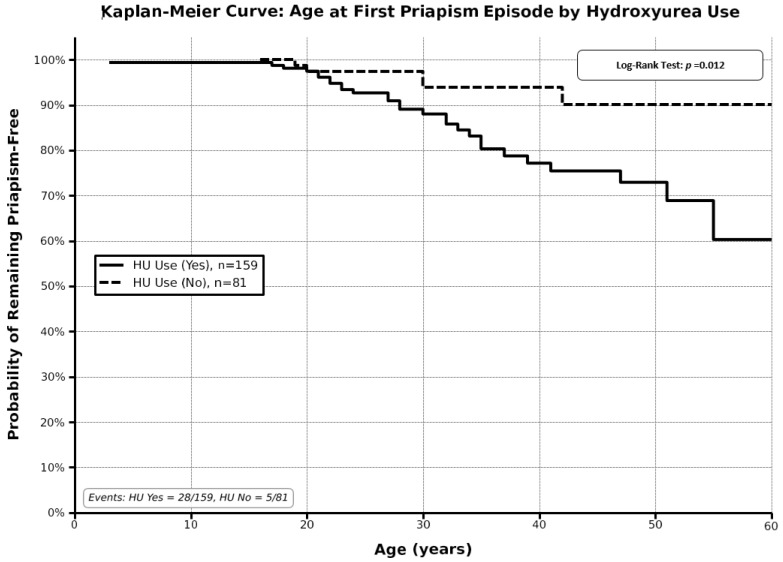 Figure 6
Peer Reviews
No public reviews on file for this paper yet. If you reviewed it on a platform where reviews are public (OpenReview, ICLR, NeurIPS, ICML), you can paste yours below so the community can read it here.
Videos
No videos yet. Explain this paper in a talk, walkthrough, or lecture? Add one.
Taxonomy
TopicsSexual function and dysfunction studies · Hemoglobinopathies and Related Disorders · Female Genital Mutilation/Cutting Issues