Metabolic and Neuroendocrine Responses to Intermittent Fasting in Obesity
Salvatore Allocca, Antonietta Monda, Maria Casillo, Fiorenzo Moscatelli, Marco La Marra, Vincenzo Monda, Girolamo Di Maio, Raffaele Ivan Cincione, Paride Vasco, Marcellino Monda, Rita Polito, Giovanni Messina, Antonietta Messina

TL;DR
Intermittent fasting, especially the 16:8 protocol, improves obesity-related metabolic and neuroendocrine issues more effectively than a Mediterranean diet.
Contribution
This study identifies the 16:8 intermittent fasting protocol as a superior strategy for obesity management through enhanced metabolic and neuroendocrine responses.
Findings
Intermittent fasting protocols improved BMI, adiposity, and lipid profiles faster than the Mediterranean diet.
The 16:8 protocol showed a consistent increase in Orexin-A levels, linked to better metabolic flexibility and reduced inflammation.
The 5:2 protocol had more variable responses due to alternating caloric restriction and intake.
Abstract
Background and Objectives: Intermittent fasting (IF) has emerged as a nutritional strategy capable of modulating circadian alignment, metabolic efficiency, and neuroendocrine regulation in individuals with obesity. Among the neurobiological mediators potentially involved, Orexin-A—a hypothalamic neuropeptide regulating arousal, appetite, and energy balance—may represent a key link between fasting patterns and metabolic homeostasis. This study aimed to evaluate the long-term metabolic and neuroendocrine effects of two intermittent fasting protocols, time-restricted feeding (16:8) and alternate-day fasting (5:2), compared with a hypocaloric Mediterranean diet used as a reference condition. Materials and Methods: Thirty adults with obesity (aged 20–40 years) were allocated to one of three dietary interventions—low-calorie Mediterranean diet, IF 16:8, or IF 5:2—based on habitual dietary…
Genes, proteins, chemicals, diseases, species, mutations and cell lines named across the full text — each resolved to its canonical identifier and authoritative record.
Click any figure to enlarge with its caption.
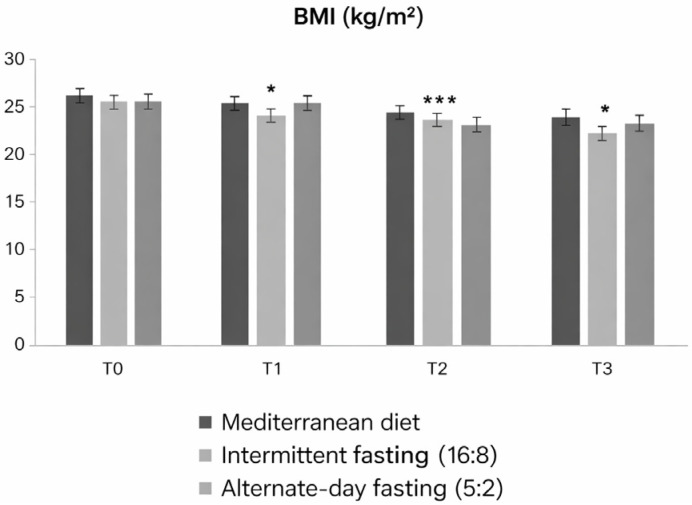 Figure 1
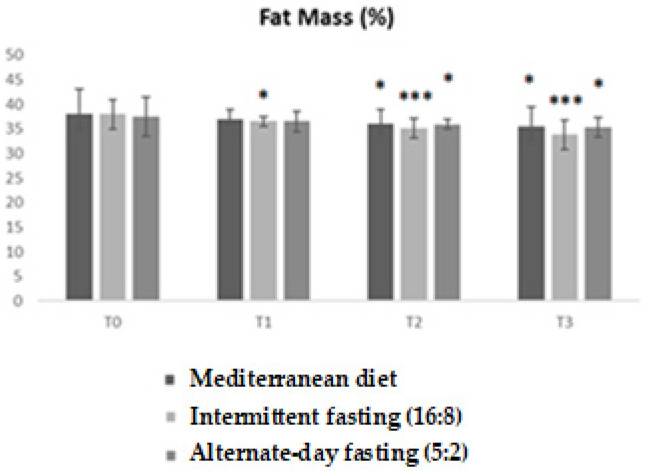 Figure 2
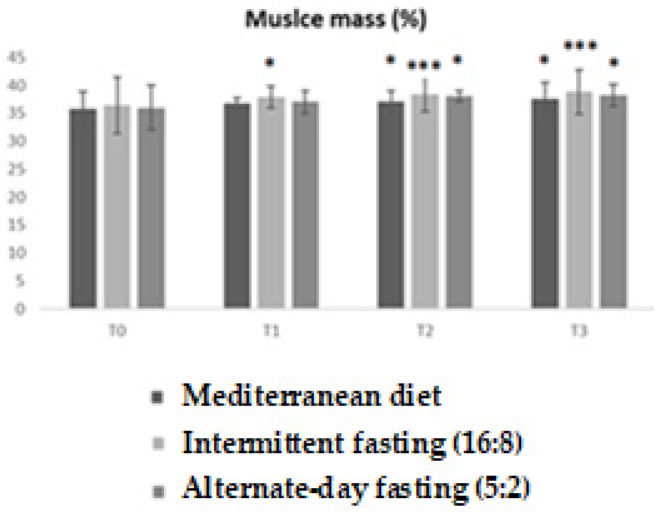 Figure 3
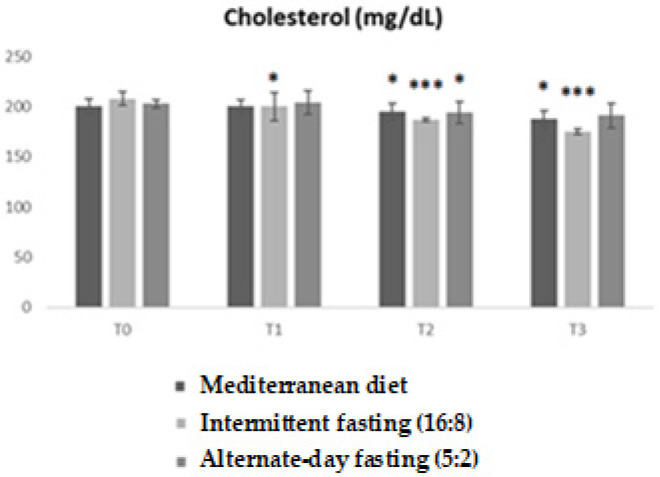 Figure 4
 Figure 5
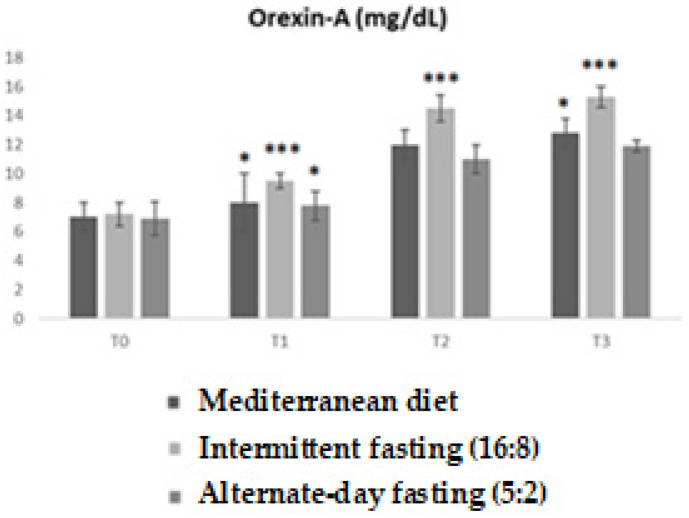 Figure 6
Peer Reviews
No public reviews on file for this paper yet. If you reviewed it on a platform where reviews are public (OpenReview, ICLR, NeurIPS, ICML), you can paste yours below so the community can read it here.
Videos
No videos yet. Explain this paper in a talk, walkthrough, or lecture? Add one.
Taxonomy
TopicsDietary Effects on Health · Diet and metabolism studies · Regulation of Appetite and Obesity