Association of the Triglyceride–Glucose Index with Major Adverse Cardiovascular Events in Patients with Acute Coronary Syndromes: A Systematic Review and Meta-Analysis
Eleni Bampali, Sotirios Chiotis, Aikaterini Zgouridou, Leonidas Koliastasis, Dimitrios Vrachatis, Dimitrios-Orestis Pavlou, Vaios Schismenos, Nikolaos Chaitidis, Antonios Antoniadis, Efstathios Pagourelias, Ioannis Doundoulakis, Vassileios P. Vassilikos, Georgios Giannopoulos

TL;DR
This study finds that higher triglyceride-glucose index values are linked to increased risk of major cardiovascular events in patients with acute coronary syndromes.
Contribution
The study provides a meta-analysis confirming the TyG index as a novel metabolic marker for cardiovascular risk in ACS patients.
Findings
Higher TyG index values are associated with a 45% increased risk of MACEs in ACS patients.
The association is stronger in patients with type 2 diabetes mellitus.
The TyG index could serve as an additive metabolic risk marker alongside existing tools.
Abstract
Background and Objectives: The triglyceride–glucose (TyG) index is an accessible surrogate marker of insulin resistance and has been increasingly investigated for its prognostic relevance in cardiovascular disease. However, evidence regarding its predictive value for major adverse cardiovascular events (MACEs) in patients with acute coronary syndromes (ACSs) remains inconsistent. This study systematically assessed the association between TyG index and the risk of MACEs in individuals with ACS. Materials and Methods: Following PRISMA 2020 guidelines, PubMed, ScienceDirect, and ClinicalTrials.gov were searched through October 2025. Ten observational cohort studies including 32,751 ACS patients were analyzed. Studies reporting fully adjusted hazard ratios (HRs) for the association between TyG index and MACEs were eligible. A random-effects model was used to pool effect sizes expressed as…
Genes, proteins, chemicals, diseases, species, mutations and cell lines named across the full text — each resolved to its canonical identifier and authoritative record.
Click any figure to enlarge with its caption.
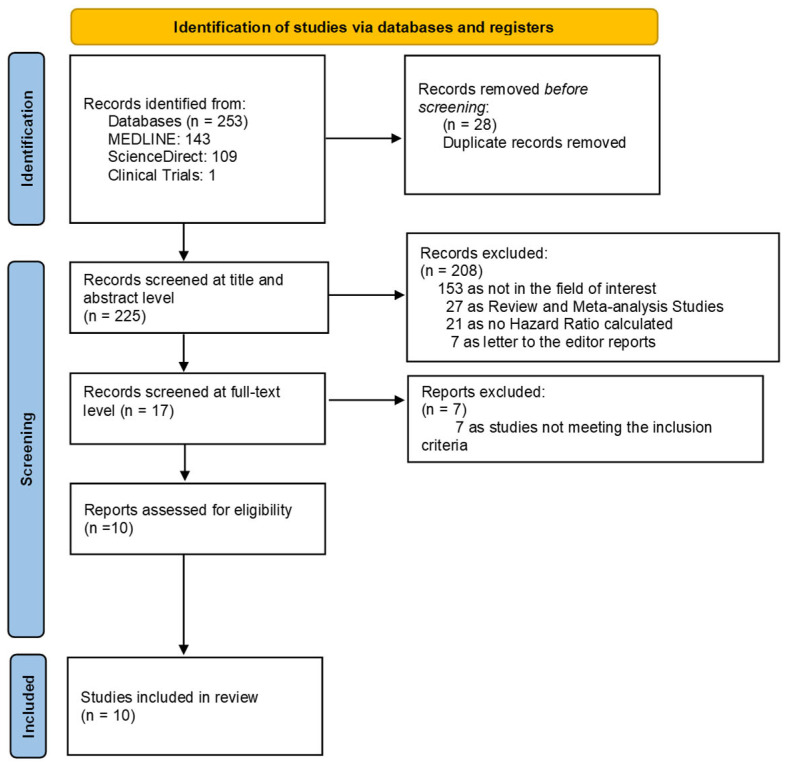 Figure 1
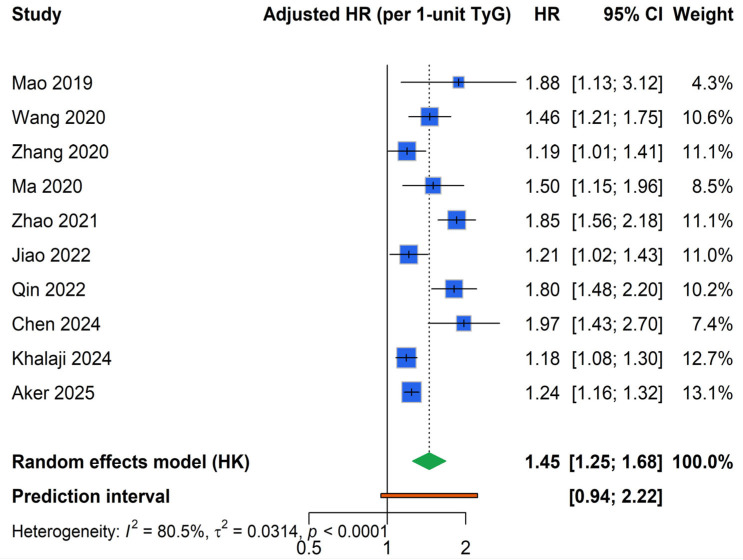 Figure 2
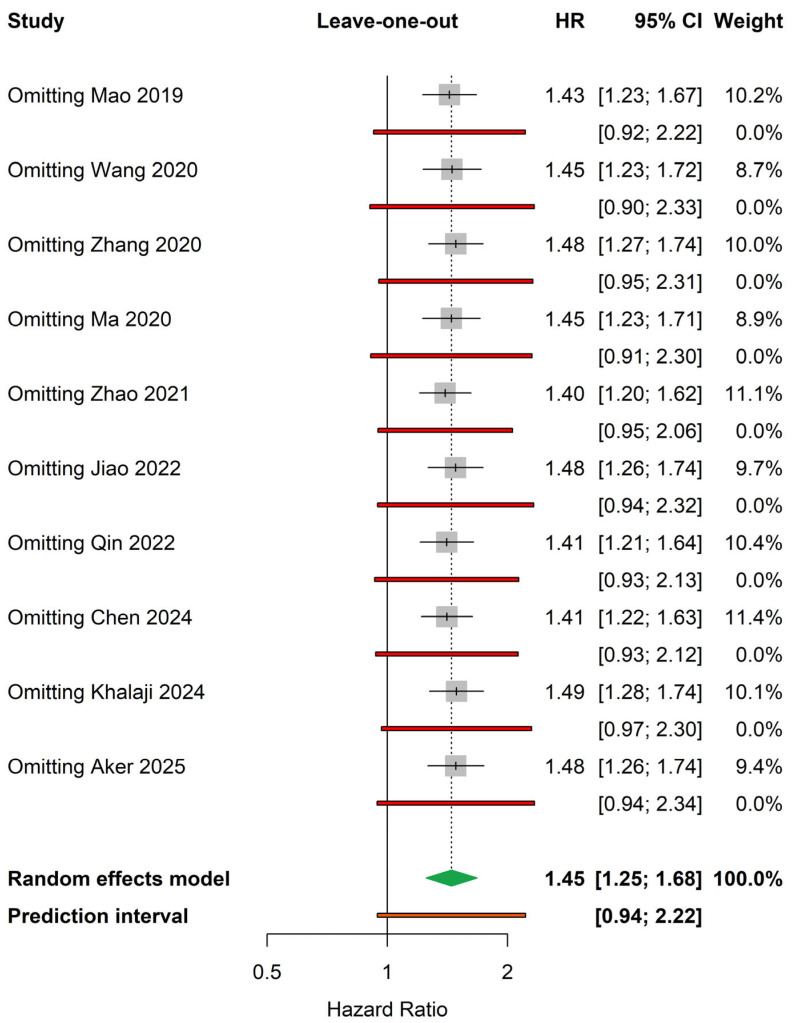 Figure 3
Peer Reviews
No public reviews on file for this paper yet. If you reviewed it on a platform where reviews are public (OpenReview, ICLR, NeurIPS, ICML), you can paste yours below so the community can read it here.
Videos
No videos yet. Explain this paper in a talk, walkthrough, or lecture? Add one.
Taxonomy
TopicsDiabetes, Cardiovascular Risks, and Lipoproteins · Hyperglycemia and glycemic control in critically ill and hospitalized patients · Cardiovascular Function and Risk Factors