Synthetic Integration of an FCS into Coronaviruses—Hype or an Unresolved Biorisk? An Integrative Analysis of DNA Repair, Cancer Research, Drug Development, and Escape Mutant Traits
Siguna Mueller

TL;DR
This paper explores potential biorisks from integrating a DNA repair gene-like fragment into coronaviruses, linking DNA repair, cancer research, and escape mutant traits.
Contribution
It highlights overlooked biorisks by connecting DNA repair gene overlaps with coronaviruses and their interactions with host pathways.
Findings
A 19 nt fragment in SARS-CoV-2 overlaps with a human DNA repair gene's reverse complement.
Coronaviruses can exploit host DNA damage response pathways to enhance replication and evade immunity.
Escape mutants with fitness advantages may arise under selective pressures like antivirals or gene silencing.
Abstract
A 19 nt fragment that spans the SARS-CoV-2 furin cleavage site (FCS) is identical to the reverse complement of a proprietary human DNA repair gene sequence. Rather than interpreting this overlap as evidence of a laboratory event, this article uses it as a theoretical springboard to explore underappreciated biorisk concerns, specifically in the context of cancer research. Although they are RNA viruses, coronaviruses are capable of hijacking host DNA damage response (DDR) pathways, exploiting nuclear functions to enhance replication and evade innate immunity. Under selective pressures (antivirals, DDR antagonists, or large-scale siRNA libraries designed to silence critical host genes), escape mutants may arise with fitness advantages. Parallel observations involving in vivo RNA interference via chimeric viruses lend plausibility to some of the key aspects underlying unappreciated…
Genes, proteins, chemicals, diseases, species, mutations and cell lines named across the full text — each resolved to its canonical identifier and authoritative record.
Click any figure to enlarge with its caption.
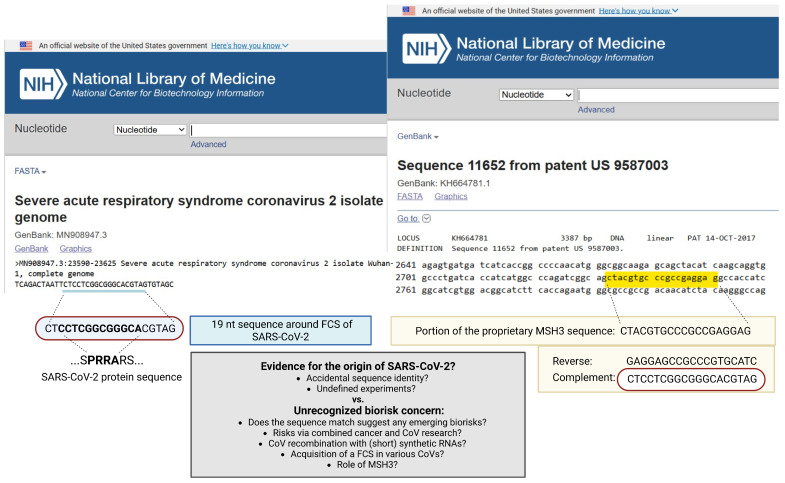 Figure 1
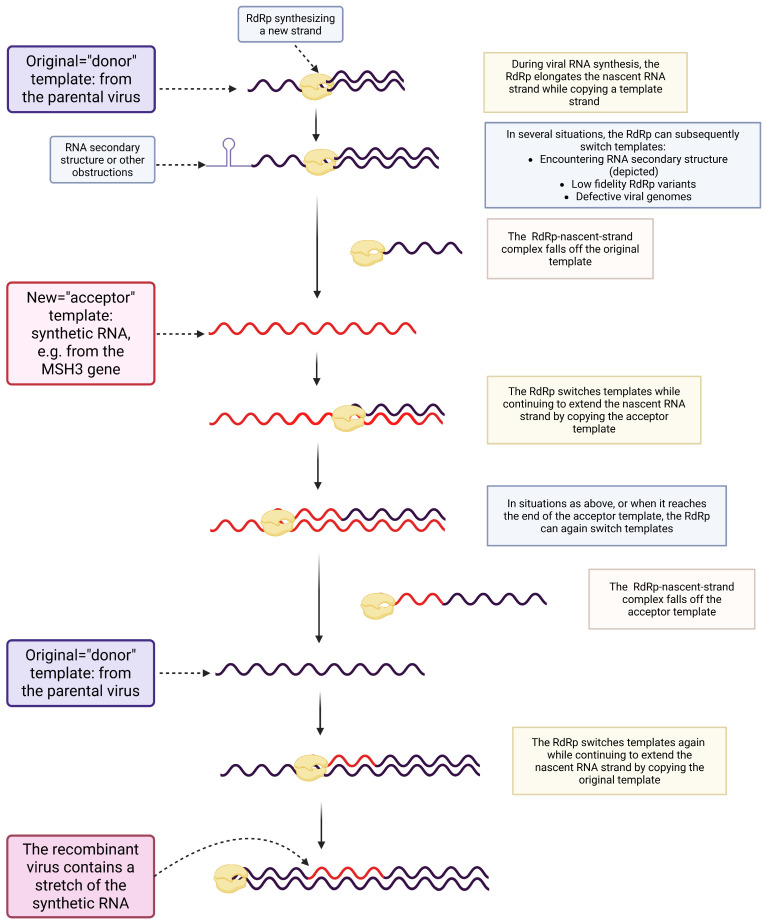 Figure 2
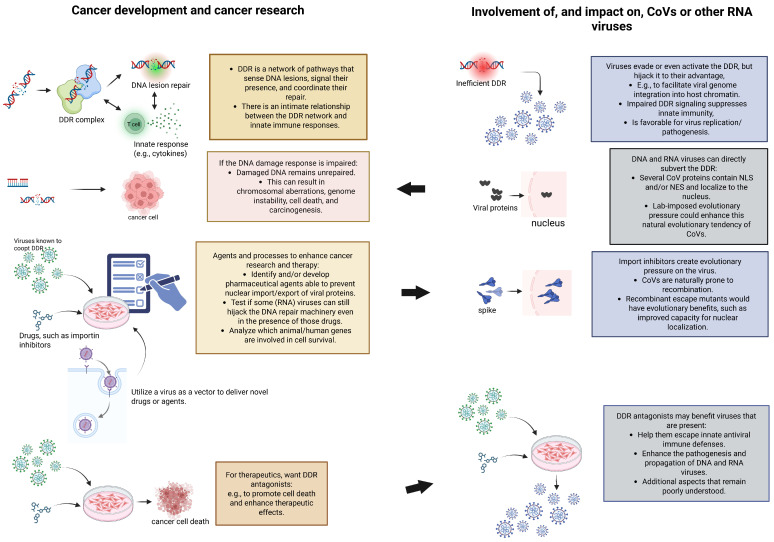 Figure 3
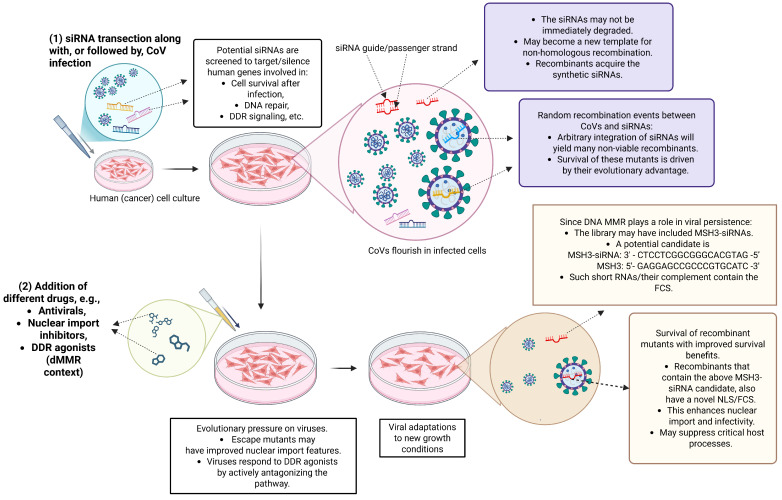 Figure 4
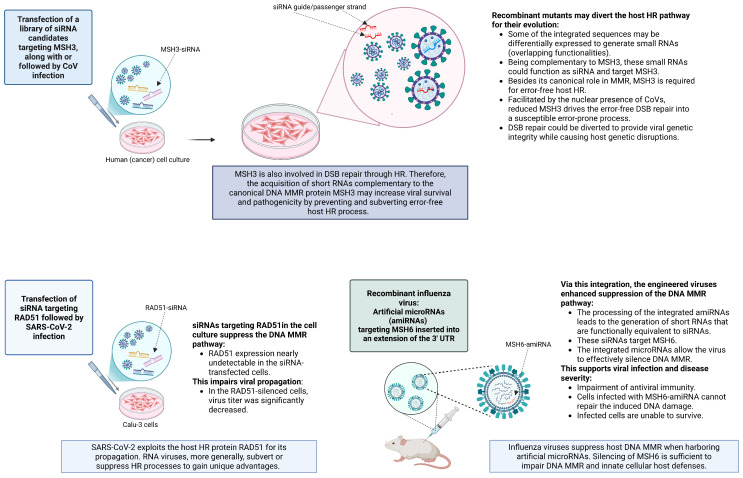 Figure 5
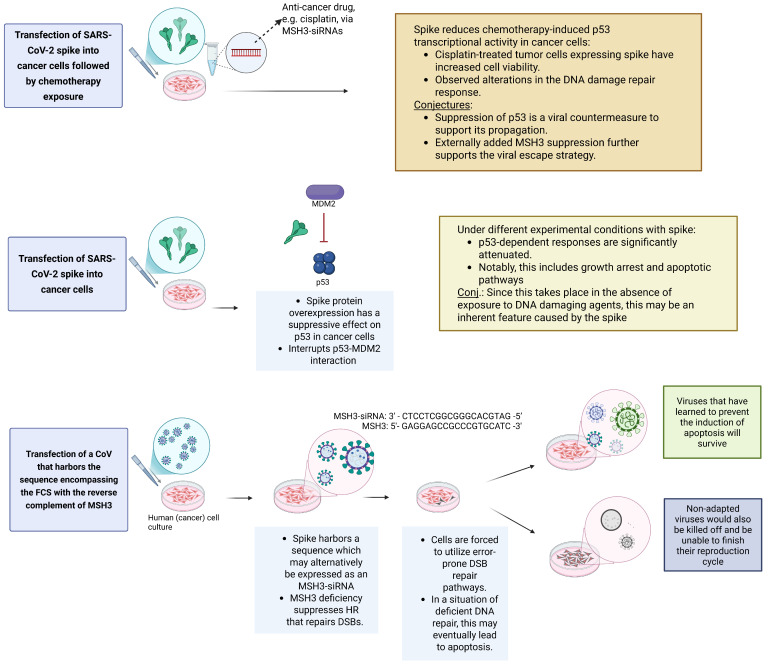 Figure 6
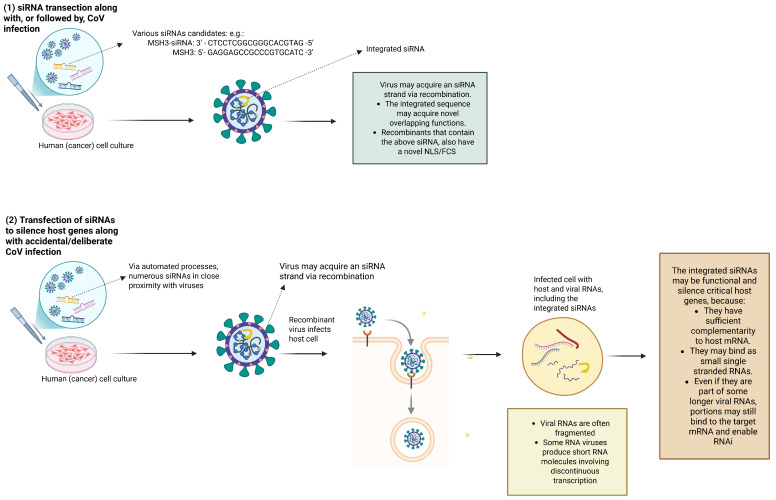 Figure 7
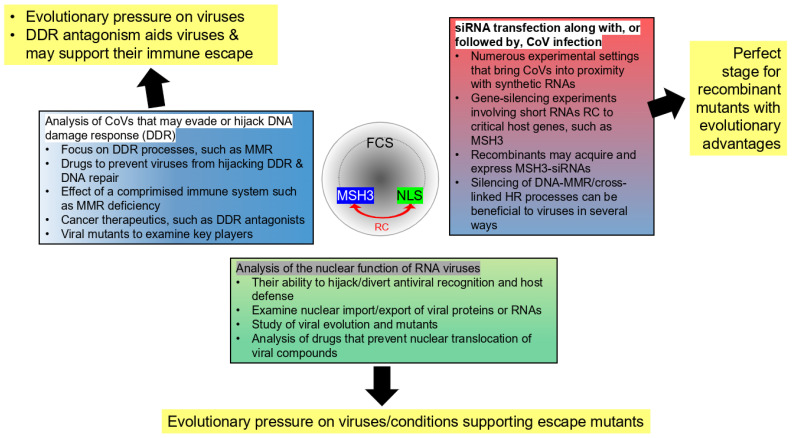 Figure 8
Peer Reviews
No public reviews on file for this paper yet. If you reviewed it on a platform where reviews are public (OpenReview, ICLR, NeurIPS, ICML), you can paste yours below so the community can read it here.
Videos
No videos yet. Explain this paper in a talk, walkthrough, or lecture? Add one.
Taxonomy
TopicsSARS-CoV-2 and COVID-19 Research · Polyomavirus and related diseases · DNA Repair Mechanisms