The Use of Methylene Blue in Pilonidal Sinus Surgery Reduces the Risk of Recurrence: A Systematic Review and Meta-Analysis
Matthias Maak, Christina Oetzmann von Sochaczewski, Theo Hackmann, Marcel Bonni, Myriam Braun-Münker, Dietrich Doll

TL;DR
Using methylene blue during pilonidal sinus surgery may lower the chance of the condition coming back, according to a review of many studies.
Contribution
This systematic review and meta-analysis shows methylene blue staining in surgery reduces recurrence rates across multiple surgical techniques.
Findings
Methylene blue use significantly reduced recurrence rates in most surgical approaches for pilonidal sinus disease.
The benefit of methylene blue was consistent across different surgical techniques like open approach and midline closure.
However, methylene blue showed a disadvantage in some flap surgeries, though with limited follow-up data.
Abstract
Background and Objectives: Pilonidal Sinus Disease shows an increasing incidence. Surgical interventions are often necessary; thus, we wanted to analyze whether the usage of methylene blue (MB) for staining the PSD fistulas for better visualization during surgery shows an effect concerning recurrence rates. Materials and Methods: A thorough data search and cross-study data synthesis of publications in the time period of 1833 to 2023 lead to a total of 7936 studies focusing on PSD. The data sets were scanned for the eligibility criteria, namely treatment information, follow-up, recurrence data, and the use of MB in surgery. The data were sorted into different surgical treatment groups, and the recurrence rates were analyzed using Kaplan–Meier-survival curves. Results: A total of 1192 studies involving 130,677 patients were eligible for analysis. A total of 263 studies were performed with…
Genes, proteins, chemicals, diseases, species, mutations and cell lines named across the full text — each resolved to its canonical identifier and authoritative record.
Click any figure to enlarge with its caption.
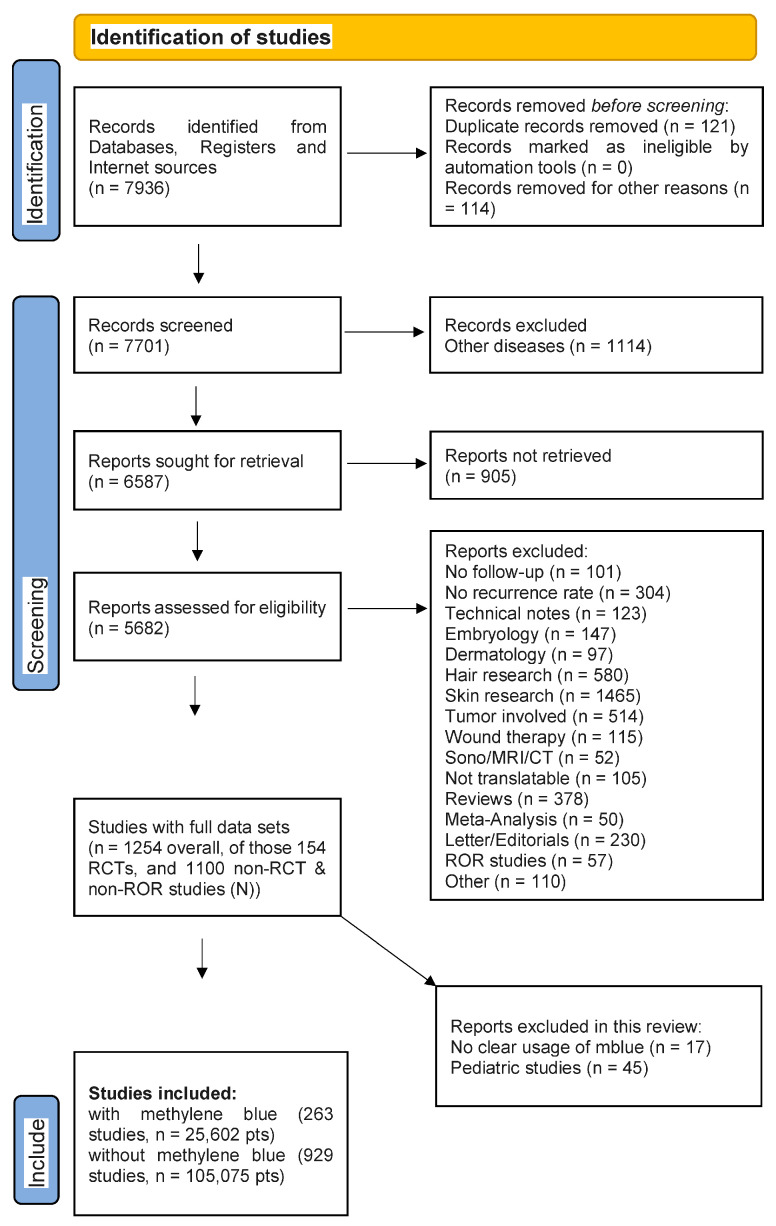 Figure 1
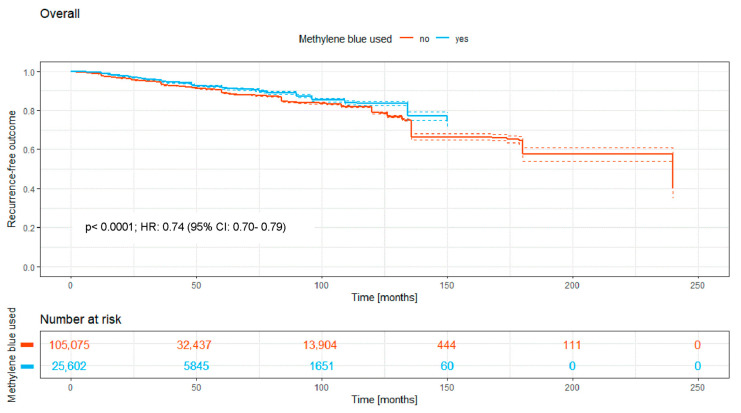 Figure 2
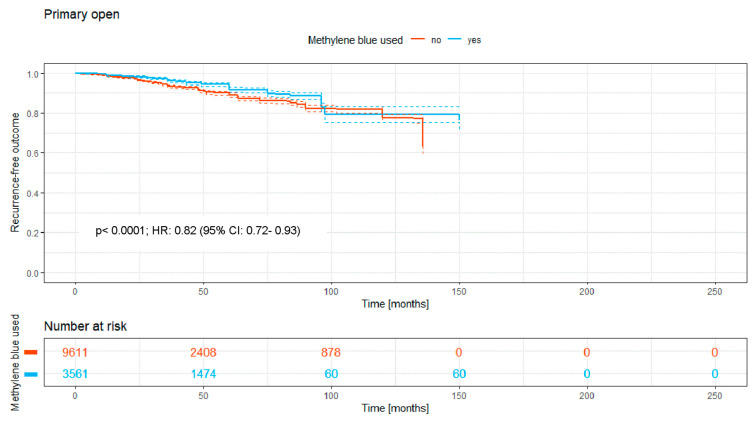 Figure 3
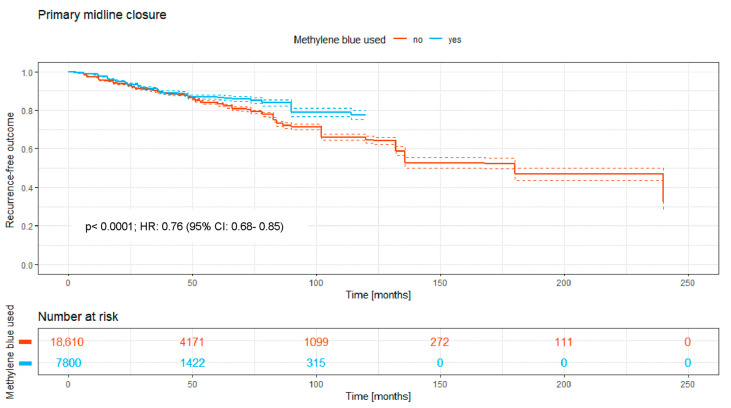 Figure 4
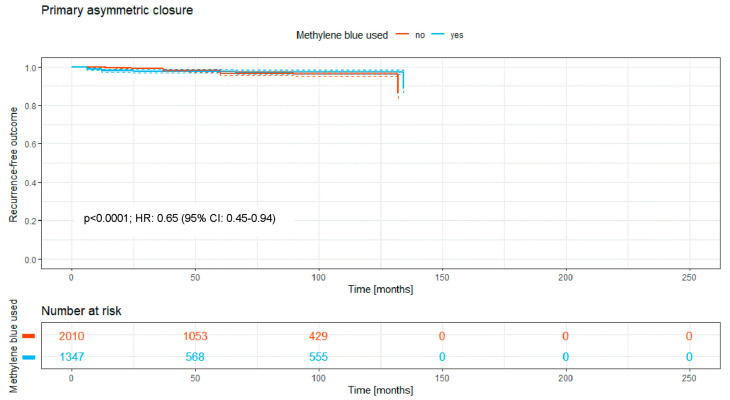 Figure 5
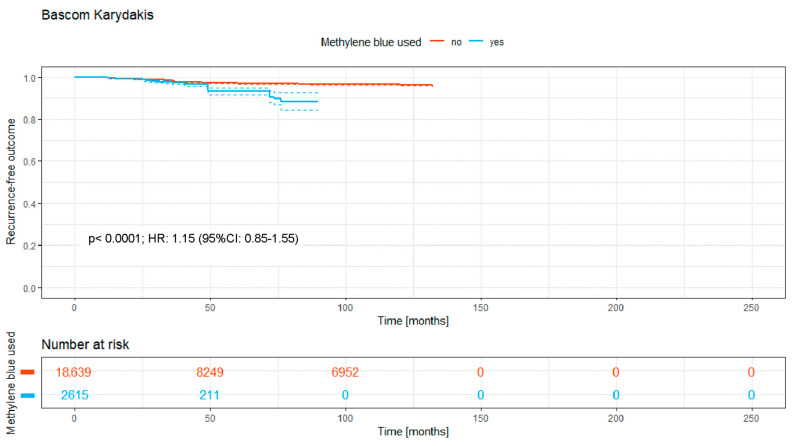 Figure 6
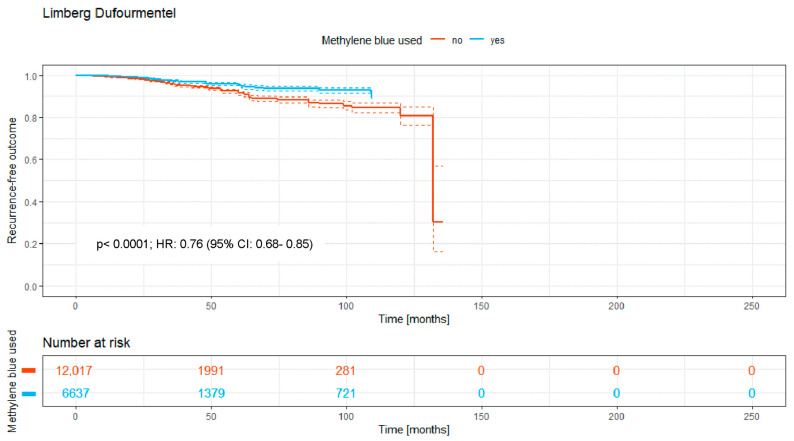 Figure 7
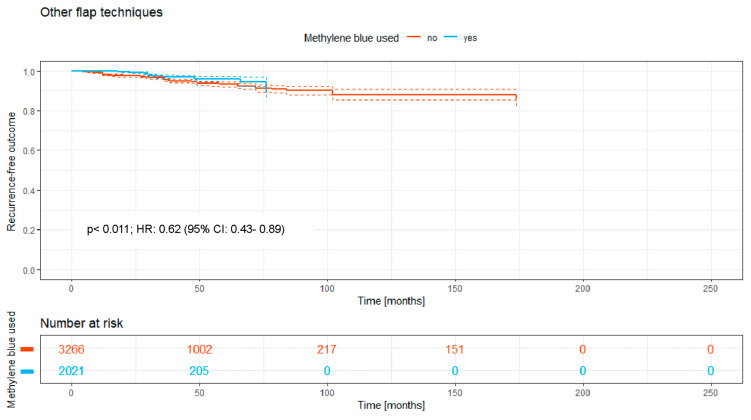 Figure 8
Peer Reviews
No public reviews on file for this paper yet. If you reviewed it on a platform where reviews are public (OpenReview, ICLR, NeurIPS, ICML), you can paste yours below so the community can read it here.
Videos
No videos yet. Explain this paper in a talk, walkthrough, or lecture? Add one.
Taxonomy
TopicsAnorectal Disease Treatments and Outcomes · Hidradenitis Suppurativa and Treatments · Congenital gastrointestinal and neural anomalies