TP53 Functional-Domain-Specific Mutations Define Distinct Clinical Outcomes in EGFR-Mutant Non-Small Cell Lung Cancer Treated with EGFR Tyrosine Kinase Inhibitors
Keigo Kobayashi

TL;DR
This study shows that specific TP53 mutations in lung cancer patients affect how well they respond to EGFR-targeted treatments, especially when using older drug generations.
Contribution
The study introduces a domain-specific classification of TP53 mutations to better predict clinical outcomes in EGFR-mutant lung cancer patients.
Findings
TP53 mutations in the DNA-binding domain are linked to worse progression-free survival in patients with common EGFR mutations.
Third-generation EGFR-TKIs show better outcomes for TP53-mutant tumors compared to first- or second-generation drugs.
TP53 wild-type patients do not show significant differences in outcomes based on the generation of EGFR-TKI used.
Abstract
Background: In advanced non-small cell lung cancer (NSCLC) with sensitizing EGFR mutations, EGFR tyrosine kinase inhibitors (EGFR-TKIs) improve progression-free survival (PFS). However, clinical outcomes vary according to EGFR mutation subtype and TP53 co-mutations. Most prior studies have evaluated TP53 status as binary, and the clinical relevance of domain-specific TP53 alterations remains insufficiently defined. Methods: We retrospectively analyzed patients with advanced NSCLC harboring sensitizing EGFR mutations who received first-line EGFR-TKI therapy at the National Cancer Centre Singapore between 22 November 2007, and 17 February 2022. EGFR mutations were classified as common (exon 19 deletion or L858R) or uncommon (all others). TP53 alterations were categorized into three groups: (i) DNA-binding domain (DBD)-involved mutations, including DBD-only mutations and those with…
Genes, proteins, chemicals, diseases, species, mutations and cell lines named across the full text — each resolved to its canonical identifier and authoritative record.
Click any figure to enlarge with its caption.
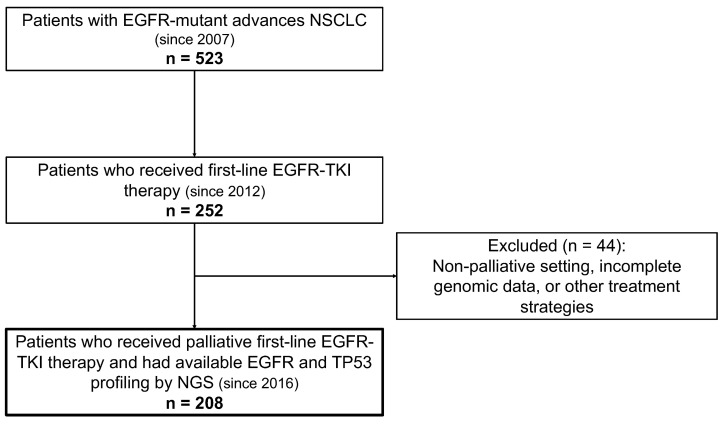 Figure 1
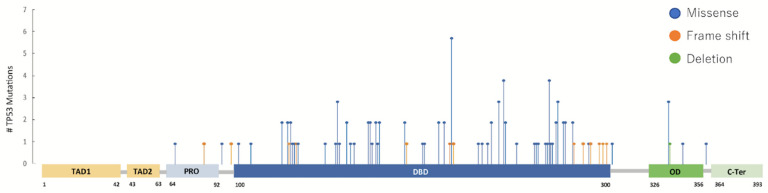 Figure 2
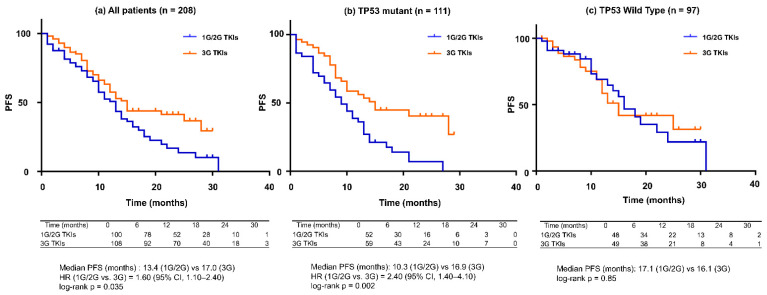 Figure 3
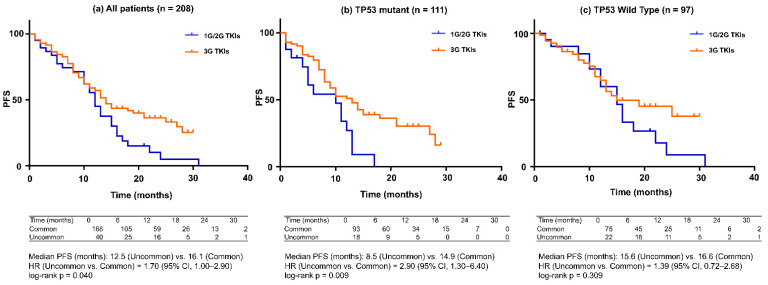 Figure 4
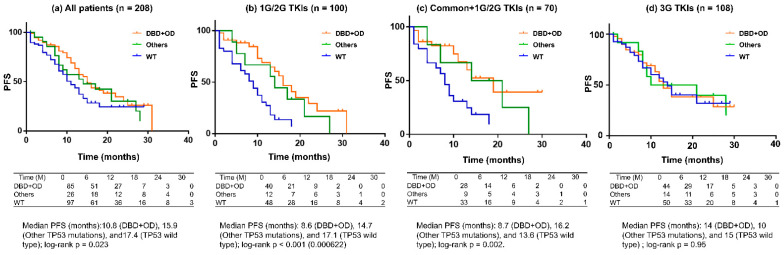 Figure 5
Peer Reviews
No public reviews on file for this paper yet. If you reviewed it on a platform where reviews are public (OpenReview, ICLR, NeurIPS, ICML), you can paste yours below so the community can read it here.
Videos
No videos yet. Explain this paper in a talk, walkthrough, or lecture? Add one.
Taxonomy
TopicsLung Cancer Treatments and Mutations · Cancer Immunotherapy and Biomarkers · Radiomics and Machine Learning in Medical Imaging