Unusual Sporotrichosis: A New Concept Proposal on the Unexpected Faces of Sporothrix spp. Infection
Jayne Araújo da Silva, Adriany Lucas dos Santos, Júlia Andrade de Castro Rodrigues, Mariana de Paula Pires, Marcelo Cerilo-Filho, Gil Benard, José Rodrigo Santos Silva, Ricardo Luiz Dantas Machado, Jéssica Dornelas da Silva, Héctor Manuel Mora-Montes, Gutemberg Gomes Alves

TL;DR
This paper introduces 'unusual sporotrichosis' as a rare, severe form of fungal infection that affects healthy people and is often missed in diagnosis.
Contribution
The paper proposes a new clinical concept of 'unusual sporotrichosis' and characterizes its global patterns.
Findings
Unusual sporotrichosis mainly affects adults aged 40–59 and is more common in males.
Osteoarticular and systemic forms are the most frequent, with the worst outcomes seen in osteoarticular cases.
Sporothrix schenckii is the most common species involved, with sapronotic transmission being the primary route.
Abstract
“Unusual sporotrichosis”, a concept proposed in this review, refers to severe, extracutaneous, or anatomically atypical manifestations of sporotrichosis occurring in immunocompetent hosts and represents an underrecognized clinical subset associated with important diagnostic and therapeutic challenges. This systematic review aimed to characterize unusual sporotrichosis worldwide and to clarify its epidemiological, clinical, diagnostic, and therapeutic patterns. Following a registered protocol and PRISMA guidelines, PubMed, Scopus, and BVS/LILACS were searched up to November 2025 using a PICO-based strategy. Eligible studies included peer-reviewed case reports and case series with laboratory-confirmed sporotrichosis in patients without immunosuppression, diabetes mellitus, alcoholism, or other confounding comorbidities; classical lymphocutaneous and fixed cutaneous forms were excluded.…
Genes, proteins, chemicals, diseases, species, mutations and cell lines named across the full text — each resolved to its canonical identifier and authoritative record.
Click any figure to enlarge with its caption.
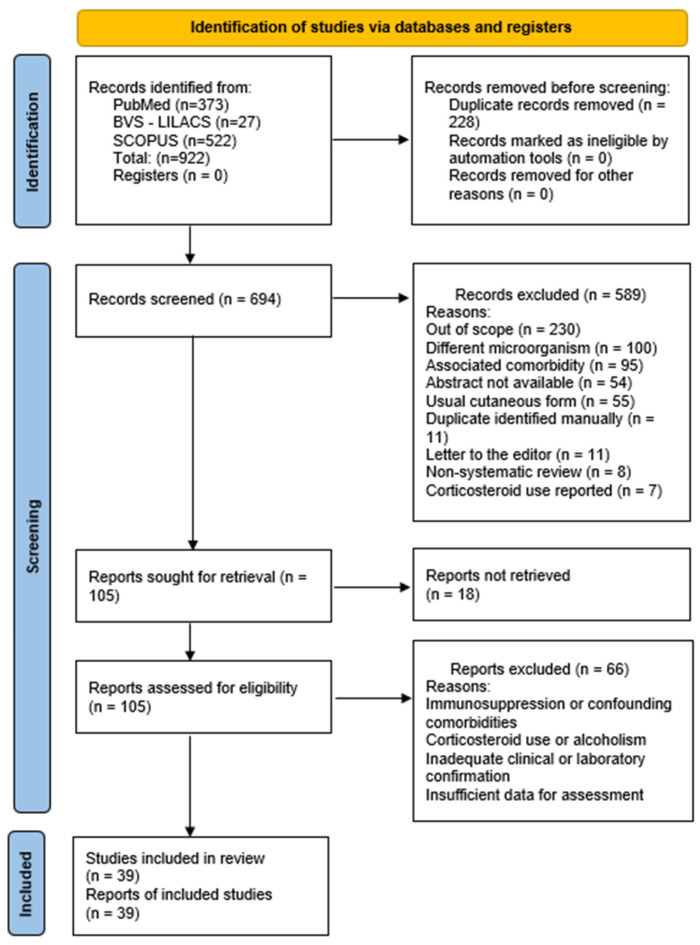 Figure 1
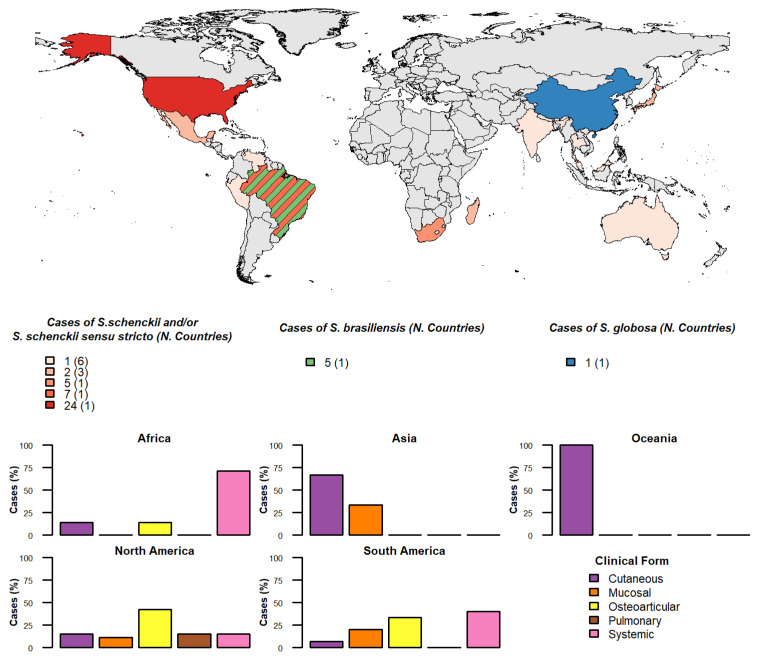 Figure 2
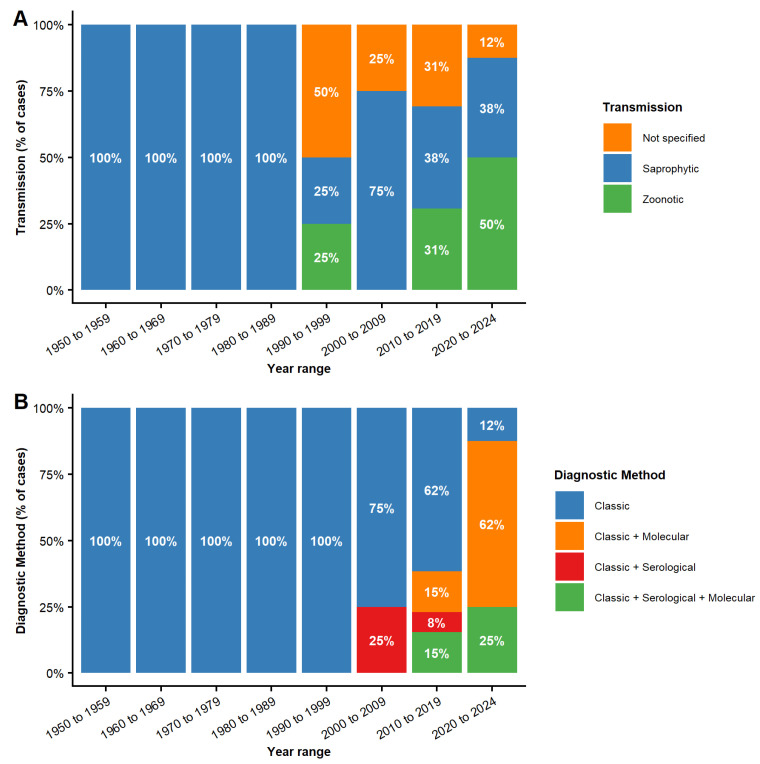 Figure 3
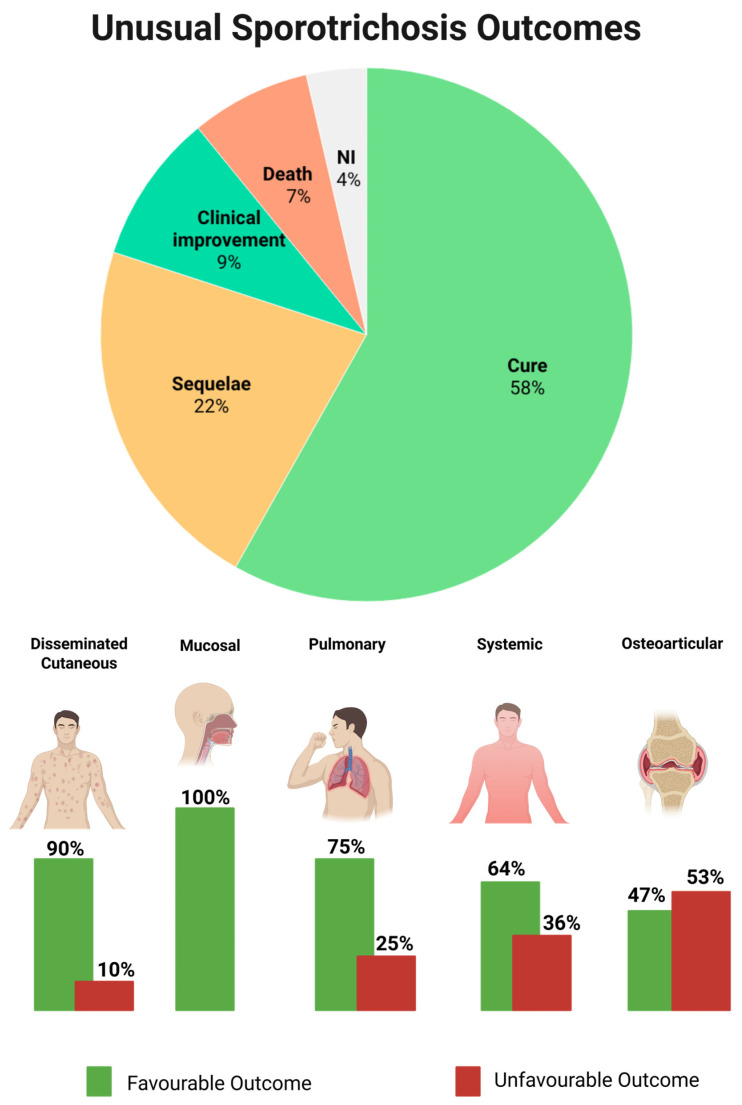 Figure 4
Peer Reviews
No public reviews on file for this paper yet. If you reviewed it on a platform where reviews are public (OpenReview, ICLR, NeurIPS, ICML), you can paste yours below so the community can read it here.
Videos
No videos yet. Explain this paper in a talk, walkthrough, or lecture? Add one.
Taxonomy
TopicsFungal Infections and Studies · Nail Diseases and Treatments · Mycobacterium research and diagnosis