Deciphering the Genomic Landscape of Oropharyngeal Squamous Cell Carcinoma: Distinct Mutation Patterns in Disease
Beau Hsia, Gabriel Bitar, Pedro S. Bonilla, Vinay D. Veluvolu, Nathan Tran, Saif Alshaka, Eli Oved, Bhavish Aubeelauck, Hassan Nur, Abubakar Tauseef, Vijay A. Patel, Aliasgher Khaku

TL;DR
This study analyzed the genomic mutations in oropharyngeal cancer to identify patterns that could help guide personalized treatments.
Contribution
The study reveals distinct mutation patterns in oropharyngeal cancer subgroups, including gender-specific and tumor stage-specific genomic alterations.
Findings
TP53, PIK3CA, and KMT2D were the most frequently mutated genes in OPSCC.
Primary tumors showed TP53 and CDKN2A mutations, while metastatic tumors had CBLB and BUB1B mutations.
Co-occurrence of PIK3CA and FBXW7 and mutual exclusivity of TP53 and CYLD were observed.
Abstract
Objective: We aimed to characterize the somatic mutational landscape of oropharyngeal squamous cell carcinoma (OPSCC) and identify potential genomic drivers of tumor progression and therapeutic resistance using the AACR GENIE database. Study Design: Retrospective genomic analysis was employed. Setting: We used publicly available data from the American Association for Cancer Research (AACR) Project GENIE database accessed via cBioPortal. Methods: We analyzed 412 tumor samples from 401 patients diagnosed with OPSCC. Somatic mutations, clinical variables and tumor characteristics were extracted and analyzed. Statistical comparisons of mutation frequencies across gender and tumor stage (primary vs. metastatic) were conducted. Co-occurrence and mutual exclusivity analyses were performed to identify significant genomic patterns. Results: The most frequently mutated genes included TP53…
Genes, proteins, chemicals, diseases, species, mutations and cell lines named across the full text — each resolved to its canonical identifier and authoritative record.
Click any figure to enlarge with its caption.
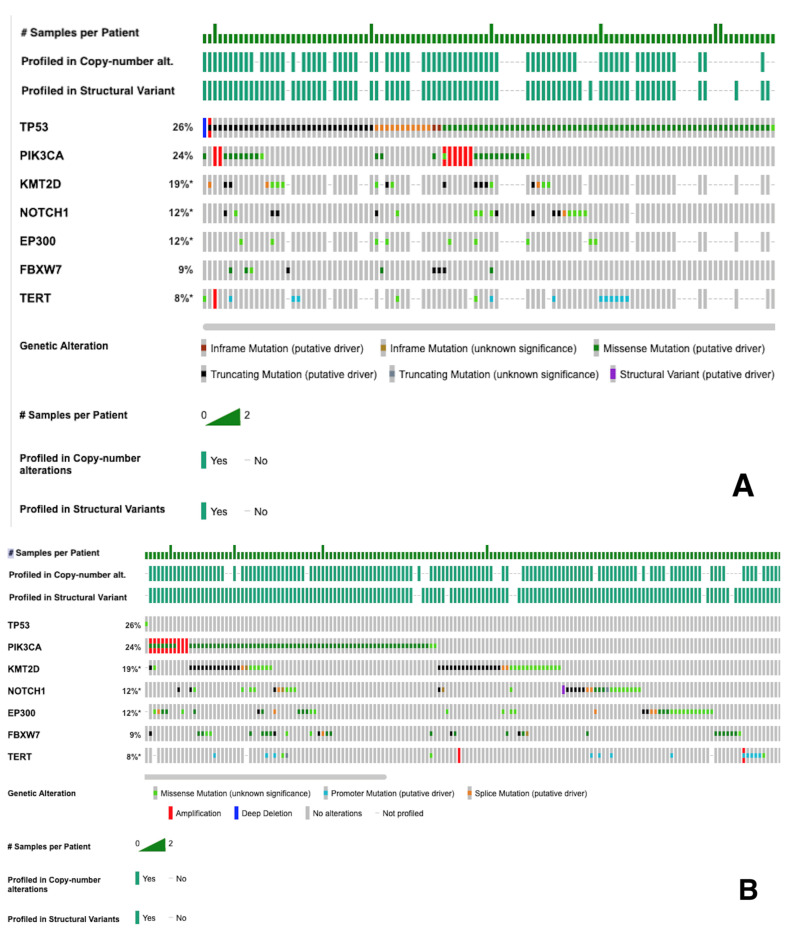 Figure 1
Peer Reviews
No public reviews on file for this paper yet. If you reviewed it on a platform where reviews are public (OpenReview, ICLR, NeurIPS, ICML), you can paste yours below so the community can read it here.
Videos
No videos yet. Explain this paper in a talk, walkthrough, or lecture? Add one.
Taxonomy
TopicsHead and Neck Cancer Studies · Esophageal Cancer Research and Treatment · Cancer-related Molecular Pathways