Fitzpatrick Skin Phototype Is Independently Associated with Differential Short-Term Cutaneous Reactivity Following Standardized Topical Provocation in Humans
Laura Maghiar, Corina Beiușanu, Corina Moisa, Timea Claudia Ghitea, Octavia Gligor, Antonia Maria Lestyan, Marieta Lestyan, Ilarie Brihan, Teodor-Andrei Maghiar, Csaba Nagy, Mădălin Florin Ganea, Laura Grațiela Vicaș, Mariana Ganea

TL;DR
The study finds that skin color, as measured by Fitzpatrick skin phototype, affects how skin reacts to topical substances, with lighter skin types showing stronger short-term reactions.
Contribution
The study demonstrates that Fitzpatrick skin phototype independently modifies early cutaneous reactivity to topical provocation, independent of age, sex, and country of origin.
Findings
Participants with phototypes I–II showed significantly higher skin reactivity at 20 min and 24 h compared to phototype III.
Phototype III was independently associated with lower reactivity in adjusted models.
No persistent reactions were observed at 96 h in any phototype group.
Abstract
Background: Human cutaneous reactivity exhibits marked inter-individual variability, yet the contribution of constitutional pigmentation traits to short-term skin responses remains incompletely characterized. Fitzpatrick skin phototype reflects stable differences in pigmentation-related traits and may therefore act as a phenotypic modifier of early cutaneous reactivity following topical exposure. Methods: In this controlled human study, 239 healthy volunteers were stratified by Fitzpatrick skin phototype into three groups: I–II (n = 138), III (n = 72), and IV–V (n = 29). A standardized emulgel-based topical provocation model was applied under occlusion to the volar forearm, and cutaneous responses were assessed at 20 min (Test A), 24 h (Test B), and 96 h (Test C) using standardized visual scoring. Group comparisons, multivariable linear regression models adjusted for age, sex, country…
Genes, proteins, chemicals, diseases, species, mutations and cell lines named across the full text — each resolved to its canonical identifier and authoritative record.
Click any figure to enlarge with its caption.
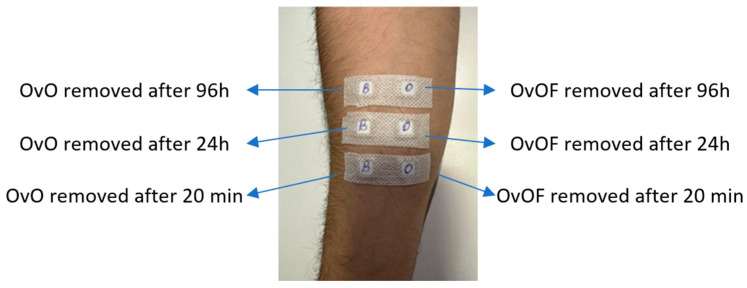 Figure 1
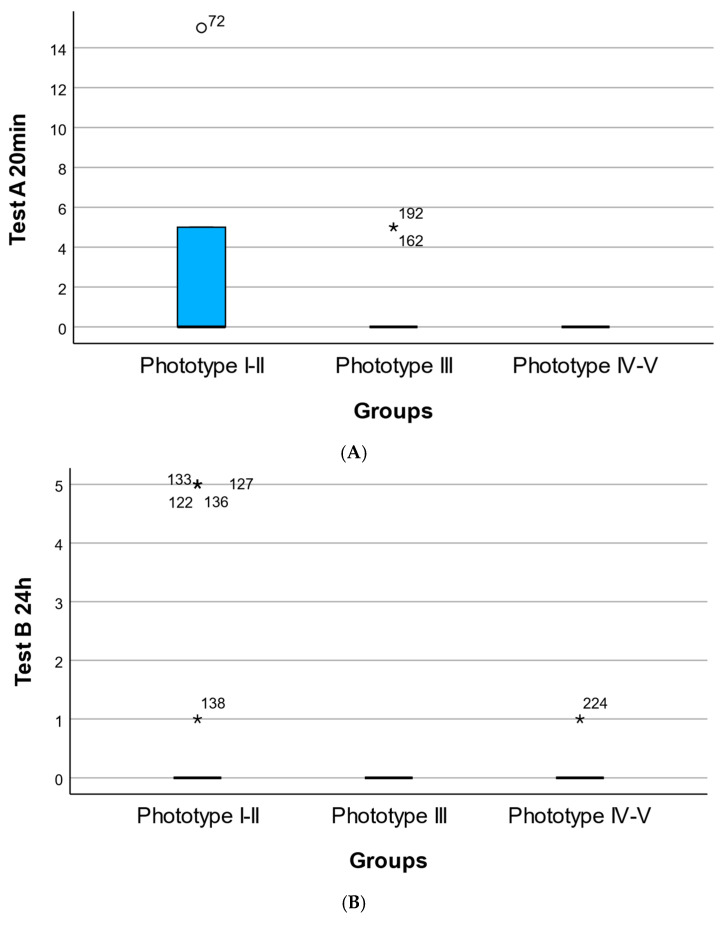 Figure 2
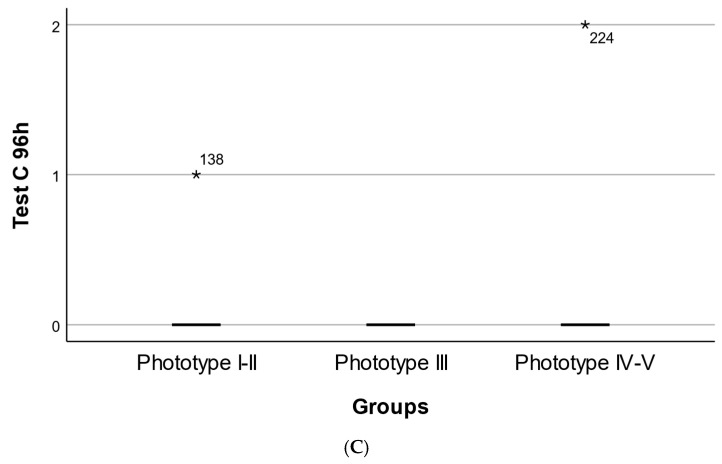 Figure 3
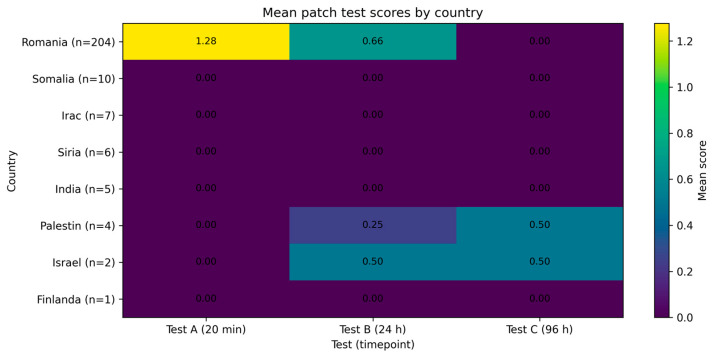 Figure 4
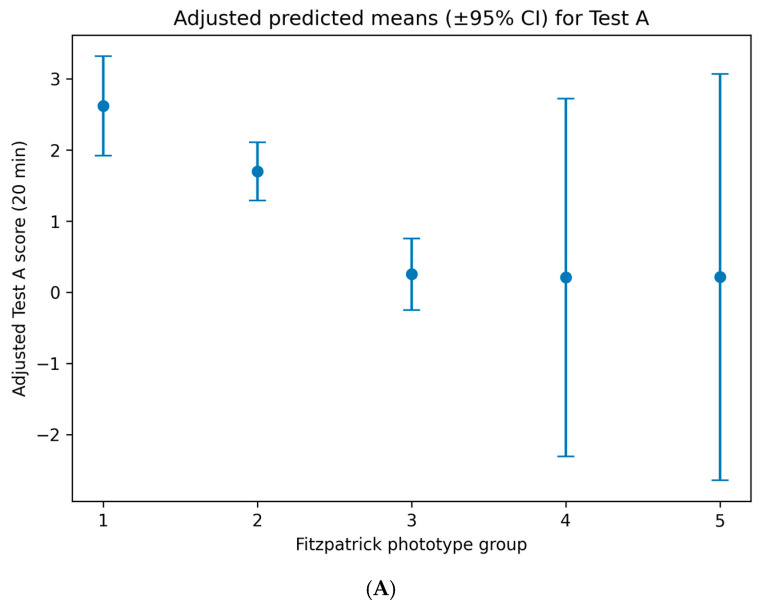 Figure 5
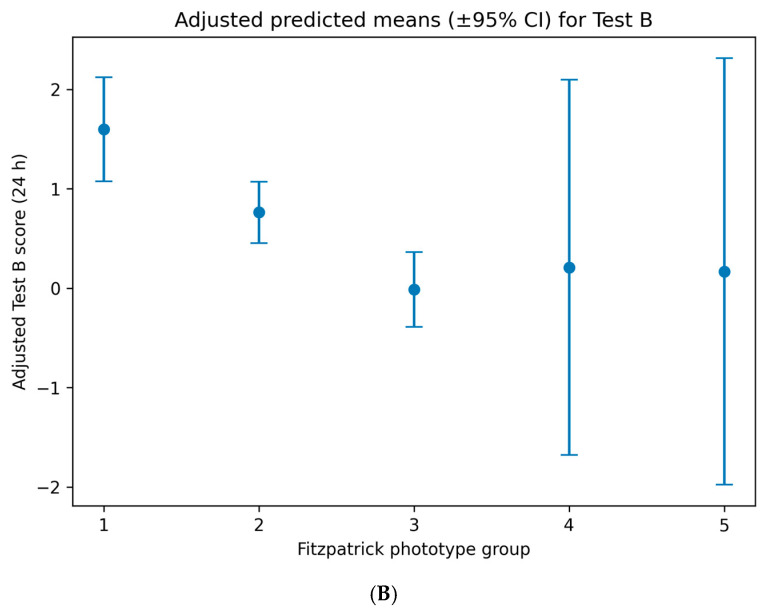 Figure 6
Peer Reviews
No public reviews on file for this paper yet. If you reviewed it on a platform where reviews are public (OpenReview, ICLR, NeurIPS, ICML), you can paste yours below so the community can read it here.
Videos
No videos yet. Explain this paper in a talk, walkthrough, or lecture? Add one.
Taxonomy
TopicsSkin Protection and Aging · Dermatologic Treatments and Research · Dermatology and Skin Diseases