Evolving Aerobic Bacterial Skin Flora and Healthcare-Associated Infections Among Intensive Care Unit Patients at a Tertiary Care Hospital: A Therapeutic Concern
Utsav Gupta, Garima Kapoor, Ravpreet Kaur, Naveen Patbamniya, Deepak Nayak, Harsh Darshan, Ashish Tiwari

TL;DR
This study shows that ICU patients develop more drug-resistant bacteria on their skin over time, increasing the risk of healthcare-associated infections.
Contribution
The study tracks the evolution of aerobic bacterial flora in ICU patients and links it to rising healthcare-associated infections.
Findings
WHO priority pathogens and potentially pathogenic bacteria were found in 63.4% of skin swabs.
Fingertips and webs had the highest pathogenic burden, with ESBL-producing Enterobacteriaceae being most prevalent.
Multidrug-resistant organism colonization increased significantly from day 1 to day 7 in ICU patients.
Abstract
This study aimed to assess the evolution of aerobic bacterial flora among ICU patients and its association with healthcare-associated infections in a tertiary care hospital. A total of 52 patients were selected from the medical, surgical, and burn and plastic surgery ICUs. A total of 764 skin swabs were collected from four sites, namely the fingertips and webs, dorsum of the hand, axilla, and anterior nares on days 1, 2, 3, 4, and 7. Of the total swabs collected, 484 (63.4%) were identified to have WHO priority pathogens and potentially pathogenic bacteria. A total of 650 isolated microorganisms were isolated from the 484 swabs, comprising both WHO priority pathogens and potentially pathogenic bacteria. Fingertips and webs were found to have the highest pathogenic burden of these 650 microorganisms (27.7%, n=180), with WHO priority pathogens comprising 20.5% (n=37) and…
Genes, proteins, chemicals, diseases, species, mutations and cell lines named across the full text — each resolved to its canonical identifier and authoritative record.
Click any figure to enlarge with its caption.
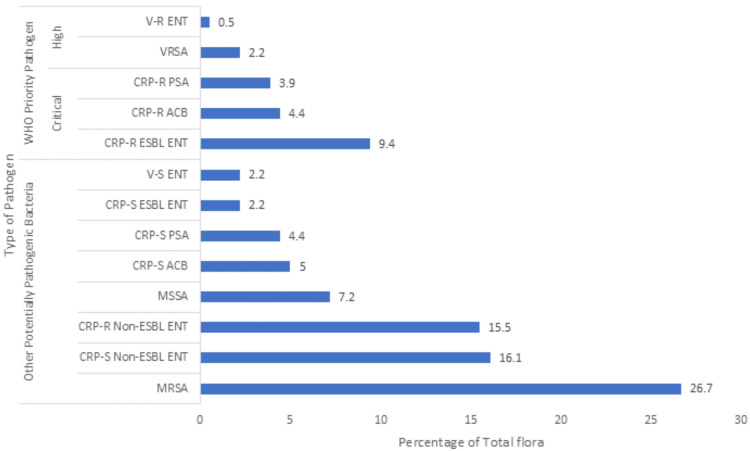 Figure 1
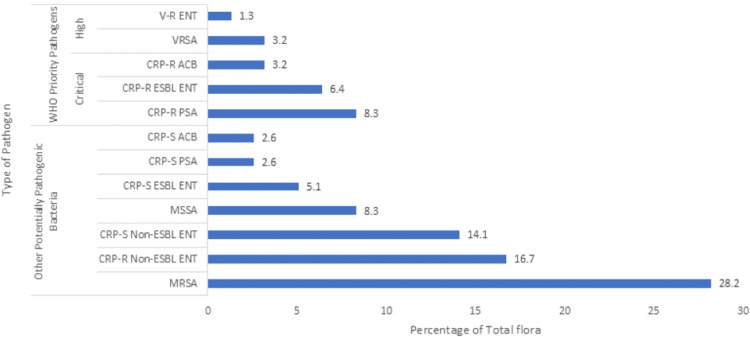 Figure 2
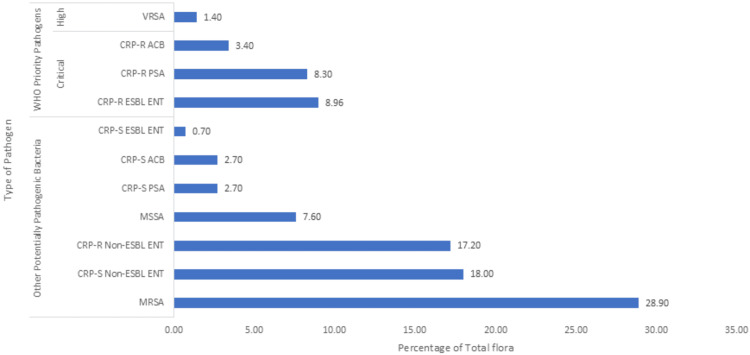 Figure 3
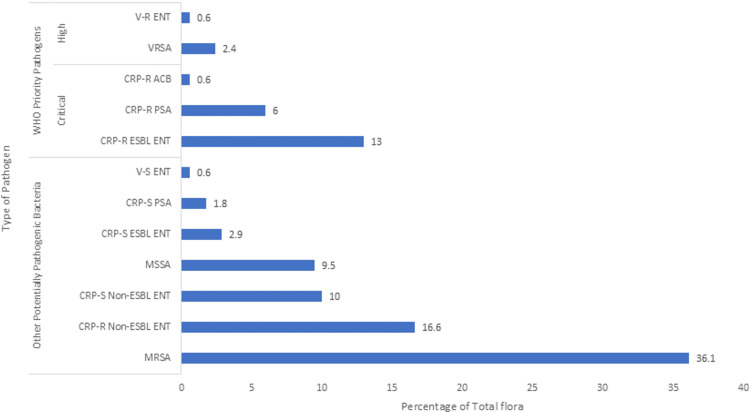 Figure 4
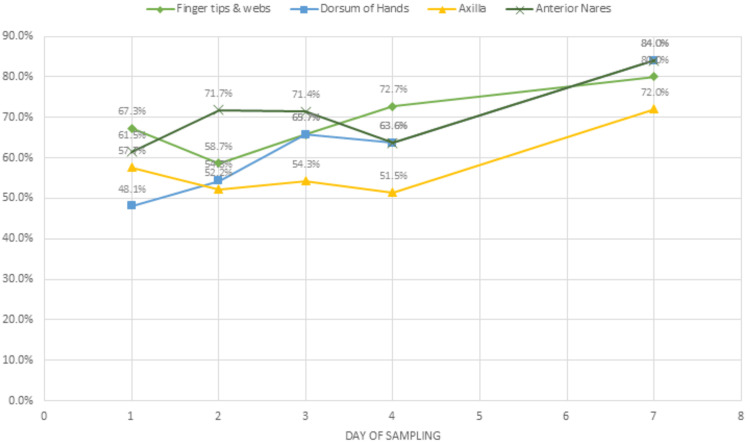 Figure 5
 Figure 6
Peer Reviews
No public reviews on file for this paper yet. If you reviewed it on a platform where reviews are public (OpenReview, ICLR, NeurIPS, ICML), you can paste yours below so the community can read it here.
Videos
No videos yet. Explain this paper in a talk, walkthrough, or lecture? Add one.
Taxonomy
TopicsSurgical site infection prevention · Infection Control in Healthcare · Urinary Tract Infections Management