5-Aminolevulinic Acid-Based Radiodynamic Therapy for Malignant Gliomas: A Conceptual Framework for Mitochondria-Centered Mechanisms, Target Cell States and Translational Perspectives
Junkoh Yamamoto

TL;DR
This paper explores how 5-aminolevulinic acid can enhance radiation therapy for brain tumors by targeting mitochondria and causing oxidative stress.
Contribution
The paper introduces a new framework for radiodynamic therapy using 5-ALA, focusing on mitochondria and oxidative stress mechanisms.
Findings
5-ALA induces protoporphyrin IX accumulation in tumor mitochondria, leading to oxidative stress.
Radiodynamic therapy using 5-ALA shows antitumor effects through mitochondrial dysfunction.
5-ALA-based RDT offers a novel approach distinct from traditional DNA-focused radiosensitization.
Abstract
5-Aminolevulinic acid (5-ALA) is a naturally occurring heme precursor with a favorable safety profile and is widely used for fluorescence-guided resection of malignant gliomas. Exogenous administration of 5-ALA results in the selective intracellular accumulation of protoporphyrin IX (PpIX), predominantly within tumor cell mitochondria, reflecting tumor-specific alterations in cellular metabolism and heme biosynthetic pathways. Historically, the radiosensitizing potential of 5-ALA was considered limited, as 5-ALA itself is not a porphyrin and intracellular PpIX levels are lower than those achieved with classical porphyrin-based agents, such as hematoporphyrin derivatives or porfimer sodium. Recent experimental and translational studies have challenged this view by demonstrating that the interactions between 5-ALA-induced PpIX and ionizing irradiation elicit biologically significant…
Genes, proteins, chemicals, diseases, species, mutations and cell lines named across the full text — each resolved to its canonical identifier and authoritative record.
Click any figure to enlarge with its caption.
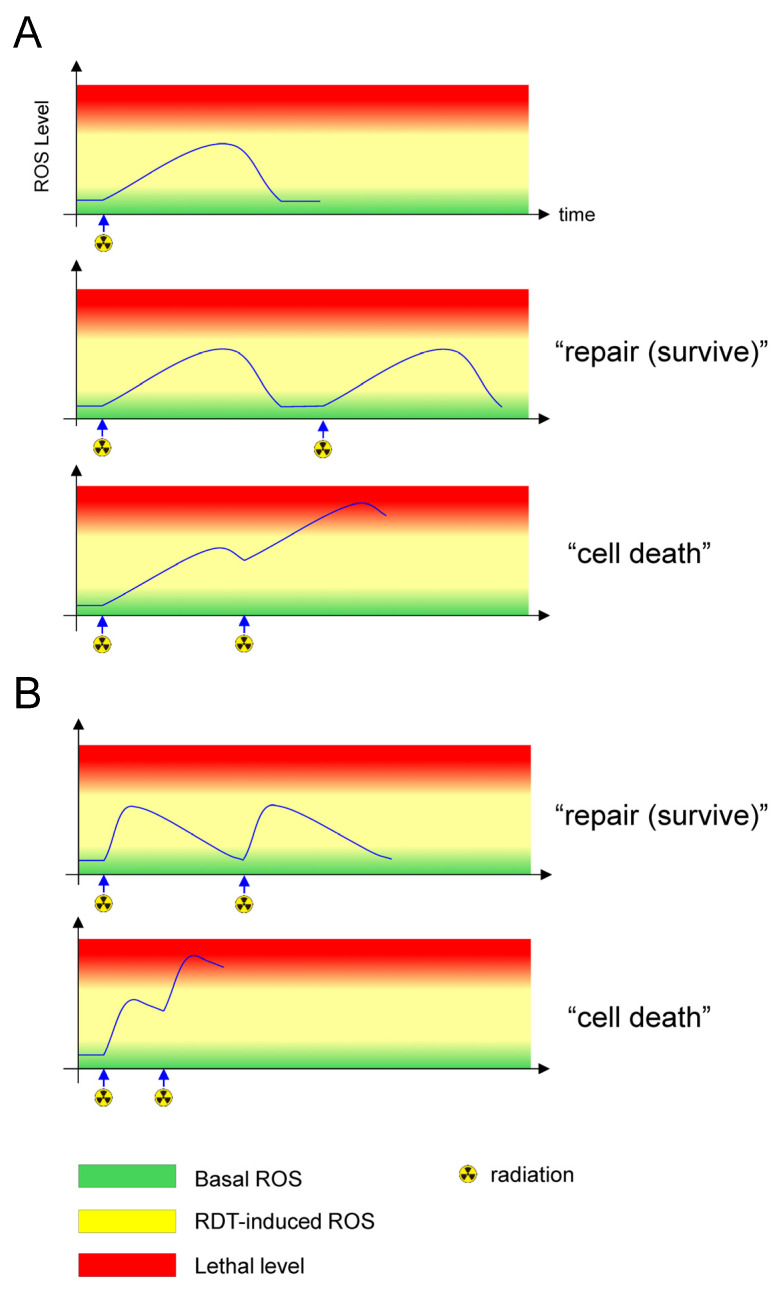 Figure 1
Peer Reviews
No public reviews on file for this paper yet. If you reviewed it on a platform where reviews are public (OpenReview, ICLR, NeurIPS, ICML), you can paste yours below so the community can read it here.
Videos
No videos yet. Explain this paper in a talk, walkthrough, or lecture? Add one.
Taxonomy
TopicsPhotodynamic Therapy Research Studies · Cancer, Hypoxia, and Metabolism · DNA Repair Mechanisms