Forecasting Stone-Free Status Following Percutaneous Nephrolithotomy Utilizing Explainable Machine Learning
Resul Çiçek, İbrahim Topçu, Bulut Dural, İpek Balıkçı Çiçek, Murat Yılmaz, Cemil Çolak

TL;DR
This study uses explainable machine learning to predict whether patients will be stone-free after a kidney stone surgery called PNL.
Contribution
The study introduces an explainable machine learning model, particularly XGBoost, for predicting post-PNL stone-free outcomes with clinical transparency.
Findings
XGBoost achieved the highest accuracy (0.916) and ROC–AUC (0.975) among tested models.
SHAP analysis revealed anatomical anomalies as the strongest predictor of stone-free outcomes.
Model features like stone placement and operation duration showed clinical relevance.
Abstract
Background: This study aimed to create and evaluate explainable machine learning models for forecasting postoperative stone-free status following percutaneous nephrolithotomy (PNL) utilizing a substantial clinical cohort. Methods: This retrospective single-center analysis encompassed 2144 adult patients who received PNL from 2010 to 2024. We employed clinical, radiographic, stone-related, and surgical data to train four supervised machine learning models: Extreme Gradient Boosting (XGBoost), Random Forest, Light Gradient Boosting Machine (LightGBM), and Adaptive Boosting (AdaBoost). We used the Synthetic Minority Oversampling Technique exclusively on the training set to fix the class imbalance. We assessed the model’s accuracy, precision, recall, F1-score, and area under the receiver operating characteristic curve (ROC–AUC) to see how well it worked. SHapley Additive exPlanations (SHAP)…
Genes, proteins, chemicals, diseases, species, mutations and cell lines named across the full text — each resolved to its canonical identifier and authoritative record.
Click any figure to enlarge with its caption.
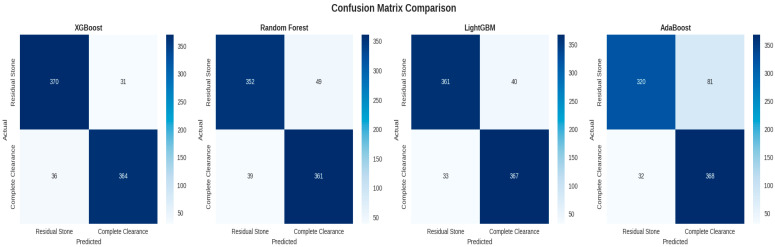 Figure 1
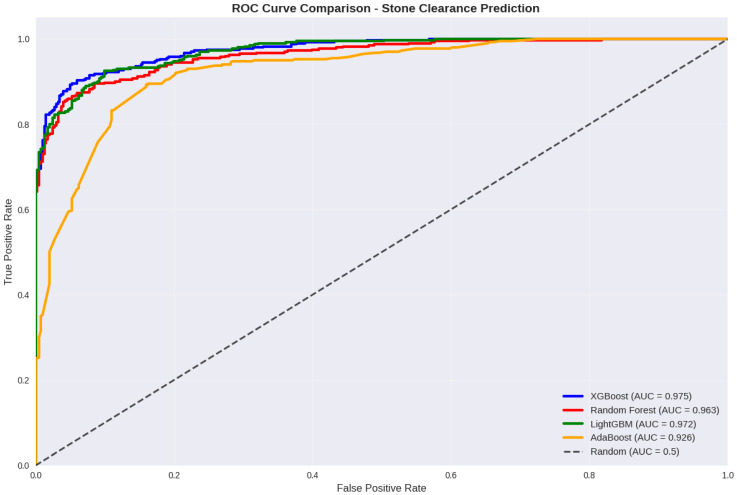 Figure 2
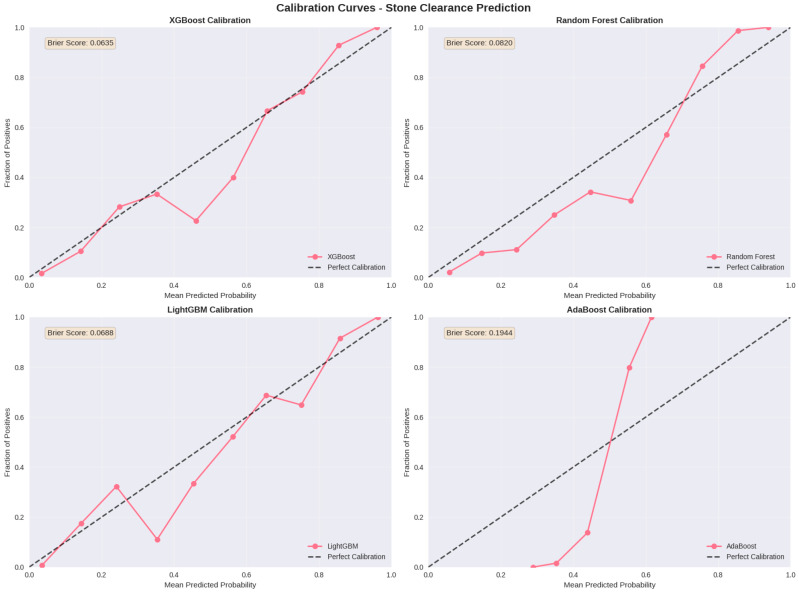 Figure 3
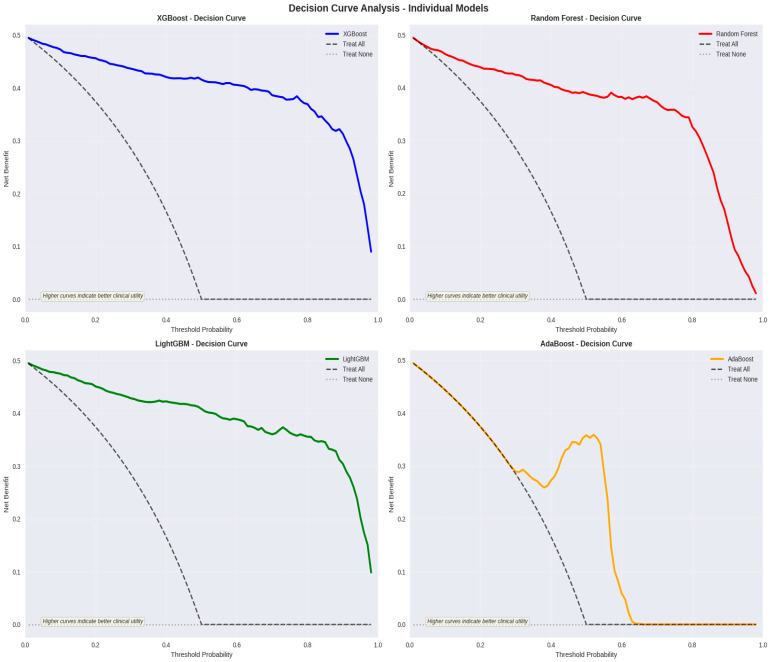 Figure 4
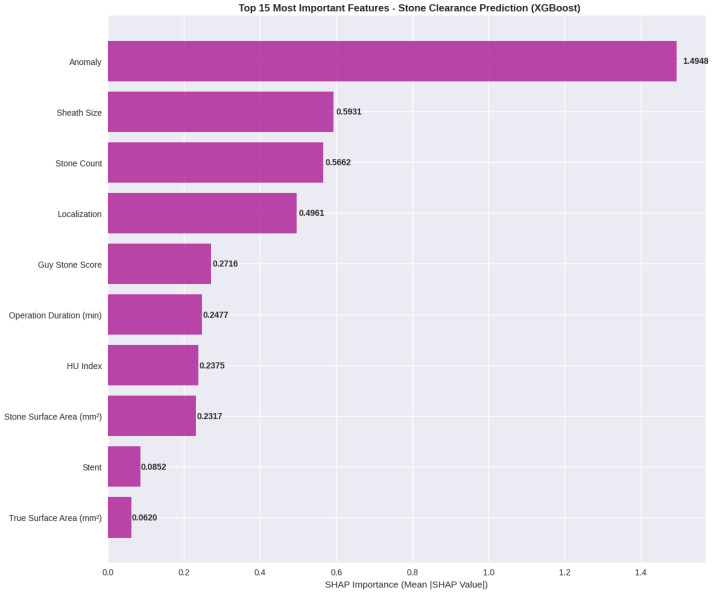 Figure 5
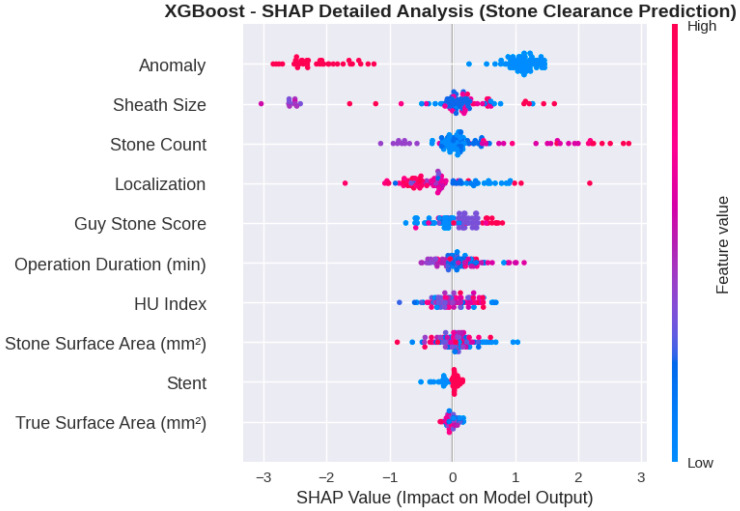 Figure 6
Peer Reviews
No public reviews on file for this paper yet. If you reviewed it on a platform where reviews are public (OpenReview, ICLR, NeurIPS, ICML), you can paste yours below so the community can read it here.
Videos
No videos yet. Explain this paper in a talk, walkthrough, or lecture? Add one.
Taxonomy
TopicsKidney Stones and Urolithiasis Treatments · Dialysis and Renal Disease Management · Therapeutic Uses of Natural Elements