Parameter Optimisation in 3D Extrusion Printing of Polyhydroxybutyrate Using Design of Experiment Methodology
Mingzu Du, Giuseppe Tronci, Xuebin B. Yang, David J. Wood

TL;DR
This paper optimizes 3D printing parameters for polyhydroxybutyrate to improve the accuracy and reliability of printed structures for regenerative medicine.
Contribution
A novel DoE-based optimization strategy for PHB extrusion printing is introduced, improving scaffold fidelity and process reliability.
Findings
An optimized parameter set significantly improved the shape fidelity of PHB scaffolds.
A regression model identified key printing parameters and their interactions affecting dimensional accuracy.
Verification prints confirmed the effectiveness of the optimized conditions.
Abstract
This study systematically optimised extrusion-printing parameters for polyhydroxybutyrate (PHB) using a Design of Experiment (DoE) approach to improve printability and construct fidelity. A five-factor DoE was conducted to evaluate the individual and interactive effects of printhead temperature, printing pressure, printing speed, bed temperature, and cartridge heating time on the dimensional accuracy of printed constructs. The resulting regression model enabled the identification of statistically significant main and interaction effects among processing variables. An optimised parameter set (printhead temperature 145 °C, pressure 150 kPa, speed 15 mm s−1, bed temperature 25 °C, and cartridge heating time 120 s) enabled the fabrication of PHB scaffolds with substantially improved shape fidelity, which was experimentally validated using verification prints. These results demonstrate that…
Genes, proteins, chemicals, diseases, species, mutations and cell lines named across the full text — each resolved to its canonical identifier and authoritative record.
Click any figure to enlarge with its caption.
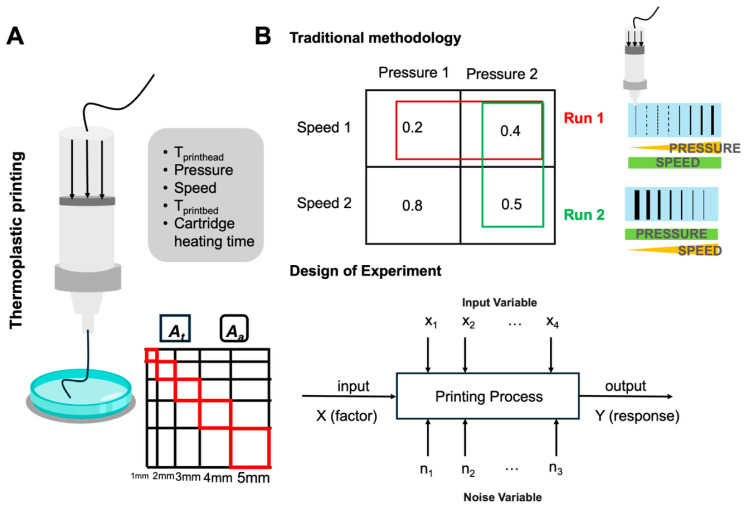 Figure 1
 Figure 2
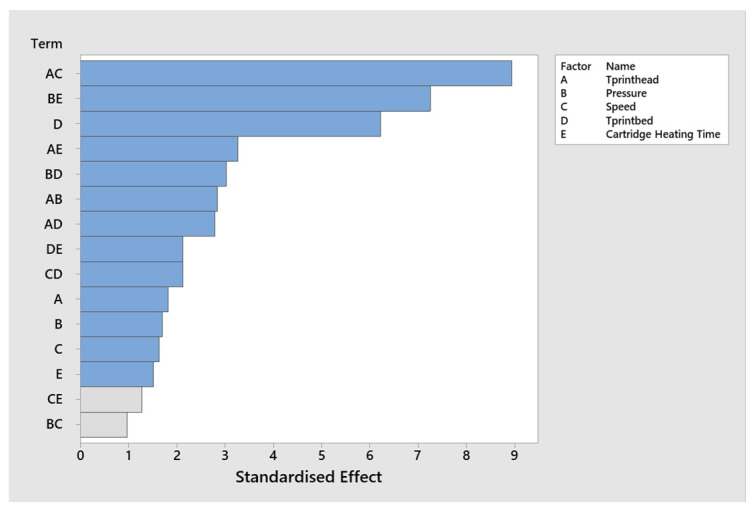 Figure 3
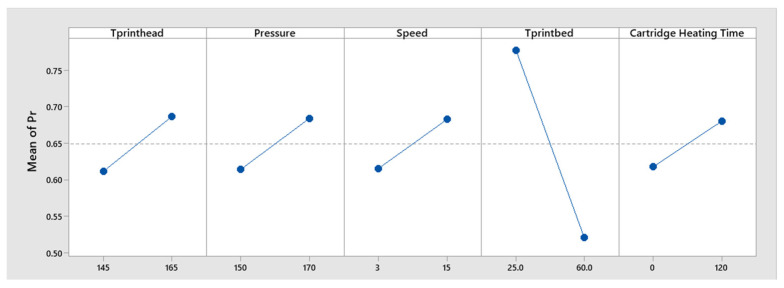 Figure 4
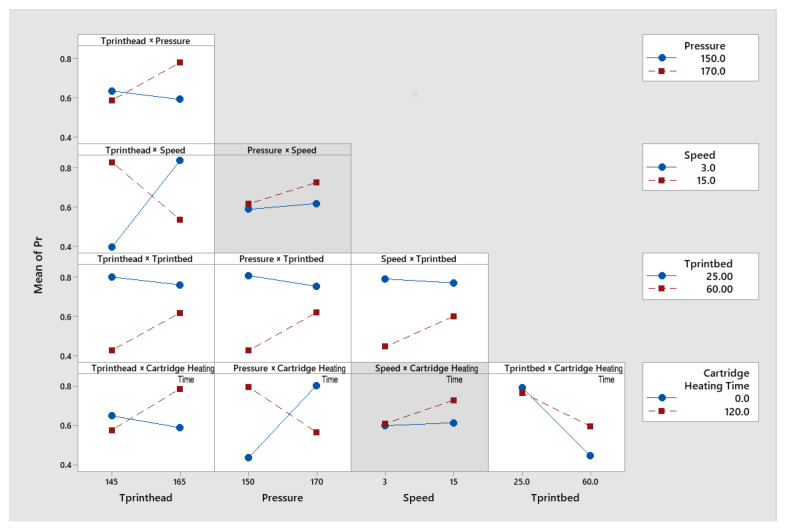 Figure 5
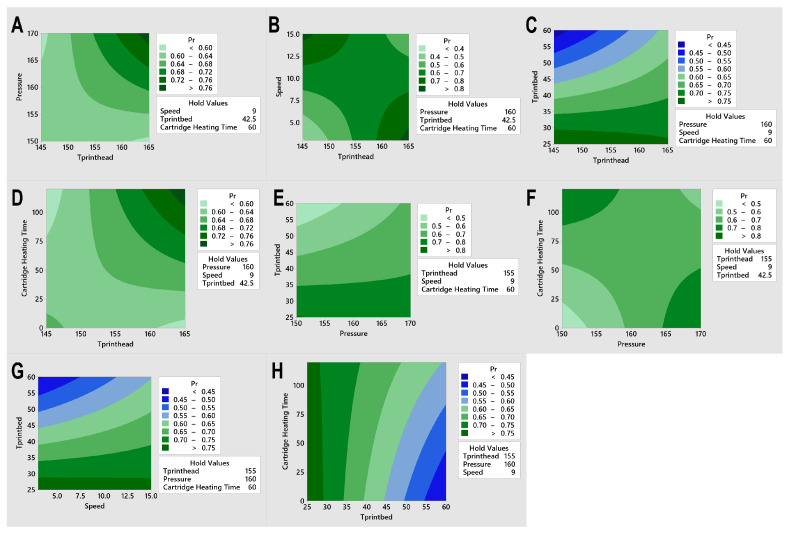 Figure 6
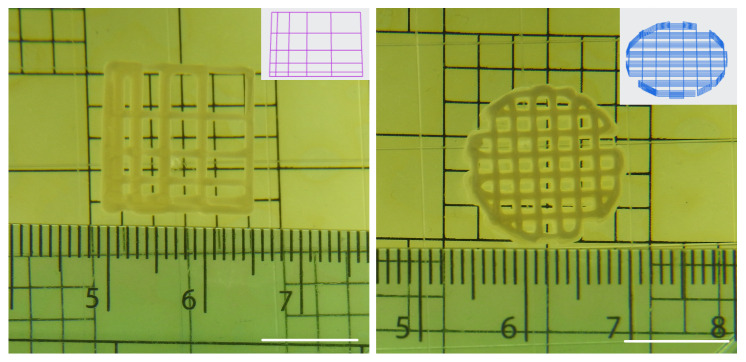 Figure 7
Peer Reviews
No public reviews on file for this paper yet. If you reviewed it on a platform where reviews are public (OpenReview, ICLR, NeurIPS, ICML), you can paste yours below so the community can read it here.
Videos
No videos yet. Explain this paper in a talk, walkthrough, or lecture? Add one.
Taxonomy
TopicsAdditive Manufacturing and 3D Printing Technologies · 3D Printing in Biomedical Research · biodegradable polymer synthesis and properties