Altered Ocular Surface Temperature in Congenital Aniridia with PAX6 Pathogenic Variants: Impact of Age, Salzmann Nodules and Ocular Surgery
Orsolya Németh, Annamária Náray, Mária Csidey, Klaudia Kéki-Kovács, Krisztina Knézy, Mária Bausz, Andrea Szigeti, Anita Csorba, Kitti Kormányos, Ditta Zobor, Zoltán Zsolt Nagy, Marta Cortón, Eszter Jávorszky, Kálmán Tory, Erika Maka, Timo Eppig, Achim Langenbucher, Nóra Szentmáry

TL;DR
This study found that ocular surface temperature in congenital aniridia is influenced by age, Salzmann nodules, and prior eye surgery, suggesting it could be a useful noninvasive biomarker.
Contribution
The study identifies age, Salzmann nodules, and ocular surgery as key factors affecting ocular surface temperature in aniridia patients.
Findings
Superior ocular surface temperature was higher in aniridia patients compared to controls.
Salzmann nodules and prior ocular surgery were significant determinants of lower ocular surface temperature.
Age was identified as a key factor influencing ocular surface temperature in aniridia.
Abstract
PAX6 haploinsufficiency-related congenital aniridia is frequently associated with ocular surface disease, including meibomian gland dysfunction (MGD), dry eye, limbal stem cell deficiency (LSCD), aniridia-associated keratopathy (AAK), and inflammation. This study measured ocular surface temperature (OST) at the corneal center and four paracentral points (2 mm from center) in patients with congenital aniridia and examined factors influencing OST. Forty-five eyes from 26 aniridia patients (55.6% female; 26.29 ± 17.78 years) with PAX6 pathogenic variants and 47 eyes from 25 controls (68.1% female; 24.81 ± 4.73 years; p = 0.1639) were included. Body temperature, OSDI, and OST (TG-1000) were recorded; clinical assessment evaluated MGD, LSCD, AAK, iris malformation, epithelial defects, Salzmann nodules, glaucoma and previous ocular surgery. Body temperature and OSDI did not differ in aniridia…
Genes, proteins, chemicals, diseases, species, mutations and cell lines named across the full text — each resolved to its canonical identifier and authoritative record.
Click any figure to enlarge with its caption.
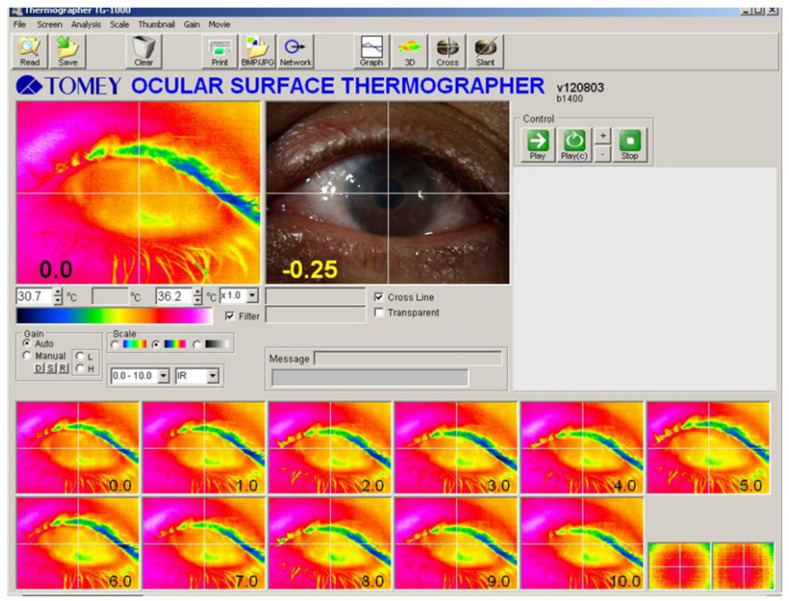 Figure 1
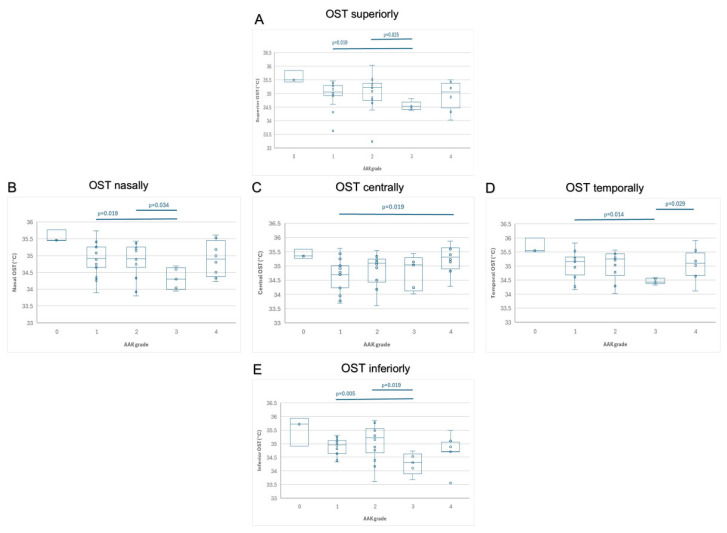 Figure 2
Peer Reviews
No public reviews on file for this paper yet. If you reviewed it on a platform where reviews are public (OpenReview, ICLR, NeurIPS, ICML), you can paste yours below so the community can read it here.
Videos
No videos yet. Explain this paper in a talk, walkthrough, or lecture? Add one.
Taxonomy
TopicsCorneal Surgery and Treatments · Developmental Biology and Gene Regulation · Ocular Oncology and Treatments