Neuropathic Pain in Neuromyelitis Optica Spectrum Disorders: Prevalence and Management Strategies—A Systematic Review and Meta-Analysis
Alexandra Akrivaki, Vasileios Giannopapas, Evangelia-Makrina Dimitriadou, Dimitrios Tzanetakos, Dimitrios Kitsos, Konstantina Stavrogianni, Athanasios K. Chasiotis, Georgios Tsivgoulis, John S. Tzartos, Sotirios Giannopoulos

TL;DR
This study finds that about half of people with NMOSD experience neuropathic pain, which is often hard to treat and linked to spinal cord lesions.
Contribution
The study provides the first meta-analysis on the prevalence of neuropathic pain in NMOSD and highlights its unique characteristics compared to other disorders.
Findings
Neuropathic pain affects 56.2% of NMOSD patients, with high heterogeneity across studies.
Thoracic spinal cord lesions are associated with neuropathic pain in NMOSD.
Standard treatments for neuropathic pain are often ineffective in NMOSD patients.
Abstract
Introduction: Neuropathic pain (NP) in neuromyelitis optica spectrum disorder (NMOSD) represents a significant and often under-recognized complication arising from central nervous system (CNS) lesions. Unlike other demyelinating disorders, NMOSD involves a distinct immunopathogenesis primarily driven by aquaporin-4 antibodies (AQP4-IgG), leading to severe inflammatory damage. NP is typically the consequence of inflammatory damage to the spinothalamic tract or dorsal columns, resulting in both acute and chronic pain syndromes. Methods: A systematic review and meta-analysis were conducted following a comprehensive search of Medline and Scopus, identifying nine eligible studies reporting on NP in NMOSD. Results: Pooled prevalence was estimated using a random-effects metaprop meta-analysis with Freeman–Tukey transformation and REML-based heterogeneity estimation. The pooled prevalence of NP…
Genes, proteins, chemicals, diseases, species, mutations and cell lines named across the full text — each resolved to its canonical identifier and authoritative record.
Click any figure to enlarge with its caption.
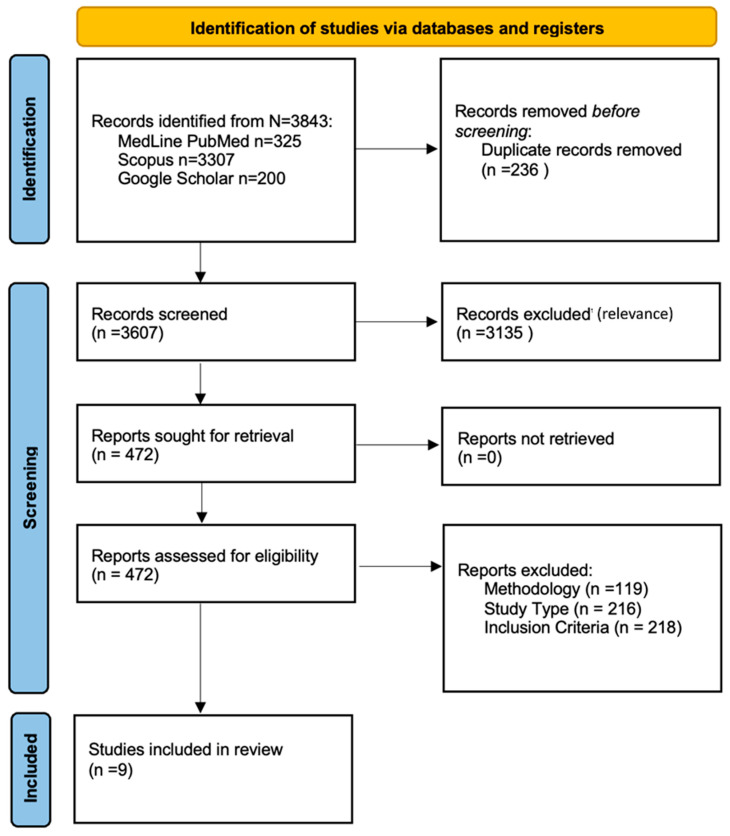 Figure 1
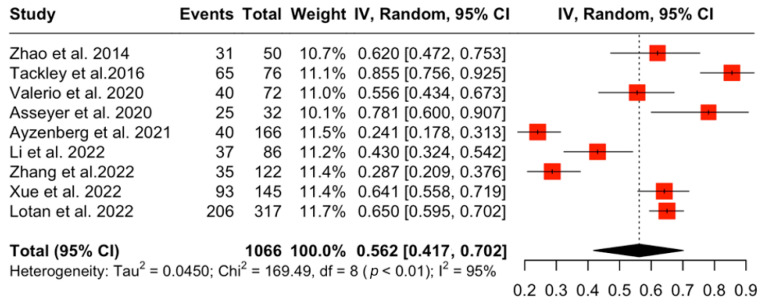 Figure 2
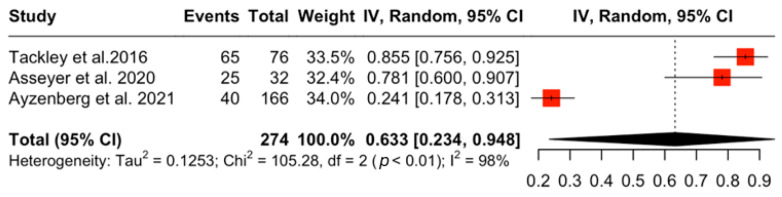 Figure 3
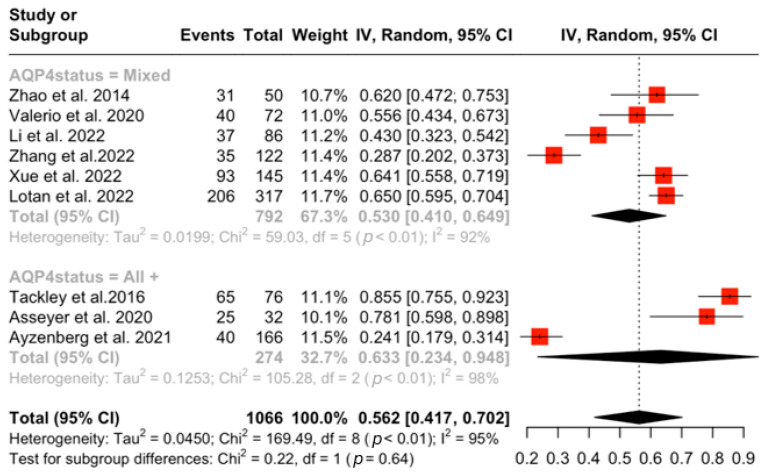 Figure 4
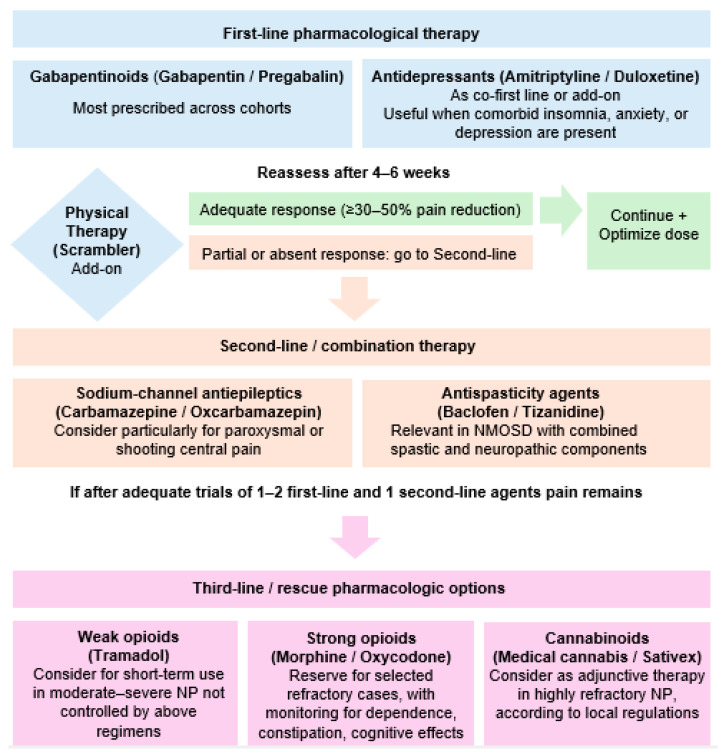 Figure 5
Peer Reviews
No public reviews on file for this paper yet. If you reviewed it on a platform where reviews are public (OpenReview, ICLR, NeurIPS, ICML), you can paste yours below so the community can read it here.
Videos
No videos yet. Explain this paper in a talk, walkthrough, or lecture? Add one.
Taxonomy
TopicsPain Mechanisms and Treatments · Multiple Sclerosis Research Studies · Hereditary Neurological Disorders