A Robust Skeletonization Method for High-Density Fringe Patterns in Holographic Interferometry Based on Parametric Modeling and Strip Integration
Sergey Lychev, Alexander Digilov

TL;DR
This paper introduces a new method for analyzing high-density fringe patterns in holographic interferometry, improving accuracy and reliability in noisy conditions.
Contribution
The novel skeletonization method combines parametric modeling, noise-robust strip integration, and sub-pixel accuracy for reliable fringe analysis.
Findings
The method achieves topology preservation and noise suppression in fringe pattern analysis.
It demonstrates sub-pixel accuracy without phase extraction, enhancing contour localization.
Validation on synthetic and real interferograms confirms lower error and practical utility.
Abstract
Accurate displacement field measurement by holographic interferometry requires robust analysis of high-density fringe patterns, which is hindered by speckle noise inherent in any interferogram, no matter how perfect. Conventional skeletonization methods, such as edge detection algorithms and active contour models, often fail under these conditions, producing fragmented and unreliable fringe contours. This paper presents a novel skeletonization procedure that simultaneously addresses three fundamental challenges: (1) topology preservation—by representing the fringe family within a physics-informed, finite-dimensional parametric subspace (e.g., Fourier-based contours), ensuring global smoothness, connectivity, and correct nesting of each fringe; (2) extreme noise robustness—through a robust strip integration functional that replaces noisy point sampling with Gaussian-weighted intensity…
Genes, proteins, chemicals, diseases, species, mutations and cell lines named across the full text — each resolved to its canonical identifier and authoritative record.
Click any figure to enlarge with its caption.
 Figure 1
 Figure 2
 Figure 3
 Figure 4
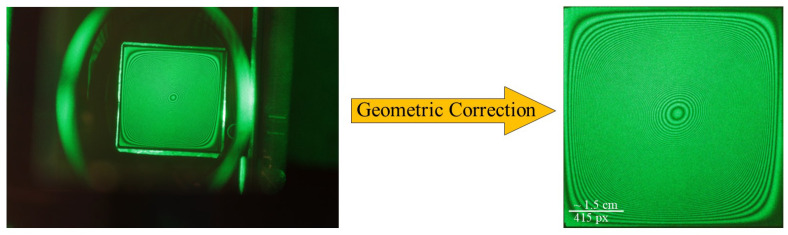 Figure 5
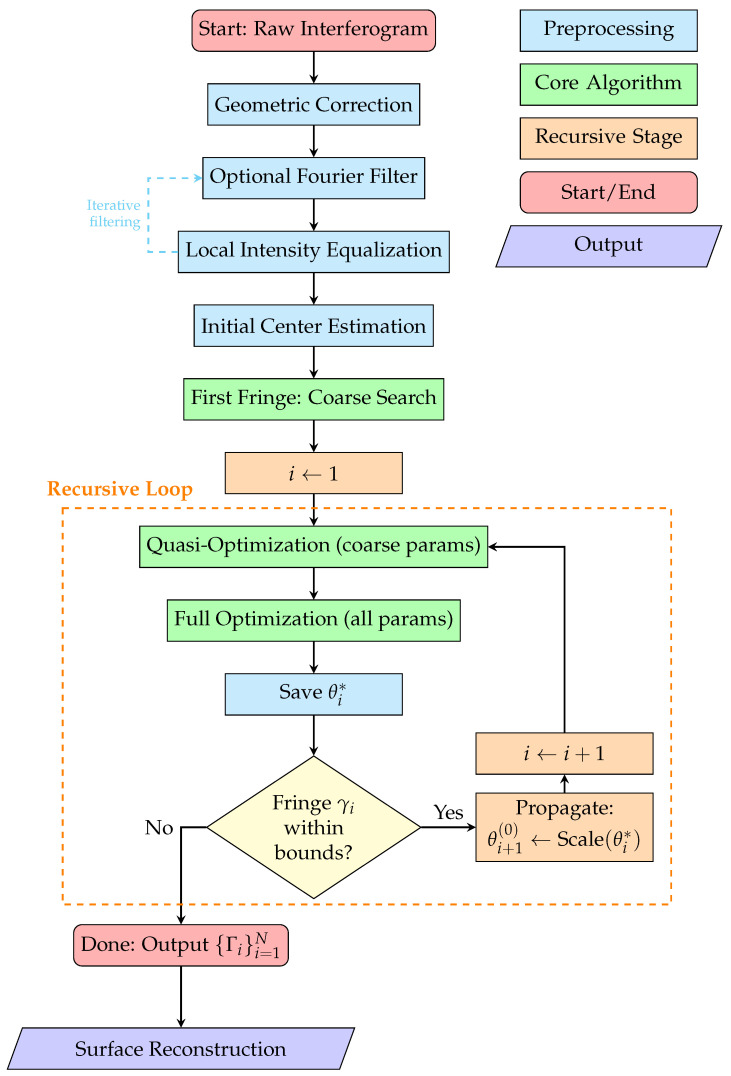 Figure 6
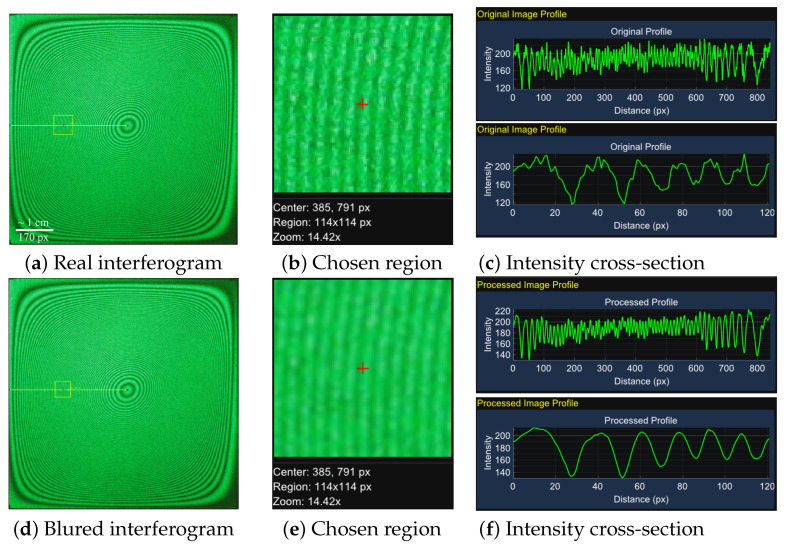 Figure 7
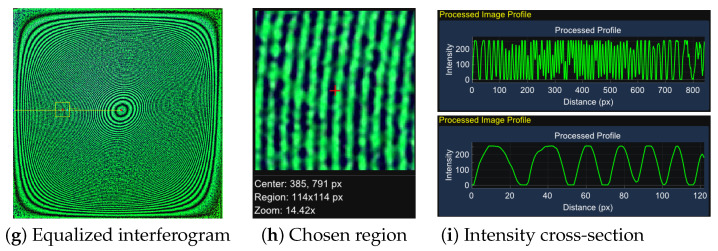 Figure 8
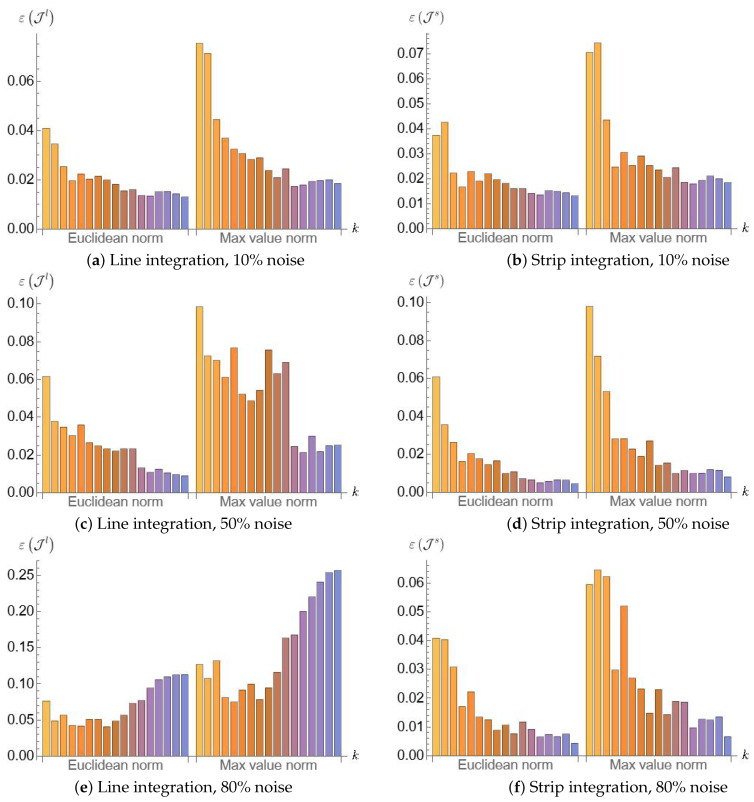 Figure 9
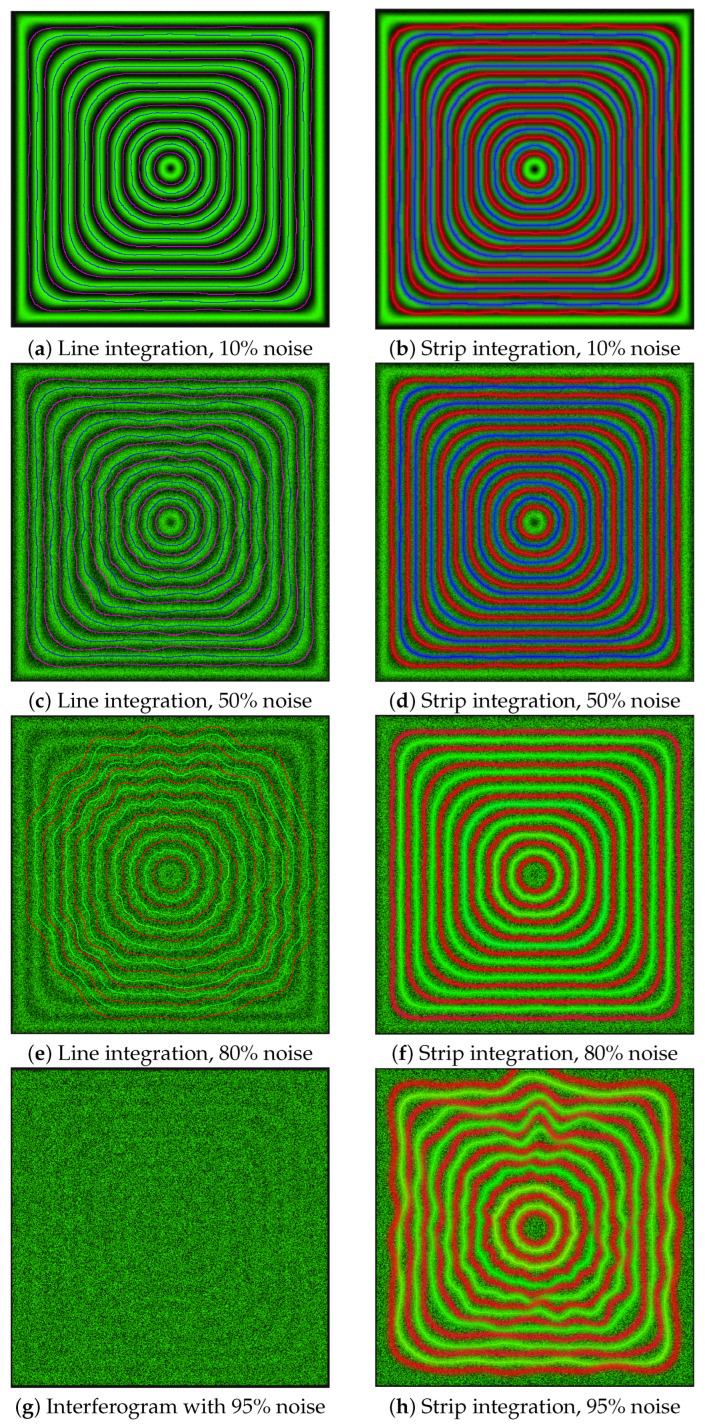 Figure 10
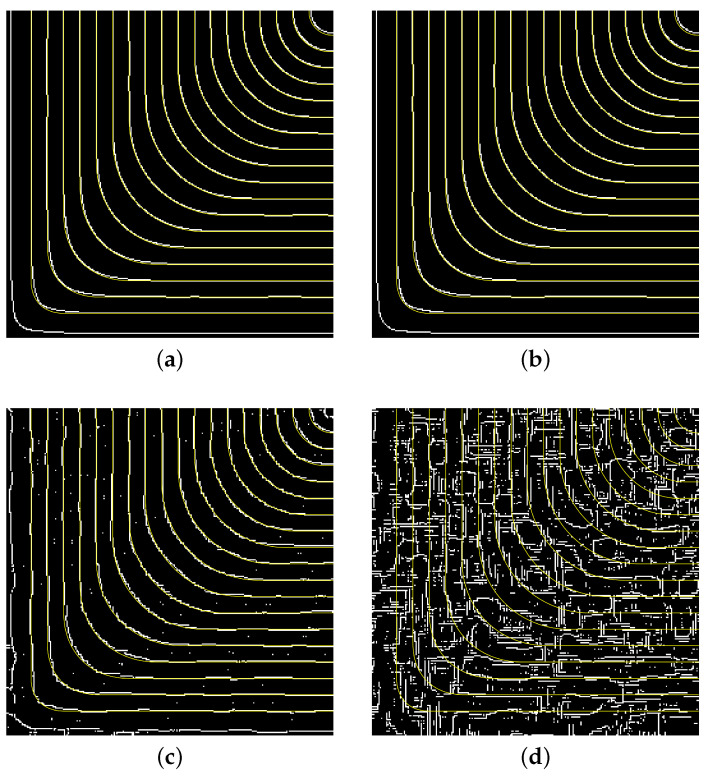 Figure 11
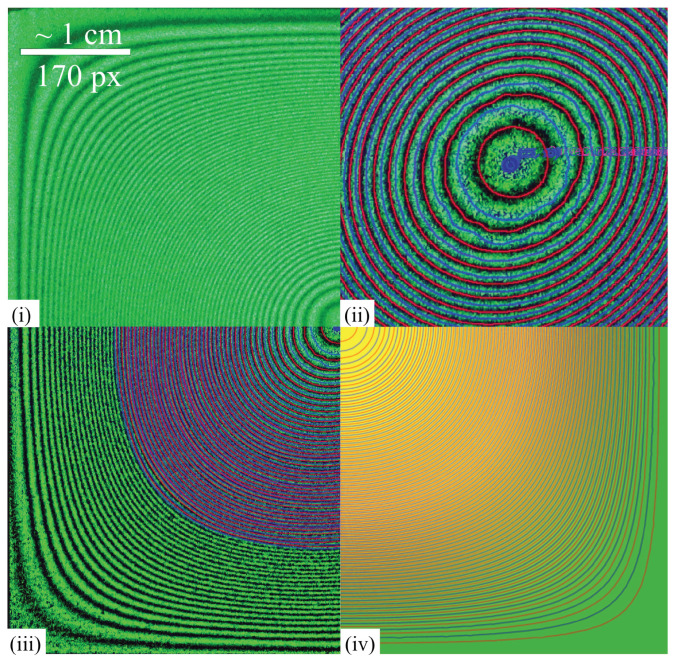 Figure 12
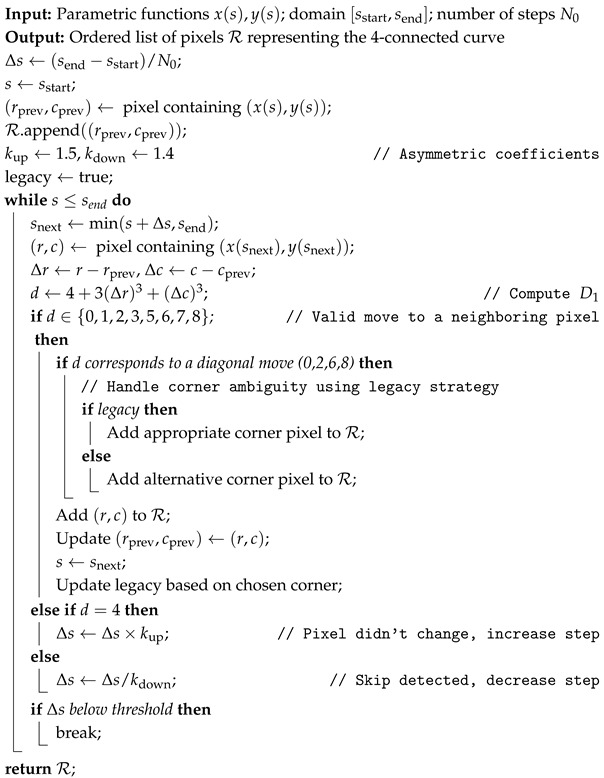 Figure 13
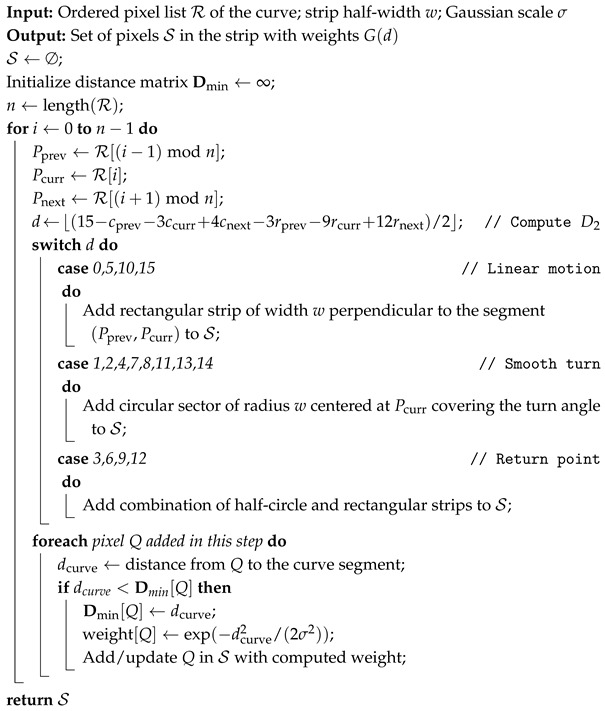 Figure 14
Peer Reviews
No public reviews on file for this paper yet. If you reviewed it on a platform where reviews are public (OpenReview, ICLR, NeurIPS, ICML), you can paste yours below so the community can read it here.
Videos
No videos yet. Explain this paper in a talk, walkthrough, or lecture? Add one.
Taxonomy
TopicsOptical measurement and interference techniques · Digital Holography and Microscopy · Structural Health Monitoring Techniques