The Impact of Cardiopulmonary Bypass on the Structure and Mechanics of Red Blood Cells: Pilot Study
Viktoria Sergunova, Boris Akselrod, Snezhanna Kandrashina, Denis Guskov, Mikhail Shvedov, Olga Dymova, Alexander Grechko, Maxim Dokukin, Ilya Eremin, Vladimir Inozemtsev, Artem Kuzovlev, Ekaterina Sherstyukova

TL;DR
This study uses atomic force microscopy to show how heart surgery procedures affect red blood cell structure and stiffness, with different impacts based on whether hypothermia is used.
Contribution
The study introduces atomic force microscopy as a novel method to assess erythrocyte nanostructural and mechanical changes caused by cardiopulmonary bypass.
Findings
CPB+HCA caused more severe erythrocyte membrane damage compared to normothermic CPB.
Normothermic CPB increased red blood cell stiffness but preserved membrane structure.
AFM-derived parameters like membrane roughness and elasticity could detect erythrocyte biophysical changes.
Abstract
Background/Objectives: Cardiopulmonary bypass (CPB) facilitates complex cardiac surgery but can damage erythrocyte membranes, impairing microcirculation and oxygen transport. Standard rheological tests assess overall blood properties but fail to define specific cellular mechanisms. In this study, atomic force microscopy (AFM) was employed to characterize morphological, nanostructural, and mechanical changes in erythrocytes following CPB and CPB combined with hypothermic circulatory arrest (HCA). Methods: The study included 14 patients who underwent cardiac surgery with CPB. Patients were divided into two groups. Group 1 underwent heart valve surgery with normothermic CPB (n = 7), and Group 2 underwent aortic arch surgery with CPB combined with HCA and moderate hypothermia (28 °C) (n = 7). Arterial blood samples were collected before the induction of anesthesia and immediately after CPB.…
Genes, proteins, chemicals, diseases, species, mutations and cell lines named across the full text — each resolved to its canonical identifier and authoritative record.
Click any figure to enlarge with its caption.
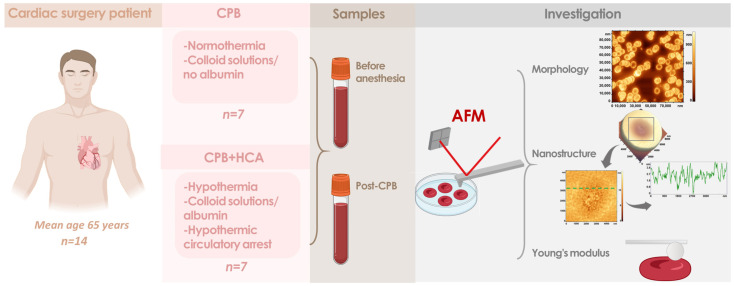 Figure 1
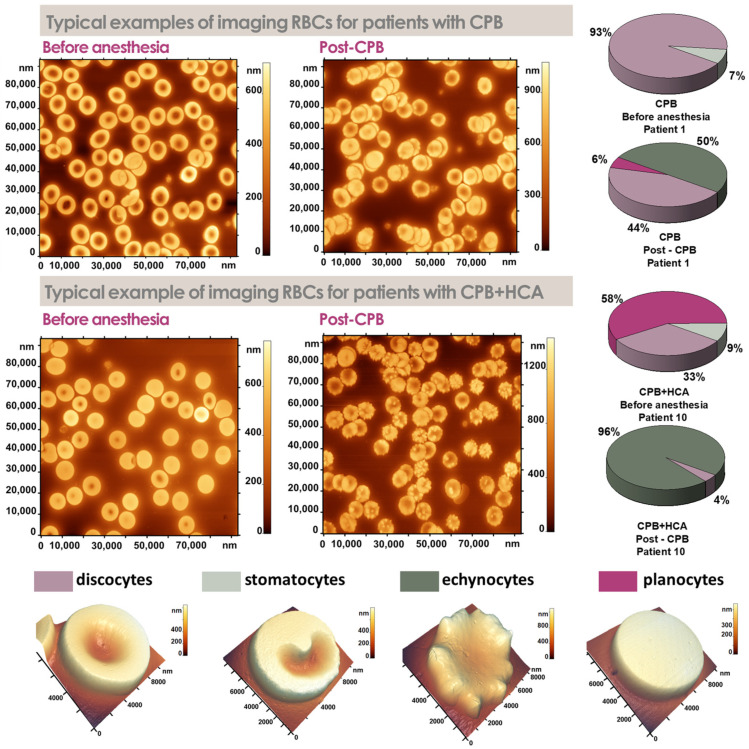 Figure 2
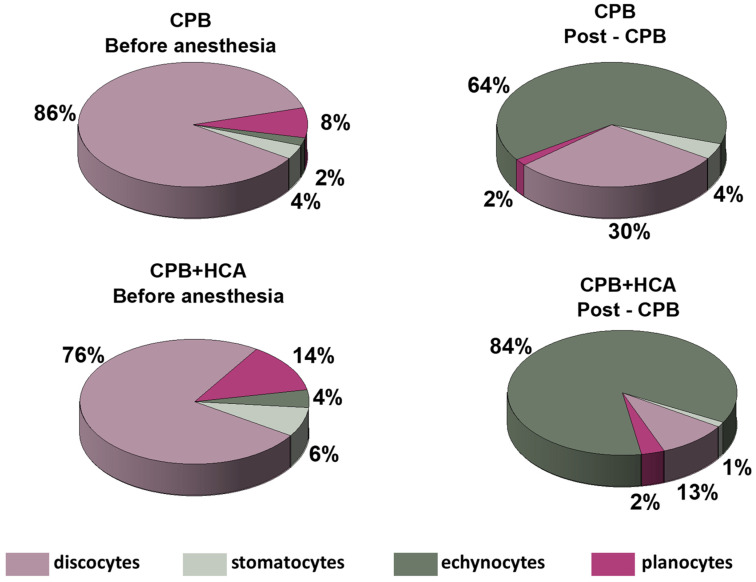 Figure 3
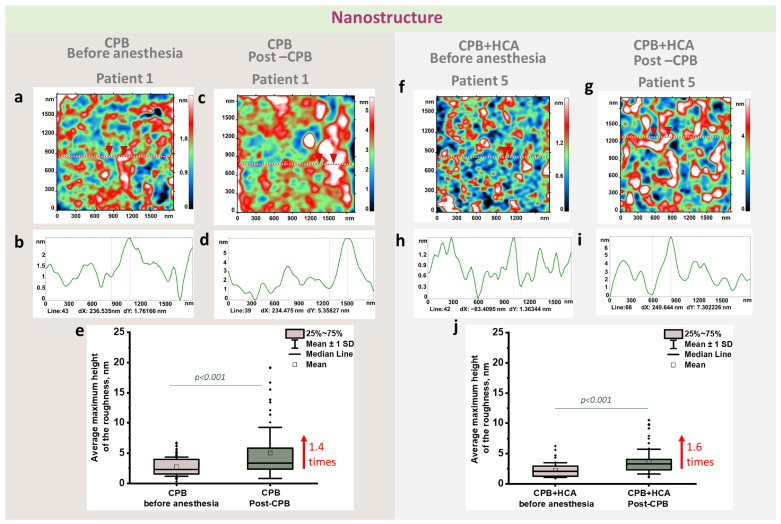 Figure 4
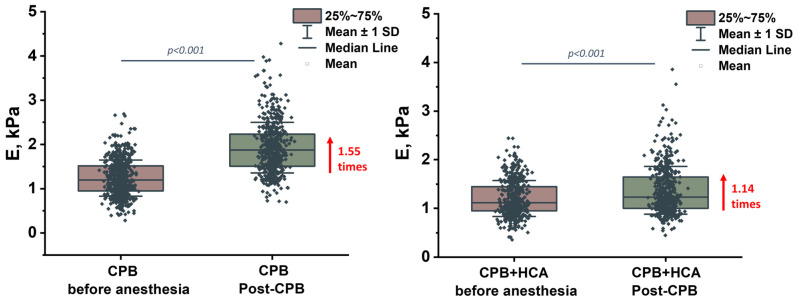 Figure 5
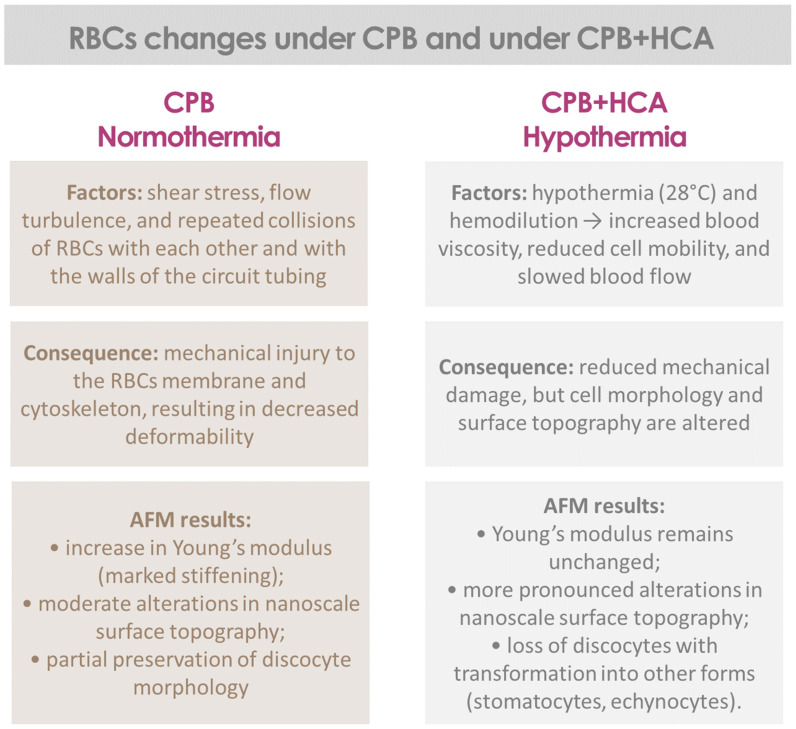 Figure 6
Peer Reviews
No public reviews on file for this paper yet. If you reviewed it on a platform where reviews are public (OpenReview, ICLR, NeurIPS, ICML), you can paste yours below so the community can read it here.
Videos
No videos yet. Explain this paper in a talk, walkthrough, or lecture? Add one.
Taxonomy
TopicsBlood properties and coagulation · Cardiac and Coronary Surgery Techniques · Trauma, Hemostasis, Coagulopathy, Resuscitation