Age-Adjusted Mortality Trends in Acute Tubulointerstitial Nephritis by Gender, Race, and Census Region in the United States: A CDC-WONDER Study, 1999–2020
Abdallah Ibrahim Abujlambo, Muhammad Ali Khan, Hiba Hamdar, Bassam G. Abu Jawdeh

TL;DR
This study examines how deaths from acute tubulointerstitial nephritis in the U.S. have changed over time, revealing rising mortality rates with differences by gender, race, and region.
Contribution
The study identifies a recent reversal in declining mortality trends for acute tubulointerstitial nephritis and highlights converging racial disparities and regional increases.
Findings
Mortality rates for acute tubulointerstitial nephritis followed a 'V-shaped' trend, declining until 2013 then rising sharply through 2020.
Non-Hispanic White individuals saw a significant surge in mortality rates after 2013, leading to convergence with Black/African American rates by 2020.
The Midwest and South regions experienced the most pronounced recent increases in mortality rates compared to other regions.
Abstract
Background: Acute tubulointerstitial nephritis (ATIN) is a significant yet under-monitored cause of U.S. mortality, particularly among the elderly. This study anrackalyzed national trends and demographic disparities in age-adjusted mortality rates (AAMRs) from 1999 to 2020 to identify high-risk populations and inform public health policy. Methods: Using the CDC WONDER database, we conducted a retrospective analysis of 6872 ATIN-related deaths. AAMRs (per 100,000) were stratified by sex, race, and census region. Temporal shifts were quantified using Joinpoint regression to determine annual percentage changes (APC) and 95% confidence intervals (CIs). Results: The analysis revealed a distinct “V-shaped” mortality trend across the 22-year period. Following an initial decline from 1999 to 2013, AAMRs rose sharply through 2020. Males experienced a slightly steeper recent increase (9.90%)…
Genes, proteins, chemicals, diseases, species, mutations and cell lines named across the full text — each resolved to its canonical identifier and authoritative record.
Click any figure to enlarge with its caption.
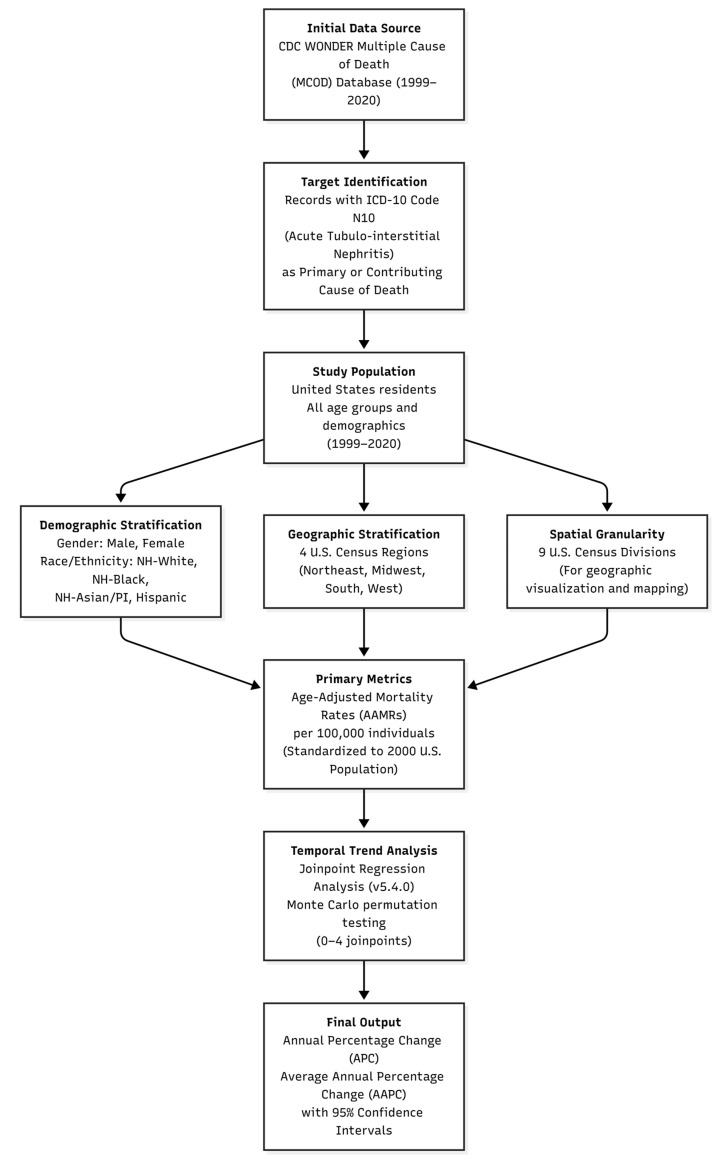 Figure 1
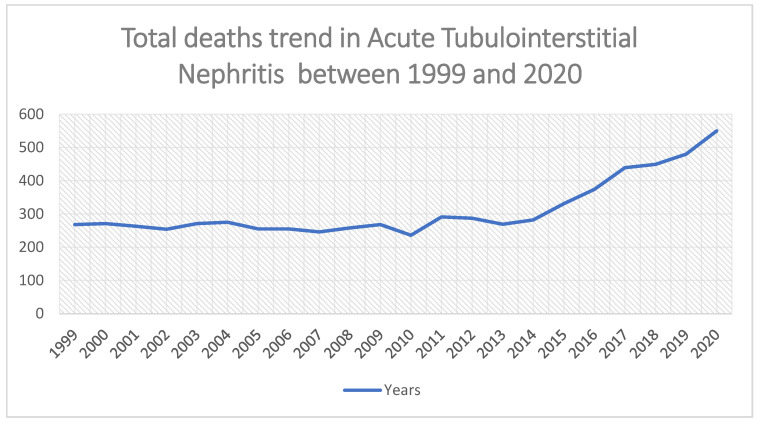 Figure 2
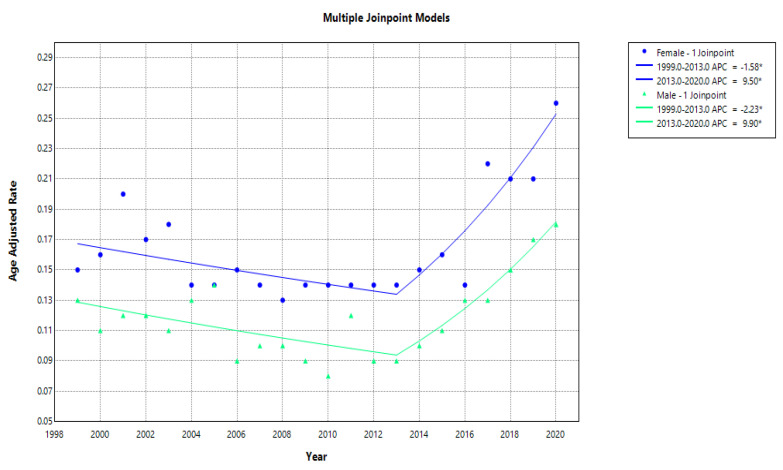 Figure 3
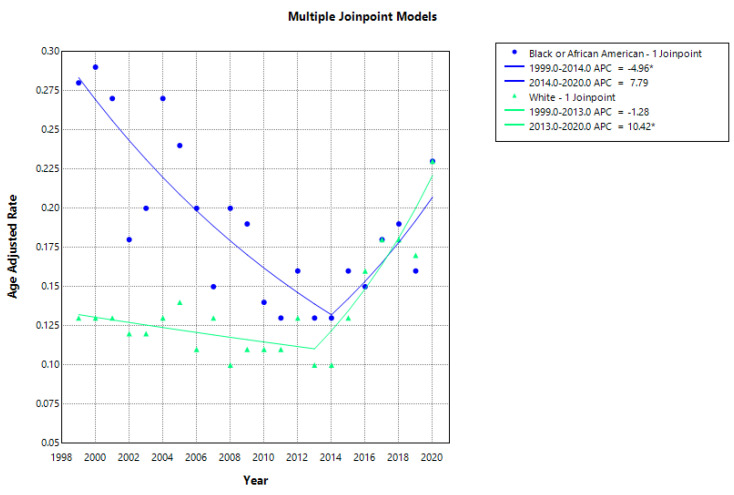 Figure 4
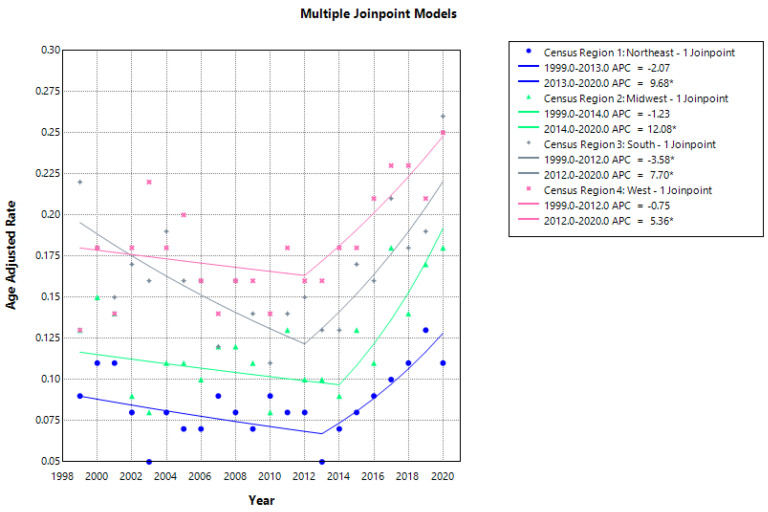 Figure 5
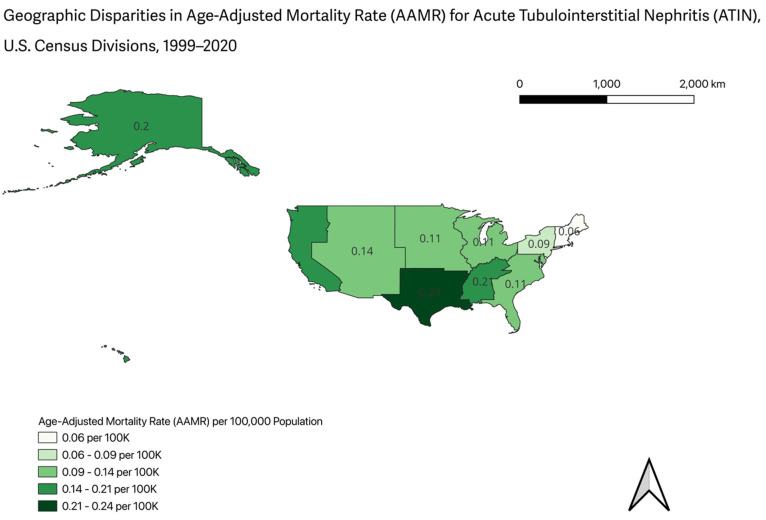 Figure 6
Peer Reviews
No public reviews on file for this paper yet. If you reviewed it on a platform where reviews are public (OpenReview, ICLR, NeurIPS, ICML), you can paste yours below so the community can read it here.
Videos
No videos yet. Explain this paper in a talk, walkthrough, or lecture? Add one.
Taxonomy
TopicsNephrotoxicity and Medicinal Plants · Kidney Stones and Urolithiasis Treatments · Chemotherapy-induced organ toxicity mitigation