Molecular Insights into Rhodococcus sp. A17: Physiological Adaptations and Degradation Characteristics for Organic Contamination at Alkaline pH
Xinyuan Wei, Haoyu Wang, Rui Li, Shengmin Liu, Hongyan Zuo, Qing Hu, Xuliang Zhuang, Zhihui Bai

TL;DR
This study explores how Rhodococcus sp. A17 adapts and degrades petroleum hydrocarbons in alkaline environments, offering potential for bioremediation.
Contribution
The study identifies physiological adaptations and genetic traits of Rhodococcus sp. A17 under alkaline conditions for petroleum degradation.
Findings
Rhodococcus sp. A17 degrades 67.8% of petroleum hydrocarbons in 72 hours under alkaline conditions.
The genome contains 18 oxygenase-related genes and four antibiotic resistance genes linked to hydrocarbon degradation.
Alkane degradation likely proceeds via terminal and subterminal oxidation pathways.
Abstract
Petroleum contamination poses a serious threat to human health and ecosystems worldwide, and microbially driven natural attenuation is an effective approach for accelerating hydrocarbon removal. Species of the genus Rhodococcus are recognized for their ability to degrade long chain petroleum hydrocarbons. However, their physiological traits and degradation mechanisms under alkaline conditions remain insufficiently understood. In this study, soil samples were collected from the Dagang oilfield in Tianjin, China, and Rhodococcus sp. A17 was isolated as an active indigenous strain for genomic and physiological characterization under high pH petroleum degradation conditions. The results showed that strain A17 grew optimally at 30 °C, pH 9.0, and 2% salinity. Petroleum hydrocarbon degradation reached 67.8% within 72 h, with a degradation half life of 34.2 h. Genome sequencing identified 18…
Genes, proteins, chemicals, diseases, species, mutations and cell lines named across the full text — each resolved to its canonical identifier and authoritative record.
Click any figure to enlarge with its caption.
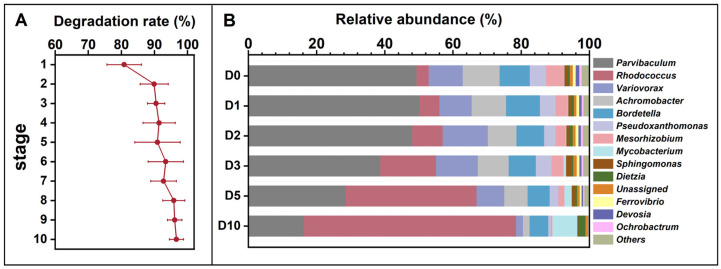 Figure 1
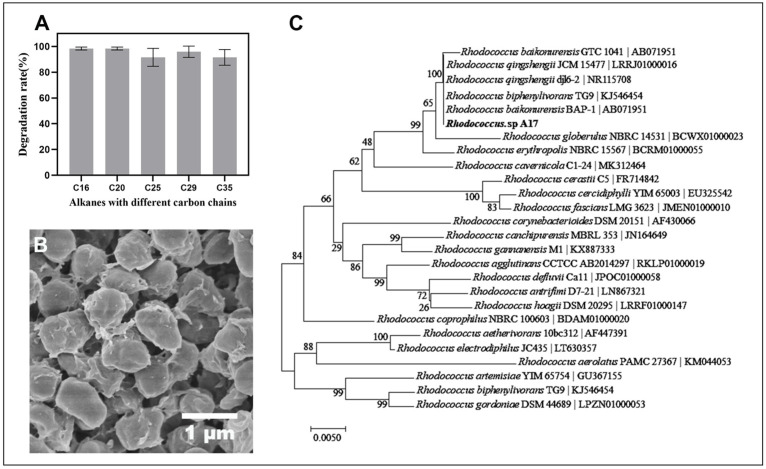 Figure 2
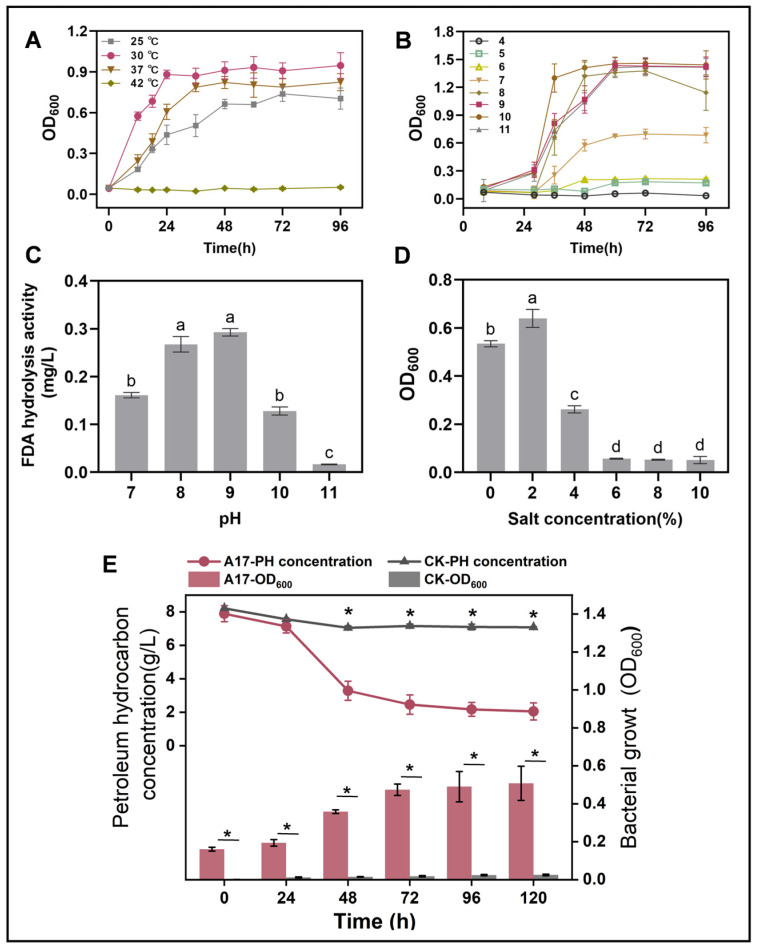 Figure 3
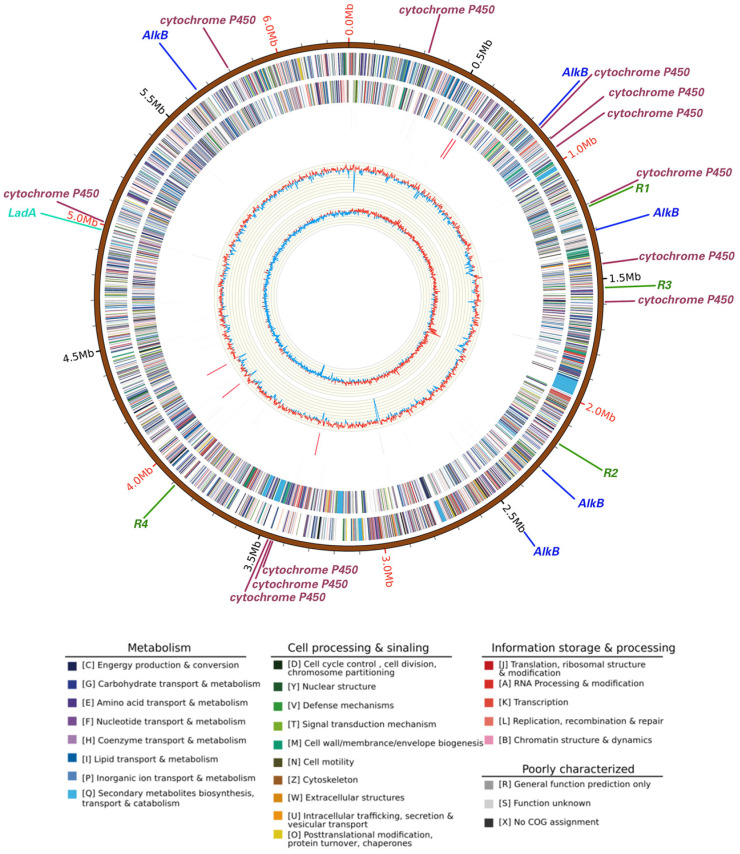 Figure 4
Peer Reviews
No public reviews on file for this paper yet. If you reviewed it on a platform where reviews are public (OpenReview, ICLR, NeurIPS, ICML), you can paste yours below so the community can read it here.
Videos
No videos yet. Explain this paper in a talk, walkthrough, or lecture? Add one.
Taxonomy
TopicsMicrobial bioremediation and biosurfactants · Chromium effects and bioremediation · Microbial metabolism and enzyme function