Removal of Cationic and Anionic Dyes from Aqueous Solution with Activated Biocarbons Obtained from Black Chokeberry Seeds
Paulina Marciniak, Marlena Groszek, Małgorzata Wiśniewska, Zhanat Idrisheva, Togzhan Toktaganov, Piotr Nowicki

TL;DR
Researchers made activated biocarbons from black chokeberry seeds to effectively remove both cationic and anionic dyes from water.
Contribution
Microwave-assisted chemical activation of black chokeberry seeds produced biocarbons with high adsorption capacity for synthetic dyes.
Findings
Microwave-assisted activation created biocarbons with a high specific surface area of 884 m²/g.
Maximum adsorption capacities of 194.5 mg/g for methylene blue and 68.6 mg/g for Congo red were achieved.
Heating method during activation significantly influenced the physicochemical properties and adsorption performance of the biocarbons.
Abstract
The main objective of the work was to prepare a series of new activated biocarbons by chemical activation of black chokeberry seed and to assess their suitability for removing cationic and anionic dyes from an aqueous medium. Activation of the precursor was performed at 550 °C with orthophosphoric acid, using conventional or microwave-assisted heating. The activated biocarbons were characterized in terms of elemental composition, textural parameters, surface morphology, acid-base character of the surface, as well as electrokinetic properties. Adsorption tests were carried out against two organic compounds: methylene blue (thiazine dye of cationic character) and Congo red (azo dye of anionic character). The influence of the initial dye concentration (5–120 mg/L), temperature (20–40 °C), and solution pH (2–10) on dye removal efficiency from the liquid phase was investigated. Additionally,…
Genes, proteins, chemicals, diseases, species, mutations and cell lines named across the full text — each resolved to its canonical identifier and authoritative record.
Click any figure to enlarge with its caption.
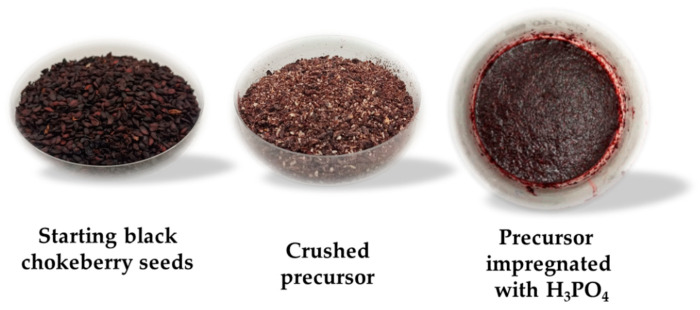 Figure 1
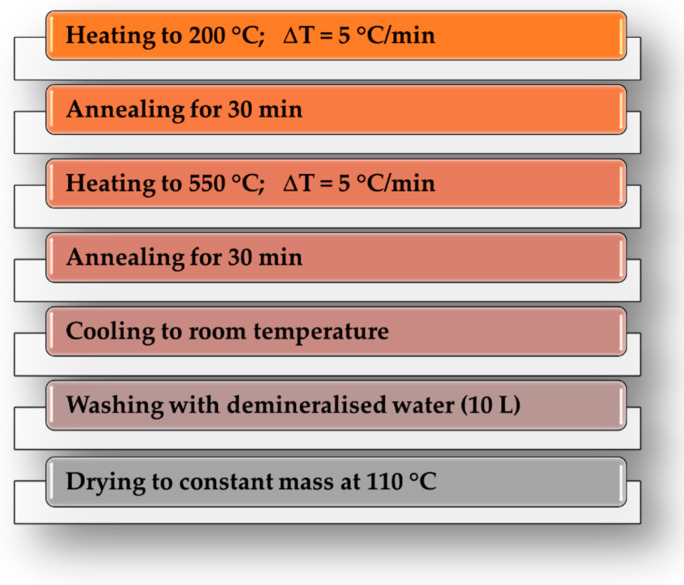 Figure 2
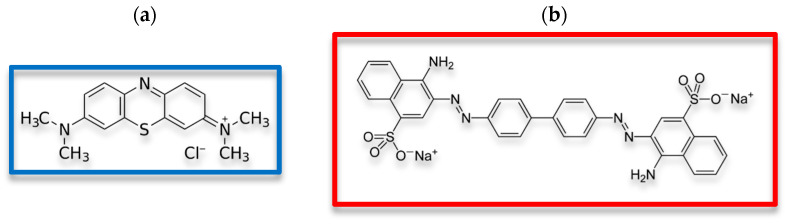 Figure 3
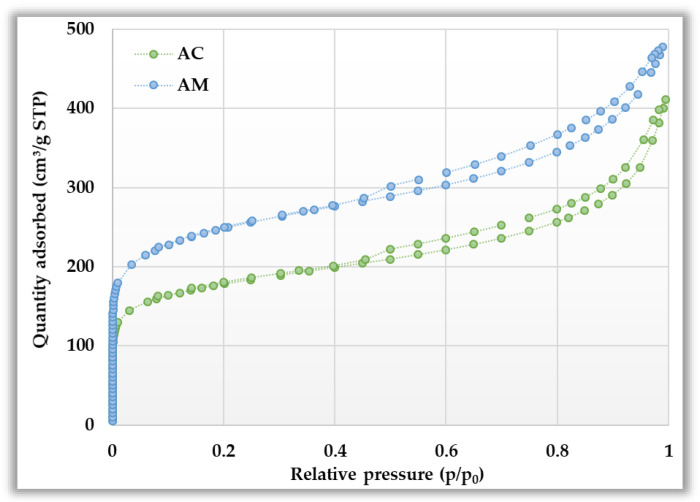 Figure 4
 Figure 5
 Figure 6
 Figure 7
 Figure 8
 Figure 9
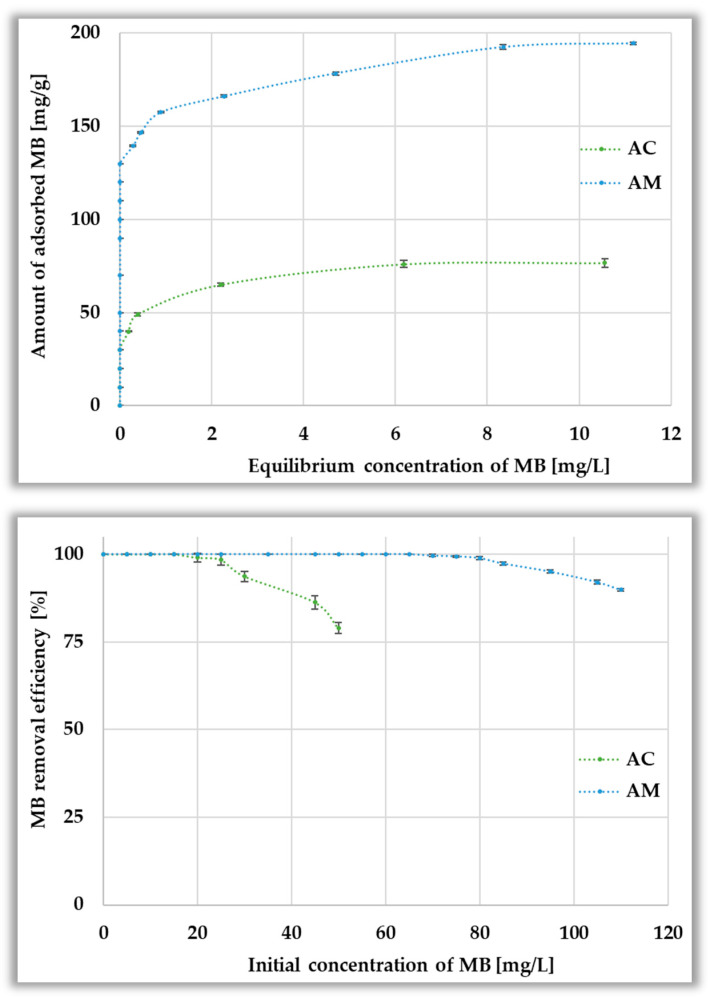 Figure 10
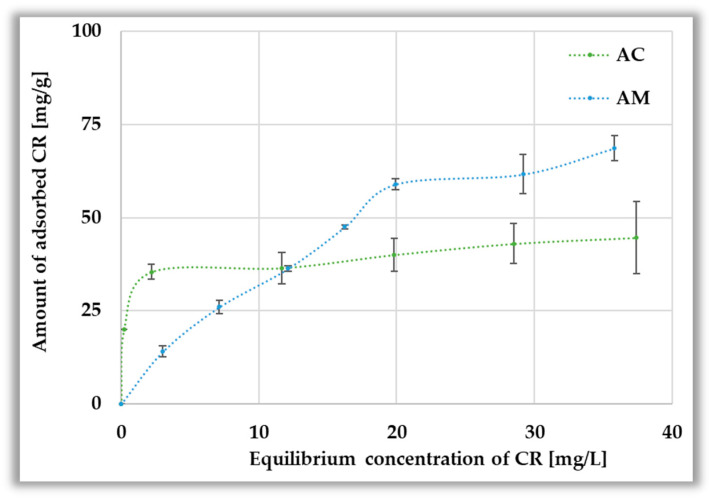 Figure 11
 Figure 12
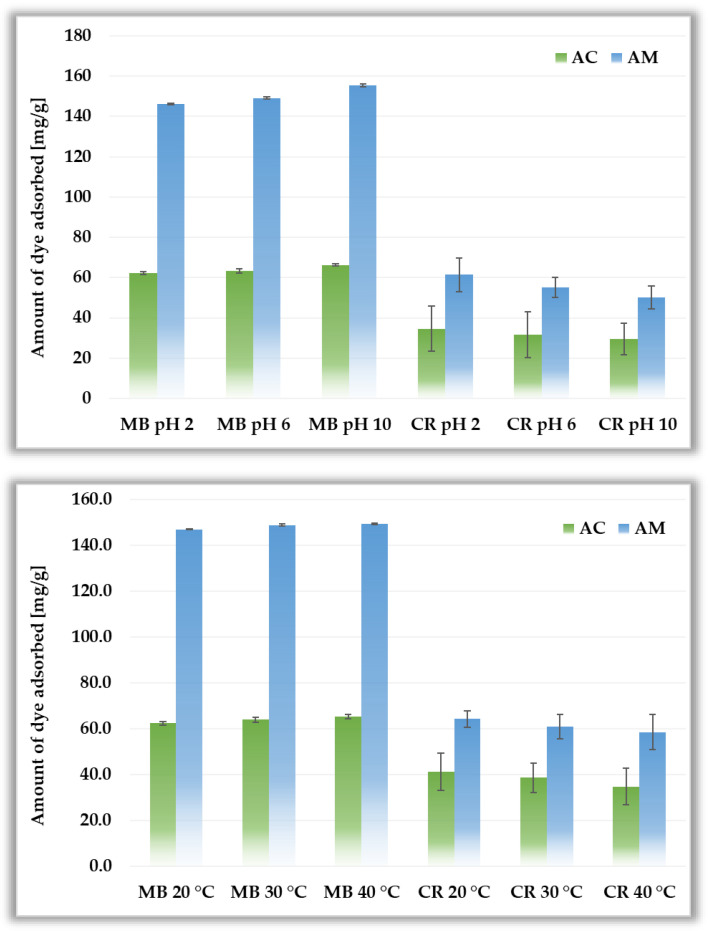 Figure 13
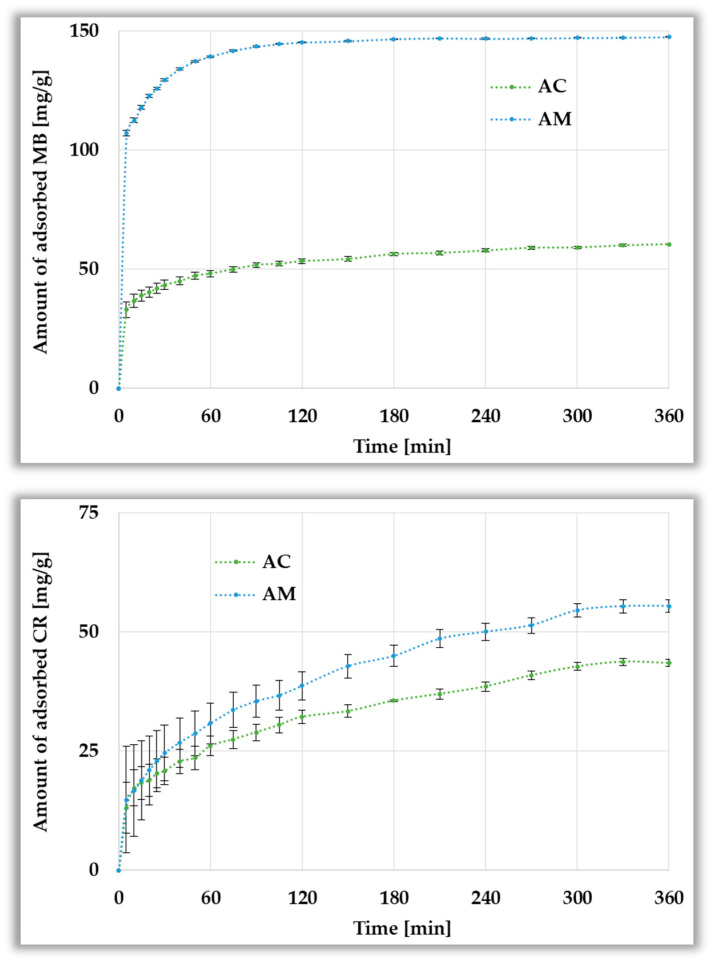 Figure 14
 Figure 15
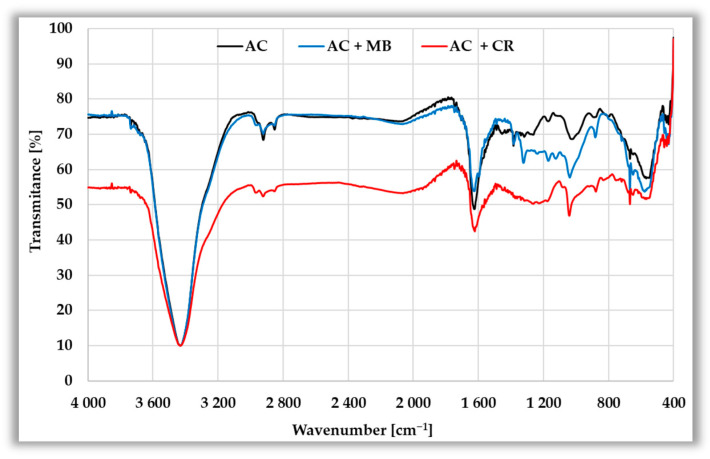 Figure 16
 Figure 17
Peer Reviews
No public reviews on file for this paper yet. If you reviewed it on a platform where reviews are public (OpenReview, ICLR, NeurIPS, ICML), you can paste yours below so the community can read it here.
Videos
No videos yet. Explain this paper in a talk, walkthrough, or lecture? Add one.
Taxonomy
TopicsAdsorption and biosorption for pollutant removal · Phosphorus and nutrient management · Coagulation and Flocculation Studies