Aneuploidy Patterns and Chaotic Embryos in IVF: Age-Stratified Analysis and Re-Biopsy Outcomes from a Romanian Cohort
Anca Huniadi, Petronela Naghi, Iona Zaha, Adelin Marcu, Liana Stefan, Liliana Sachelarie, Ioana Cristina Rotar

TL;DR
This study examines aneuploidy in embryos from IVF patients in Romania, showing how maternal age and embryo quality affect chromosomal abnormalities and the usefulness of re-biopsy for chaotic embryos.
Contribution
The study provides novel insights through age-stratified analysis and evaluates chaotic embryos in a Romanian IVF cohort.
Findings
Aneuploidy rates increased with maternal age, from 29.6% in women aged 25–30 to 68.7% in those aged 41–50.
Poor-quality blastocysts had higher aneuploidy rates (72.4%) compared to good-quality embryos (34.6%).
Re-biopsy of chaotic embryos confirmed they remained abnormal, suggesting technical variability in PGT-A results.
Abstract
Background and Objectives: Aneuploidy is the leading cause of implantation failure and miscarriage, with prevalence increasing with maternal age. Embryos classified as chaotic, characterized by the presence of five or more chromosomal abnormalities, and those with complex aneuploidies, defined by two to four abnormalities, represent a controversial category in preimplantation genetic testing for aneuploidy (PGT-A), as the potential for misclassification remains a significant concern. Materials and Methods: We performed a retrospective study at the Calla IVF Center, Oradea, analyzing 230 blastocysts grouped by maternal age (25–30, 31–35, 36–40, and 41–50 years). A trophoblast biopsy was performed on days 5–7, and the samples were analyzed by next-generation sequencing (NGS). Embryos were classified as euploid, aneuploid, mosaic, or chaotic. The 19 embryos initially diagnosed as chaotic…
Genes, proteins, chemicals, diseases, species, mutations and cell lines named across the full text — each resolved to its canonical identifier and authoritative record.
Click any figure to enlarge with its caption.
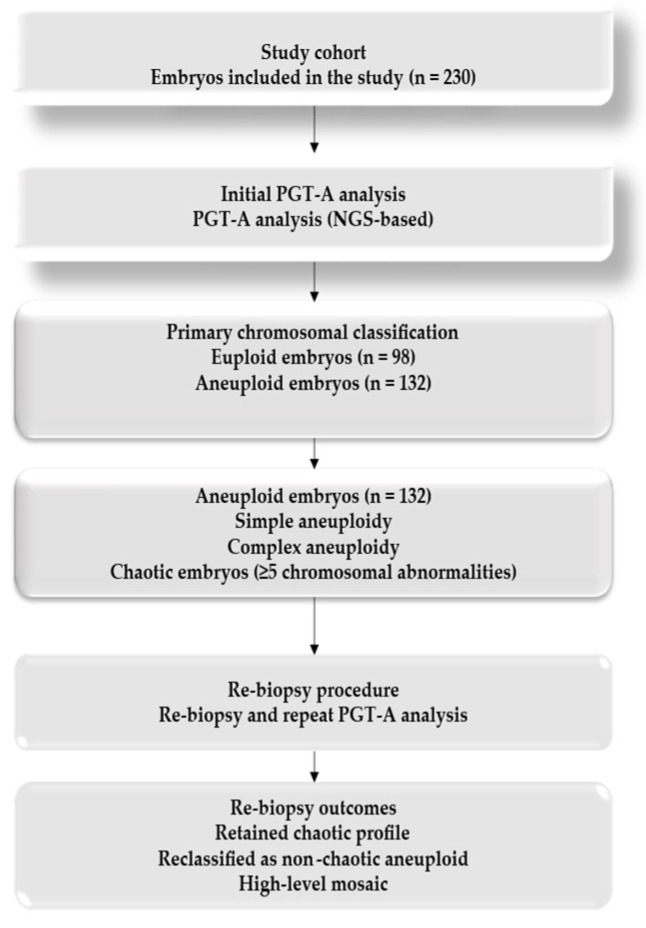 Figure 1
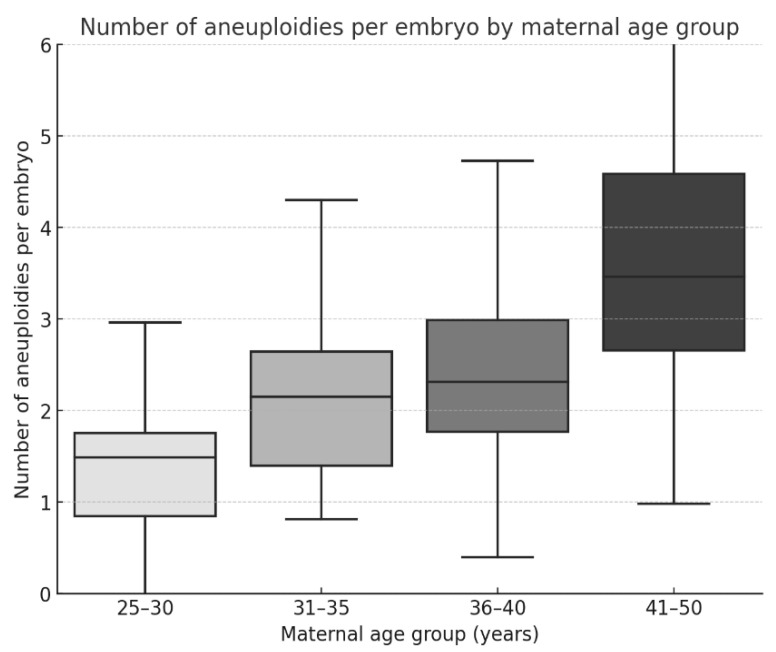 Figure 2
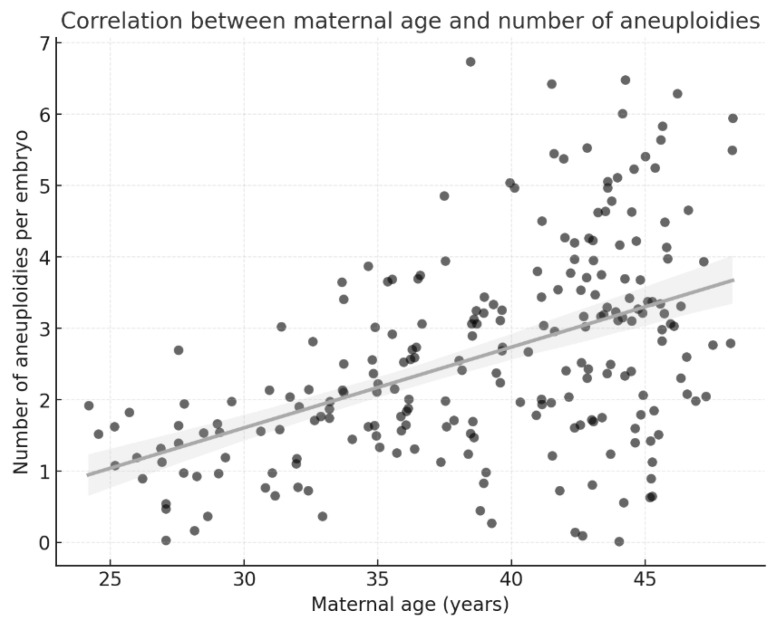 Figure 3
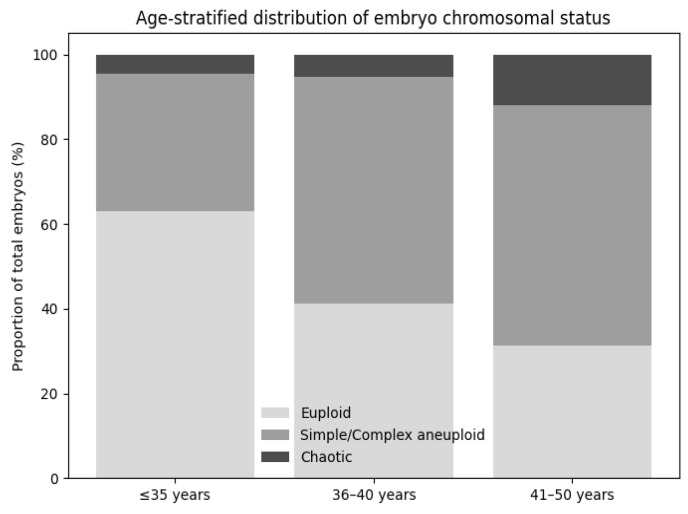 Figure 4
Peer Reviews
No public reviews on file for this paper yet. If you reviewed it on a platform where reviews are public (OpenReview, ICLR, NeurIPS, ICML), you can paste yours below so the community can read it here.
Videos
No videos yet. Explain this paper in a talk, walkthrough, or lecture? Add one.
Taxonomy
TopicsPrenatal Screening and Diagnostics · Genetic Syndromes and Imprinting · Assisted Reproductive Technology and Twin Pregnancy